

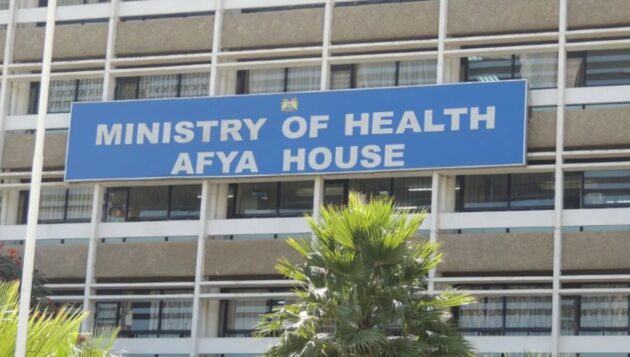
The Ministry of Health said hospitals need to be held accountable for how they treat patients.Did you ever go to a hospital, got the
medical care you needed, but walked away feeling ignored, dismissed, or
frustrated?
Maybe your concerns were not taken
seriously, or your complaints were brushed aside. That is the non-medical side
of treatment – how hospitals listen, respond, and relate to you as a person – and
it can shape your experience just as much as the pills or procedures.
Soon, health facilities will be held responsibility
also for this kind of treatment of patients.
Dr Charles Kandie, the head of Health
Standards, Quality Assurance, and Regulation at the Ministry of Health, said it
plainly: hospitals need to be held accountable for how they treat patients.
He said the proposed Kenya Quality Model
for Health Bill (KQMH) focuses on making sure patients get their rights when
seeking health services.
Kandie explained they are looking at
whether minimum health standards are met across all hospitals, whether public
or private, and whether the communities around those hospitals have a say in
how they’re run.
“Public participation is key,” he said.
He spoke at the heart of the 4th Annual
Patient Family Care Symposium held at Kenyatta National Hospital (KNH), where
hospital managers, doctors, and healthcare providers came together under the
theme “Creating Solutions for Affordable Patient-Centered Care.”
“The
bill will focus on whether facilities offer patients their rights when seeking
health services. Are the minimum health standards accessible to all patients
across all facilities, whether private or public? Lastly, we will also focus on
whether the facilities give the communities around them a voice in the running
of the health facilities, as this is key in ensuring quality is maintained in
the facilities,” he said.
Edel Quinn Mwende, marketing manager at
KNH, shared how seriously they are taking patient feedback. “We have made sure
to include patient needs in everything we do. We have gone further to install
suggestion boxes at every point of the facility for patients to write their
suggestions, complaints, and proposals, which we check at regular intervals for
reviewing and implementation where we can. Where the issue is beyond us, we
escalate it to the necessary offices for necessary action.”
All hospital heads present confirmed that all
feedback is good feedback, whether positive or negative, as it helps forge on
the way forward in running the facilities with the patient’s needs in mind.
During a fireside panel discussion, the
panelists insisted on putting patients at the centre of everything the hospital
undertakes to ensure quality and satisfactory services.