



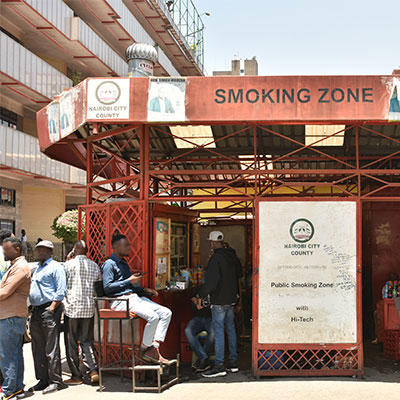
One medic argues removal of smoking zones may do more harm than good. “Because I have not come
across alternatives.”Despite Kenya’s prohibitions on
public smoking, second-hand smoke is rising in Nairobi’s informal settlements
and residential areas, raising alarms about respiratory and cardiovascular
health risks.
Smoking in Nairobi’s streets and
open spaces, especially in neighborhoods like Jamuhuri Estate, Westlands,
Kilimani and large parts of Eastlands, is resurfacing, bringing health concerns
that go beyond individual smoker habits.
Cigarette smoke now drifts into
everyday spaces: bus stops, markets, residential courtyards, and public
walkways. “I see groups smoking regularly just outside markets and along
busy pavements,” says a vendor in Jamuhuri. Passersby, including children,
have no choice but to breathe it in.
According to the 2014 Global Adult Tobacco
Survey (GATS), about 85 per cent of adults visiting bars and nightclubs
reported exposure to tobacco smoke, while 17 per cent of adults working indoors
experienced the same. Those figures predate today’s resurgence, suggesting the
problem could be widening.
Public health experts stress there
is no safe level of exposure. Second-hand smoke raises risks of asthma,
cardiovascular disease, chronic lung conditions, and cancer. Children are
especially vulnerable, facing reduced lung development, recurring bronchitis,
and higher chances of asthma.
Dr Audi Stephanie, a Nairobi-based
medical doctor, warns of the dangers.
“Smoking cigarettes has numerous
well-documented health risks,” she said. “Short-term effects include increased
heart rate, reduced lung function, nicotine addiction, and withdrawal symptoms.
Long-term effects include cancers such as lung, throat, mouth, pancreas, kidney
and bladder, as well as cardiovascular disease, strokes, heart attacks, chronic
obstructive pulmonary disease (COPD), emphysema, and chronic bronchitis.”
She added that smoking also affects
reproductive health, fertility, fetal development, and can cause gum disease
and eye problems. “Addiction to the nicotine in cigarette smoke can adversely
impact someone’s ability to function and achieve their goals,” she said.
On smoking zones, Dr Audi noted:
“The logic behind smoking zones is to protect non-smokers from second-hand
smoke whilst upholding the freedom of others to smoke. Removal of smoking zones
may do more harm than good because I have not come across alternatives. It
would be good if they were strengthened.”
Kenya’s Tobacco Control Act (2007)
and its 2014 regulations outlaw smoking in nearly all public and indoor
settings, impose fines up to Sh50,000, and allow designated zones under strict
conditions. Yet enforcement is weak.
A study of bars and restaurants
showed smoking in 86 per cent of establishments despite rules requiring
smoke-free venues. Oversight is particularly limited in informal settlements,
though high-end suburbs have also faced scrutiny.
Kenya’s GATS found only 55 per cent
of Kenyans knew the law protects them from second-hand smoke. Over 80 per cent
supported higher tobacco taxes. Public support is strong, but awareness remains
patchy.
Dr Toro Andrew, head of drug and
substance abuse control at the State Department of Public Health, said counties
are being alerted.
“We have activated all the county
teams to ensure the law is followed,” he said. “We’ve been thinking about doing
away with designated smoking areas. Globally, many countries are doing away
with them and we are thinking of taking that route.”
He confirmed that fresh enforcement
measures are underway. “We have activated multi-agency enforcement teams to
investigate and enforce the law. We are proposing to ban smoking in any public
place, and if possible, do away with designated zones.”
Dr Toro also warned about vape pens
and e-cigarettes. “The other issue is the proliferation of new nicotine
products—vapes, e-cigarettes, pouches. These are not anchored in the law right
now. We need to define them so we can enforce properly.”
In the capital, Principal Public Health
Officer and Head of the Tobacco Control Unit, Anthony Muthemba, backed a total
ban on public smoking zones.
“The current public smoking zones
within CBD (Koinange Street and Latema Street) are not owned by Nairobi County
despite the logos used on them,” he said. “These are private entities and do
not comply with Section 35 of the Tobacco Control Act. Despite efforts to get
them upgraded or removed, there’s been interference from the tobacco industry.
The way forward is for amendments to ban such zones completely.”
The challenge is not unique to
Nairobi. In Indonesia, second-hand smoke exposure remains common in public
spaces despite regulations. In China, cities such as Beijing and Harbin face
similar problems amid partial enforcement and cultural leniency.
Market traders, drivers and
residents say they feel abandoned.
“Children queue with us for water.
Smoke from smokers on the roadside hurts—some cough endlessly,” said a trader
in Kilimani.
“After work, they smoke near my car.
I can’t open windows. It’s uncomfortable for passengers, but who to report?”
asked a taxi driver in Jamuhuri.
A public health official, who
requested anonymity, admitted: “We lack manpower to police every corner. Enforcement
covers central zones, but peripheral areas slip through the cracks.”
Kenya’s legal framework is solid, and
public sentiment supports tobacco control. But enforcement gaps, institutional
weaknesses, and tobacco industry interference are undermining progress.
Experts point to four key
priorities: stronger enforcement through visible officers and penalties, public
awareness campaigns to educate citizens on their rights, community engagement
to protect children in schools and markets, and more healthcare support for
smokers who want to quit.
This return of public smoking in
Nairobi may appear a nuisance to some, but its health hazards are far-reaching.
Protecting non-smokers—especially children and informal workers—requires urgent
action.
As one resident put it, with
children around, secondhand smoke isn’t just a nuisance—it’s harm in plain
sight.