



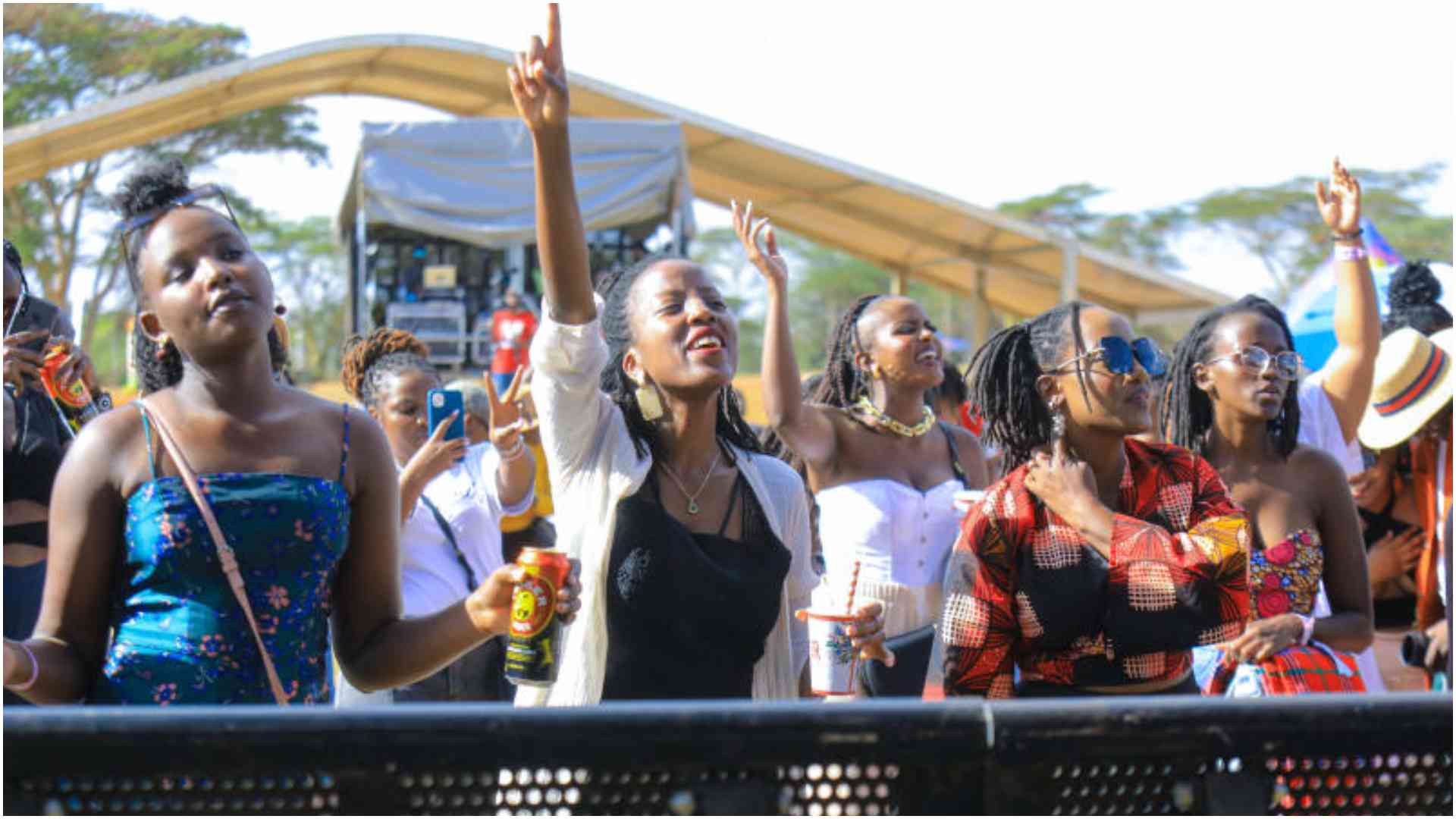
Revellers at the Blankets and Wine held on 1st October 2023. [File, Standard]
Across the larger social spectrum and entertainment landscape, a subtle yet noticeable shift is taking shape.
From nightclubs, concerts to curated brunches and lifestyle events, women are increasingly forming the visible majority.
Scroll through most event recap photos on social media, and the pattern is clear: groups of women filling dancefloors, lounges, while men appear fewer in number, quieter, or almost absent from the frame.
The trend sparked particular attention following the recently concluded Mataha Festival, where the gender imbalance was visible enough to become a talking point online.
Kenyans noted the disparity, prompting discussions about whether men were losing interest in Nairobi’s entertainment scene or if events themselves were evolving in ways that no longer appealed to them.
Organisers, attendees, and experts alike say it is a combination of social, economic, and cultural factors that explain the shift.
Michelle Njeri, Brand Manager at Good Times Africa, the producers of Blankets & Wine admitted that consumer behaviour is never static.
With their upcoming December 21st edition, marking 17 years of existence they have had a front seat to the evolution of the Kenya and African Entertainment industry.
Over the years they have seen the industry grow from a few mainstream artistes to a space where all tastes and preferences are catered for.
“We can confirm that Blankets & Wine receives more women than men at the festival. It would be interesting to understand the real reason behind this, so hopefully more research will be done on this,” Michelle says.
“We have always been keen on data and always trying to better understand our client so we can serve them.”
“Women embrace curated experiences more, and they tend to attend in groups, which makes events more vibrant and energetic,” says Jason Mutinda, an event organiser behind several lifestyle festivals.
Modern social events in Nairobi increasingly emphasise ambience, aesthetics, and curated experiences, which can naturally appeal more to women.
“Our internal data shows that women make up between 60–70 per cent of total attendees across most lifestyle, social and entertainment events. They tend to plan earlier, RSVP on time, and commit financially faster than men. Men mostly confirm last-minute or skip entirely unless the event strongly aligns with their interests,” says Joshua Bosire, CEO JayB Events Limited
“The events are designed to create memorable experiences, not just for the sake of the moment, but for social media as well,” says Tessa Wanjiru, a lifestyle event marketer.
This visibility effect extends beyond aesthetics. Women tend to be more expressive and participatory on camera, dancing, posing, and enjoying the event in ways that translate well to online media.
“Women are more likely to document, share, and promote these experiences, which encourages organisers to continue designing with them in mind,” adds Wanjiru.
Sentiments which Bosire agrees to, “women are generally more willing to pay for quality, ambiance and safety. The moment you position an event in a premium or well-known location, female attendance rises. Men, on the other hand, are more price-sensitive and often decide based on the lineup, type of entertainment or perceived value. If the event looks “too formal” or “too curated,” many men opt out.”
Economics also plays a role. Rising costs for events, including entry fees, food, drinks, and transport, have changed the way both men and women approach going out.
“Income and spending power is dependent on factors like social economic factors, education, employment etc… so that means people go for the stuff that influence their prioritsation of ones wants and discretionary spending,” says Financial Engineer Ted Kalani.
“The more inflation goes up, the more people spend less on events and social gatherings. This has made events to become more price elastic meaning consumers will only attend if the perceived value significantly outweighs the cost,” he adds.
Although he argues that we cannot peg the whole discussion on men versus women spending power, he agrees that most men have focused on different ball game all together.
“While men tend to focus more on spending on basic needs such as shelter, and maybe assets and technological tools and gadgets, women tend to prioritise food, clothing and sometimes social life,” he adds.
Good Times Africa Communications Manager, Diane Ywaya also admitted that demographic shifts are not unique to the music festival space.
“Taste and preferences keep shifting, though we continue to keep a keen eye on the who our client is and what their festival needs are. Our commitment to continually serve them regardless of who they are is what matters. We are always studying our service delivery and figuring out what to do to improve.”
Safety and comfort contribute as well. Many women report feeling more at ease in spaces where they form the majority. “I feel safer at events with more women,” says Maureen Njoki, a regular festival-goer.
“There’s less harassment, and you can enjoy yourself without constantly being wary.”
Organisers are taking note of these trends. “We are trying to create events that feel inclusive for everyone, but safety comes in handy when women are the target audience” says Bosire.
While women’s presence is highly visible, it is important to note that men have not disappeared entirely. Many attend smaller gatherings, more niche events, or spaces where they feel their participation is valued.
Bosire adds, “men are not entirely out of the scope, corporate activations, tech summits or sports-related events, men dominate so our targeting shifts depending on the event theme.”
To summarise everything Bosire advises when planning an event, several considerations come into play, all shaped by the intended audience.
The theme must genuinely resonate with the group, and the pricing should match the value guests expect to receive.
Venue safety and accessibility are crucial, particularly for women, while the choice of entertainment, whether performers, DJs or speakers, must align with their interests.
Social media habits also guide how events are discovered and talked about, influencing promotion strategies.
Even timing matters, with women often favouring earlier or well-structured gatherings, while men are more inclined toward late-night or weekend options.
“Altogether, these behavioural insights help uus as event organisers to craft experiences that draw the right crowd and ensure strong attendance,” he says.