



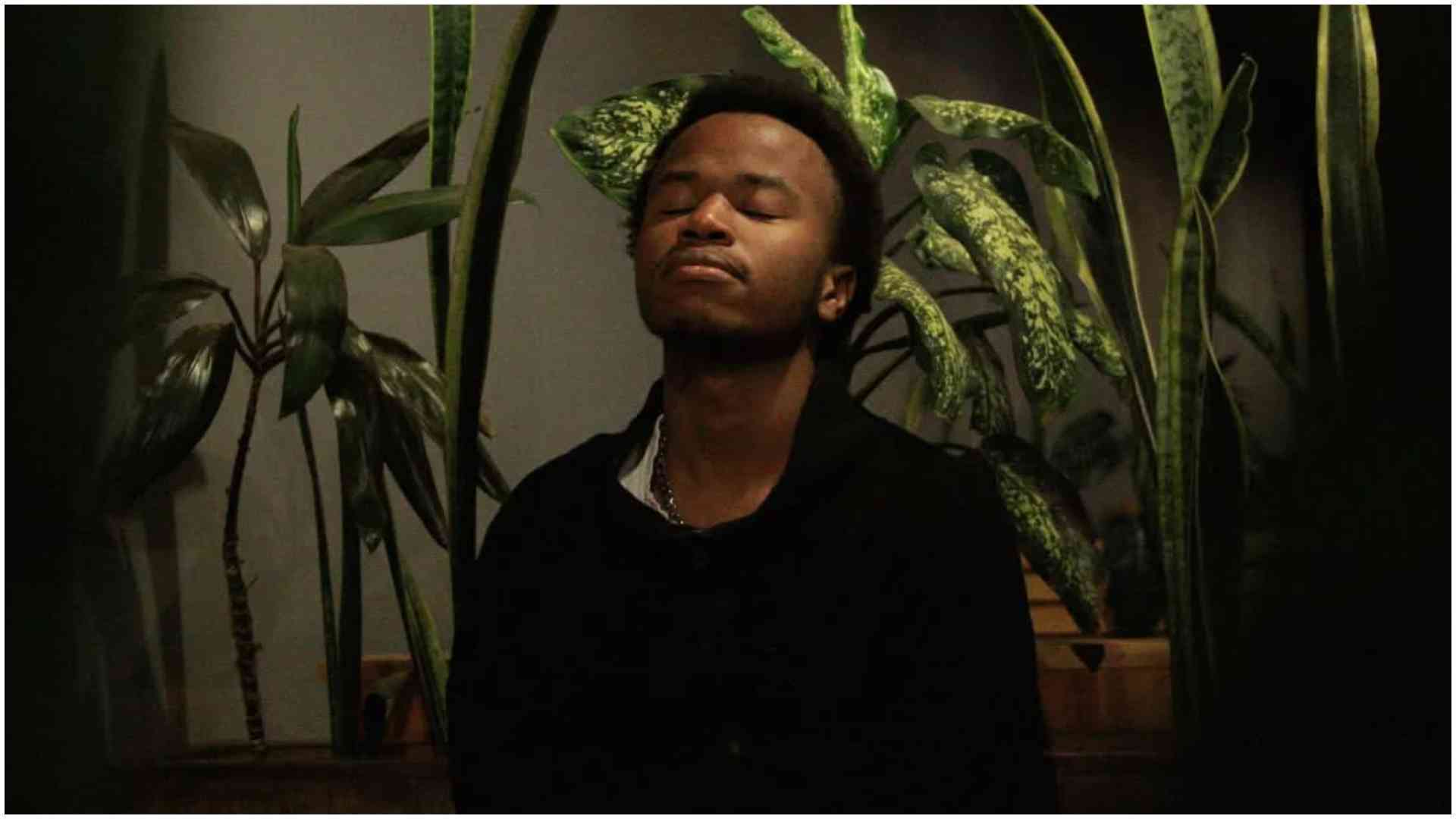
Before the world knew the name Tyler Dan, there was simply Dan Guto Momanyi, a quiet boy in Nakuru who found comfort in sound long before he understood what music could become.
He remembers singing in church choir when he was barely a teenager, his voice blending with others as he learned harmony, discipline, and the strange feeling of being moved by notes.
“I started singing in 2012,” he says. “Church choir, school festivals… that’s where I learned how music feels inside the body.”
Music became something he gravitated to without trying, something that stayed with him even as everything around him kept changing.
By 2019, he felt a shift. He began exploring who he was musically, not as part of a choir or a group, but as an individual.
“I wanted to see what my own voice sounded like.
In 2020, he found it or at least the beginning of it. He discovered the emotional weight of Afropop, the smoothness of R&B, and the freedom of rapping and singing in the same breath. It felt natural, like something that had been waiting for him all along.
“My sound came from experimenting. I wasn’t trying to fit anywhere. I was just trying to hear myself clearly,” he says.
In 2024, he released his first songs, Feel About It and Different Approach to the world, stepping into the long, uncertain, exhilarating road of becoming an artiste.
Today, he works closely with his manager, Desmond Lenku, someone he describes as a grounding force in his life.
“Desmond is someone who understands how I think and how I create. He doesn’t rush me. He guides.” It’s rare for an emerging artiste to find someone who believes in both the music and the person but Dan knows he has that privilege.
As Tyler Dan, he builds sound the way some artists build paintings: slowly, emotionally, and with a sense of honesty that sometimes surprises even him.
His recent project Chainstorm is his first full-length album released in February 2025, a deeply personal 10-track project featuring songs like Kikwetu, Never Forget Me, If Only, and others that hold stories, memories, and questions he had carried for years.
“Every track is a feeling I didn’t know how to say,” he explains. “I wanted people to walk into it like they’re walking into my head.”
He describes the project not as a collection of songs, but as a landscape storms, silences, soft moments, and memories. “I don’t always use words,” he says. “But the beats speak. The melodies speak. The production tells a story.”
His creative process reflects that philosophy. He doesn’t box himself into rigid methods; instead, he follows instinct.
“Sometimes it’s a beat. Sometimes a sample. Sometimes a feeling I can’t name yet,” he says. “If the track isn’t speaking to me, I don’t force it. I wait.”
He believes music is like a living thing it grows on its own terms. “You can’t fight sound,” he adds. “If it’s not ready today, it will be ready tomorrow.”
His partnership with Jemma on the Chainstorm intro felt like fate. “She has this softness that adds breath to a track,” he says. “She carried emotion in a way I don’t naturally do.” He chooses collaborators not for fame or numbers, but for connection. “If we don’t connect emotionally, the music won’t connect either.”
Still, there are artistes he dreams of working with voices he admires not because of hype, but because of the worlds they’ve built such as Bien, Nikita Kering, Maya Amolo, Chris Brown and Nyashinski.
“They each have something different,” he says. “It’s their presence, their emotion, their ability to make a song feel alive.”
But with growth comes challenges. Being an emerging artiste means dealing with silence, doubt, and days where inspiration hides.
“There are days you’re full of ideas and days you feel empty,” he admits. “And the doubt… your doubt, other people’s doubt… it can get loud.” What keeps him going is the understanding that growth is slow, intentional, sometimes quiet.
“I’ve learned to keep creating even when no one is watching,” he says. “Silence doesn’t mean failure. It just means you’re building.”
The connection with listeners is one of the things he values most. “When someone tells me my music made them feel calm or seen… that’s everything,” he says. “I want my music to feel like a place people can go when life feels too loud.” For him, the audience isn’t an audience they are witnesses, companions, people walking with him through sound.
Looking ahead, Dan says he is sharpening his craft, experimenting more deeply, and envisioning the day he steps onto a stage for a live performance.
“A mini tour… I see it clearly. I want people to experience the world I’m building in real time.” He dreams of a full album, more collaborations, and a legacy of honesty. “I want people to say, ‘He made music that felt like something.’ That’s the legacy I want.”
The sacrifices have been real mostly time, the one thing artists give without knowing if it will return. “It’s been worth it,” he says. “Music gives me purpose.” Some songs became therapy, helping him process heavy moments. “Those tracks saved me before they saved anyone else.”