



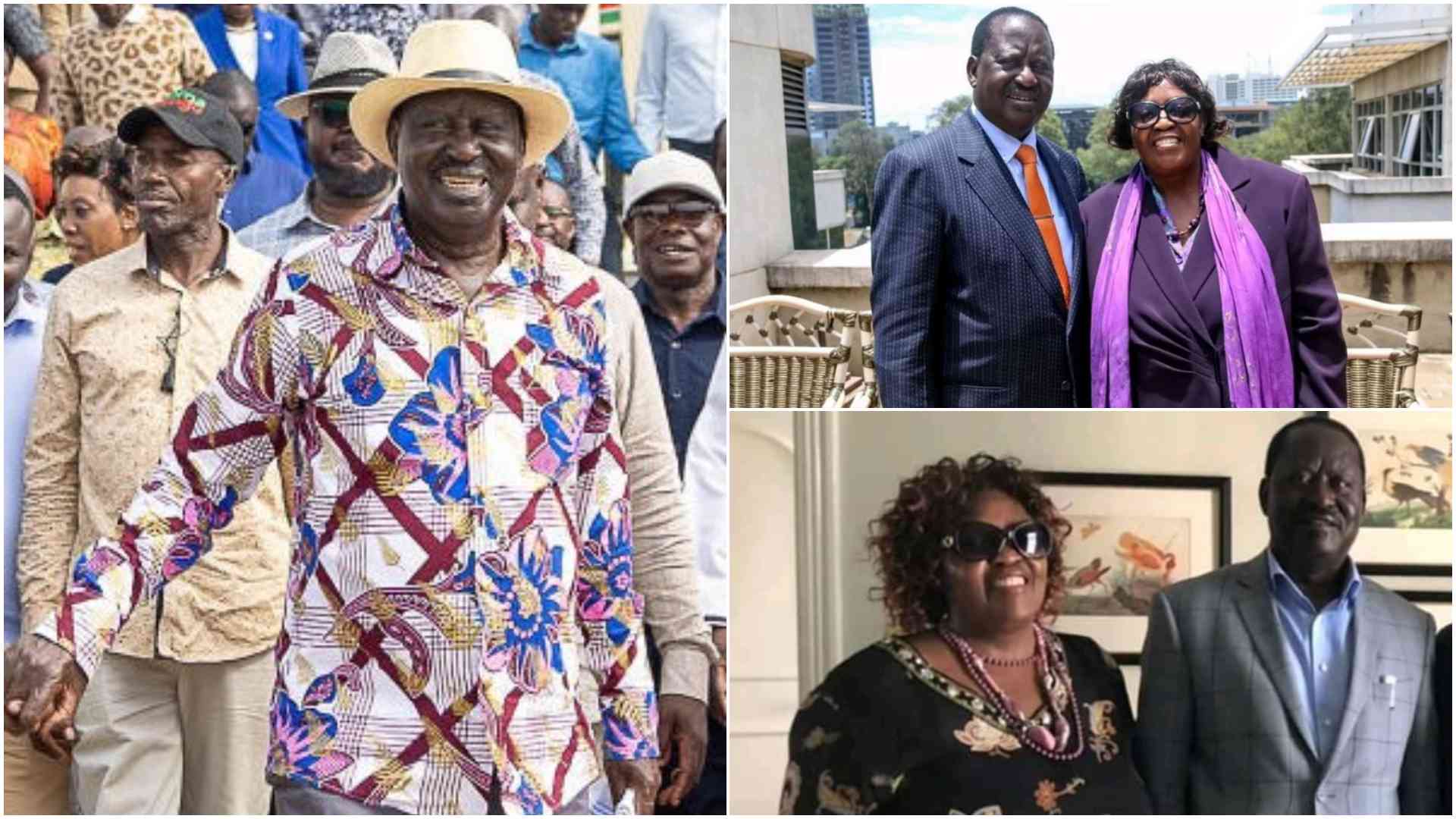
In a family where every name has sparked heated headlines, political tremors, and multi-generational debates, one Odinga lived her life in quiet shadows; deliberately, almost defiantly.
Her name is Beryl Achieng Okumu Odinga.
Unlike Jaramogi, whose booming voice rattled colonial rule; unlike Raila, whose name has shaped Kenya’s political grammar for over four decades; unlike Oburu, Ruth, or Akinyi, who have all had their public moments, Beryl chose to disappear into silence.
But silence, as her story proves, is not the same as absence.
Born in 1952, at a time when Jomo Kenyatta and the rest of the Kapenguria Six languished in detention, hers was a childhood framed by political tension and the loud footsteps of history.
She was the fourth-born in the Odinga household; arriving not in peace, but in an era defined by colonial suppression and fierce African resistance.
Yet few Kenyans know she exists.
Fewer know the scale of tragedy, resilience, intellect, and reinvention that shaped her extraordinary journey.
And even fewer know why, at Raila Odinga’s historic burial, the sister he once smuggled across borders for her safety was nowhere in sight.
This is the little-known life of the Odinga sister who refused the power her family name guaranteed.
Finding identity
Her father, Jaramogi Oginga Odinga, named her after Achieng Oneko, his comrade in struggle, and Joram Okumu, one of his closest friends.
Thus the name: Beryl Achieng Okumu.
It was a name both affectionate and symbolic; a reminder of friendship, resistance, and the shared struggle for Kenya’s freedom.
But Beryl was never drawn to political warfare. Where the rest of her family embraced it, she ran in the opposite direction.
Beryl’s focus was academic excellence.
She attended Kenya High School for her O-levels, a space that shaped many of Kenya’s future women leaders. From there, she joined St. Francis Mang’u for her A-levels before specialising in Law at university.
Politics already consumed her family. She wanted her own world, her own identity, her own peace. Eventually, she found it—but only after surviving a storm that would have broken many.
If Beryl had hoped to escape politics, fate had other ideas.
And its name was Aggrey Otieno Ambala.
Ambala’s rise was the stuff of urban legend. He began as a street-food vendor at the Ambassadeur bus stage, selling fries and fast meals to Nairobi’s hurried commuters.
With fierce ambition, the business grew. So did his wealth. Eventually, the former hawker became a fast-food tycoon, a real-estate investor, and—thanks to a Harvard economics degree—a brilliant, sought-after thinker.
But those close to the Odinga family believed his interest in Beryl was not purely romantic. It was political.
Marrying the daughter of Jaramogi Oginga Odinga was a shortcut to political legitimacy in Gem. A golden ticket.
Raila, ever politically intuitive, sensed something off.
But Beryl, deeply in love, fought hard for her family’s reluctant blessing. Eventually, the Odingas backed him in the 1974 Gem parliamentary race, but despite their support, Ambala lost to Isaac Okero.
Behind closed doors, according to family accounts, incidents of emotional manipulation and physical violence escalated.
Two children were born—Auma and Chizzy—but even motherhood could not shield her from the turbulence.
The relationship deteriorated into fear.
In 1979, after finally winning the Gem parliamentary seat with Jaramogi’s reluctant influence, Ambala only grew bolder, unpredictable, angrier.
What happened next pushed Beryl to the very edge.
Fearing for her life, Beryl fled her marital home with her children. The Odingas sheltered her. Raila took the lead, organising her quiet evacuation to the newly independent Zimbabwe in December 1980.
She hoped for a fresh start. But Ambala followed her.
He launched a custody battle in Zimbabwe. In a shocking turn, a judge ruled that the case should be handled in Kenya and awarded custody to the father. Crushed, unemployed, and financially weak, Beryl was forced to hand her children over to Ambala.
Her passport was allegedly confiscated after pressure from Kenyan officials. She was stranded. Alone. Traumatised.
And then things got even darker.
Ambala allegedly hired a private investigator to track her movements—Patrick Muiruri, the future MP for Gatundu North.
Dangerous liaison
In In the Shadow of My Father, Dr Oburu Oginga recounts a tense encounter with Ambala at International House:
“Ambala had worked himself up to a fine foam… He claimed that Raila and I had gone to his house to beat him up.”
The secretary had to intervene. The encounter ended with Oburu walking down Taifa Road, shaken but not surprised. Ambala, brilliant as he was, frequently left chaos in his wake.
Raila organised a final, risky escape with the help of Brigadier Oyite Ojok of Uganda and Dr Athuman Mwaboha in Tanzania, with Beryl securing a Ugandan passport. Through Dar es Salaam, she travelled back to Zimbabwe, this time as a legal resident.
Here, far from the noise of Gem and the political temperature of Kenya, she reinvented herself.
She rose to become the first Black Town Clerk of Mutare, and later Company Secretary of the Housing Corporation of Zimbabwe.
She eventually divorced Ambala.
In the 1983 snap elections, Ambala lost the Gem seat to Horace Ongili Owiti, the same man who had stood by him as best man at his wedding.
Two years later, Owiti was murdered in Siaya in a chilling midnight attack. Though nothing was stolen, suspicion fell on Ambala.
He was arrested and detained at Kodiaga Prison.
Before the case could proceed, he died suddenly in custody, officially of a heart attack. Unofficially, many questions linger to this day.
For the Odingas, he remained a painful chapter.
After settling in Zimbabwe, Beryl lived deliberately under the radar. She built a solid career. Raised her last-born, Taurai. Made new friends and stayed away from politics completely.
For decades, she avoided the cameras, microphones, and political stages that defined her family.
And most of Kenya forgot or never knew she existed. That was, until two years ago.
At Senator Oburu Odinga’s 80th birthday celebration, Beryl was reintroduced by Raila in an emotional moment.
Raila, visibly proud, told the crowd she had once been classmates with Kalonzo Musyoka. Taking the microphone, she said: “Among my siblings, I am the only one who attended a university in Kenya.”
It was the first time many Kenyans had heard her speak in public.
Her absence at Raila’s burial raised whispers. Some wondered if the family was divided. Others spun theories. She was unwell, but her youngest son, Taurai, read her eulogy confirming her love, respect, and bond with her brother.
Like her entire life, her absence was quiet, deliberate, and deeply personal. In a family of national giants, she chose invisibility.