



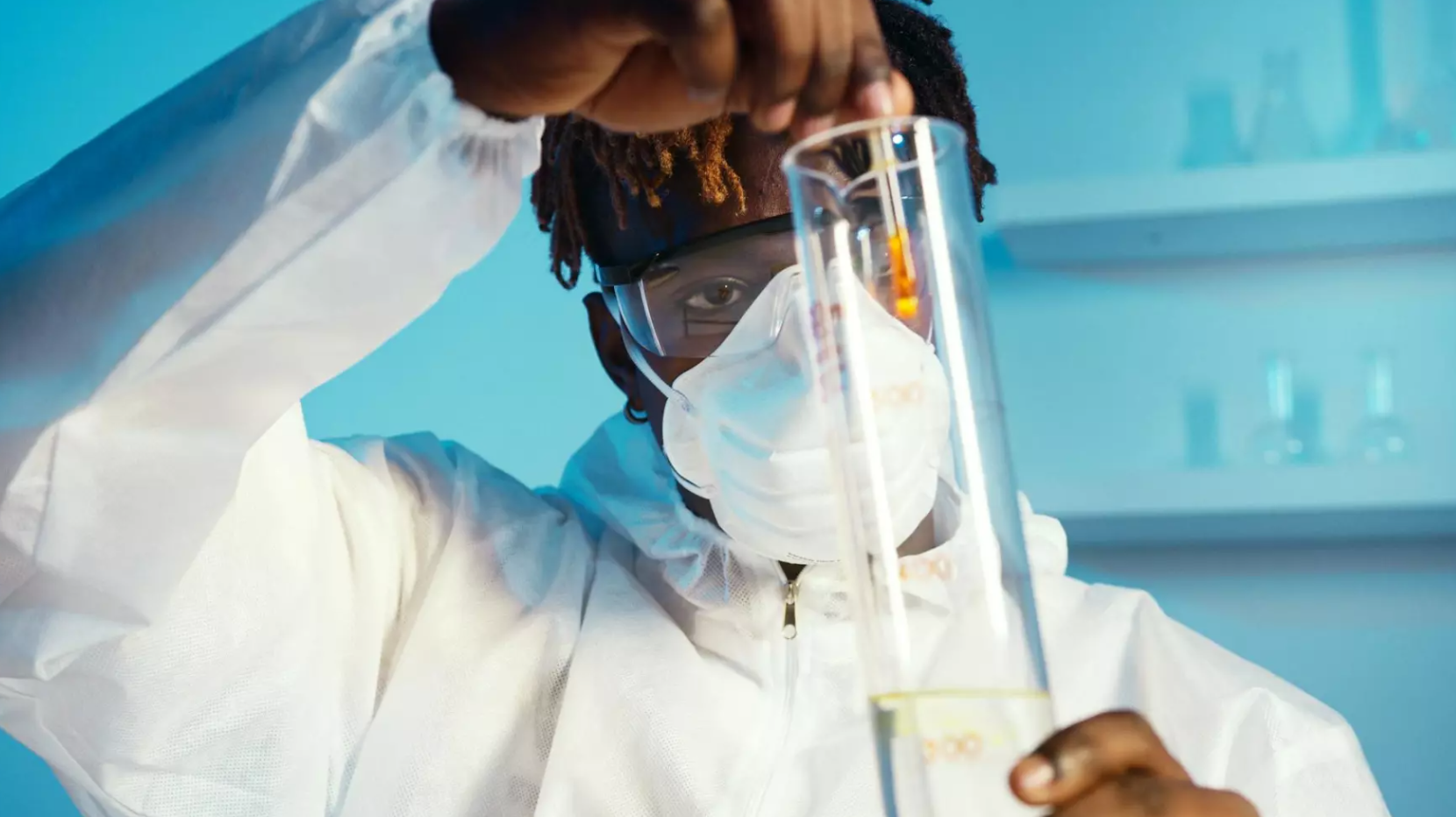
A scientist in a laboratory. They said the gene makes bacteria extremely difficult to treat because it confers resistance to many antibiotics, including carbapenems, which are often regarded as drugs of last resort.
Kenyan scientists have, for the first time in Africa, detected a gene that
can make bacteria resistant to nearly all major antibiotics.
Although this feared gene has been isolated in other countries, this is the
first time it has been found within Africa.
The gene, known as NDM-6 (New Delhi metallo-beta-lactamase-6), was found in
bacteria taken from a 58-year-old woman admitted with a severe breast infection
in Kisii County. The sample was analysed by researchers from the Kenya Medical
Research Institute (Kemri) and the Walter Reed Army Institute of Research.
“This study presents the first report of NDM-6 in Africa,” they said in a
report published by the International Journal of Infectious Diseases. “This
emphasises the need for enhanced genomic surveillance in LMICs (Low and Middle Income
Countries) to monitor the emergence and dissemination of resistance
determinants.”
The bacterium carrying this gene was Acinetobacter baumannii, which is well
known for colonising hospital surfaces. It survives for long periods on
surfaces, spreads easily in intensive care units, and often infects patients
who are already sick or recovering from surgery, especially those using
ventilators, catheters, or with open wounds.
The gene makes bacteria extremely difficult to treat because it confers resistance to many antibiotics, including carbapenems, which are often regarded as drugs of
last resort.
The finding is reported in a paper titled “First report of New Delhimetallo-β-lactamase-6 (blaNDM-6) gene in Africa identified in acarbapenem-resistant Acinetobacter baumannii clinical isolate.”
The scientists said the bacterium isolated in Kisii not only carried the NDM-6 gene but also resisted many antibiotics that doctors commonly rely
on. They said: “The isolate exhibited resistance to meropenem and displayed a
multidrug resistant (MDR) phenotype showing additional resistance to piperacillin,
ticarcillin-clavulanic acid, cefepime, ceftriaxone and levofloxacin.”
The Kenyan patient at the centre of the discovery had a purulent open septic
ulcer on her right breast. She had been on antibiotics for seven days,
including intravenous flucloxacillin, before the sample was taken.
She had no history of recent travel outside the country, meaning the gene
was most likely acquired within Kenya rather than brought in from abroad. That
suggests the gene, or bacteria carrying it, may already be spreading quietly in
Kenya.
NDM-6 is part of a family of genes known as NDM genes, first discovered in
New Delhi in 2008. It has been reported in Asia, Europe, and Oceania, in
bacteria such as Escherichia coli, Klebsiella pneumoniae, and Providencia. Some
of these cases were linked to travel, but others appeared unexpectedly.
Experts warn that if such resistance spreads in Kenya, routine infections
like urinary tract infections, pneumonia, or bloodstream infections could
become extremely difficult to treat.
They say health authorities can help prevent this threat through stronger
surveillance and aggressive infection-control measures. Patients and caregivers
can help by insisting on strict hygiene, such as handwashing, ensuring medical
devices are sterile, and asking about infection-control protocols at health
facilities.
Kenya has already seen a rise in drug-resistant infections in recent years.
The Institute for Health Metrics and Evaluation, based at the University of
Washington, recently estimated that 6,670 Kenyans died due to antimicrobial
resistance in 2021.
Dr Cecelia Mbae, the Kemri acting Deputy Director in charge of the Centre
for Microbiology Research (CMR), last month also confirmed a steady rise in
multidrug resistance in Kenya.
CMR has been monitoring resistance patterns in key pathogens, including
Salmonella, Shigella, Vibrio cholerae and diarrhoeagenic E. coli, in Nairobi’s
informal settlements for more than a decade.
Their latest surveillance data from
Mama Lucy Kibaki Hospital (MLKH) showed that over 45 per cent of typhoid fever
cases are now linked to multidrug-resistant Salmonella Typhi.
Equally concerning are insights from investigations into the 2022 cholera
outbreak, where Vibrio cholerae O1 (Ogawa serotype) was confirmed as the
causative strain, 99 per cent of which showed multidrug resistance.
Dr Loice Ombajo, an infectious disease specialist and co-director of the
Centre for Epidemiological Modelling and Analysis (Cema) at the University of
Nairobi, said most resistance is caused by overuse of drugs.
“Antibiotic resistance (often referred to as antimicrobial resistance or
AMR) occurs when bacteria change their characteristics or evolve and can no
longer be killed or inhibited by antibiotics,” she said in an unrelated
statement.
She noted data from many hospital laboratories in Kenya already show
alarmingly high antibiotic resistance levels. “For example, Escherichia coli,
the most common bacterium causing urinary and blood infections, shows
resistance of up to 70 per cent to the commonly used antibiotics. Staphylococcus
aureus, the bacteria that causes most infections of the skin structures shows
resistance rates of up to 50 per cent to the most commonly and readily
available antibiotics,” she said.