

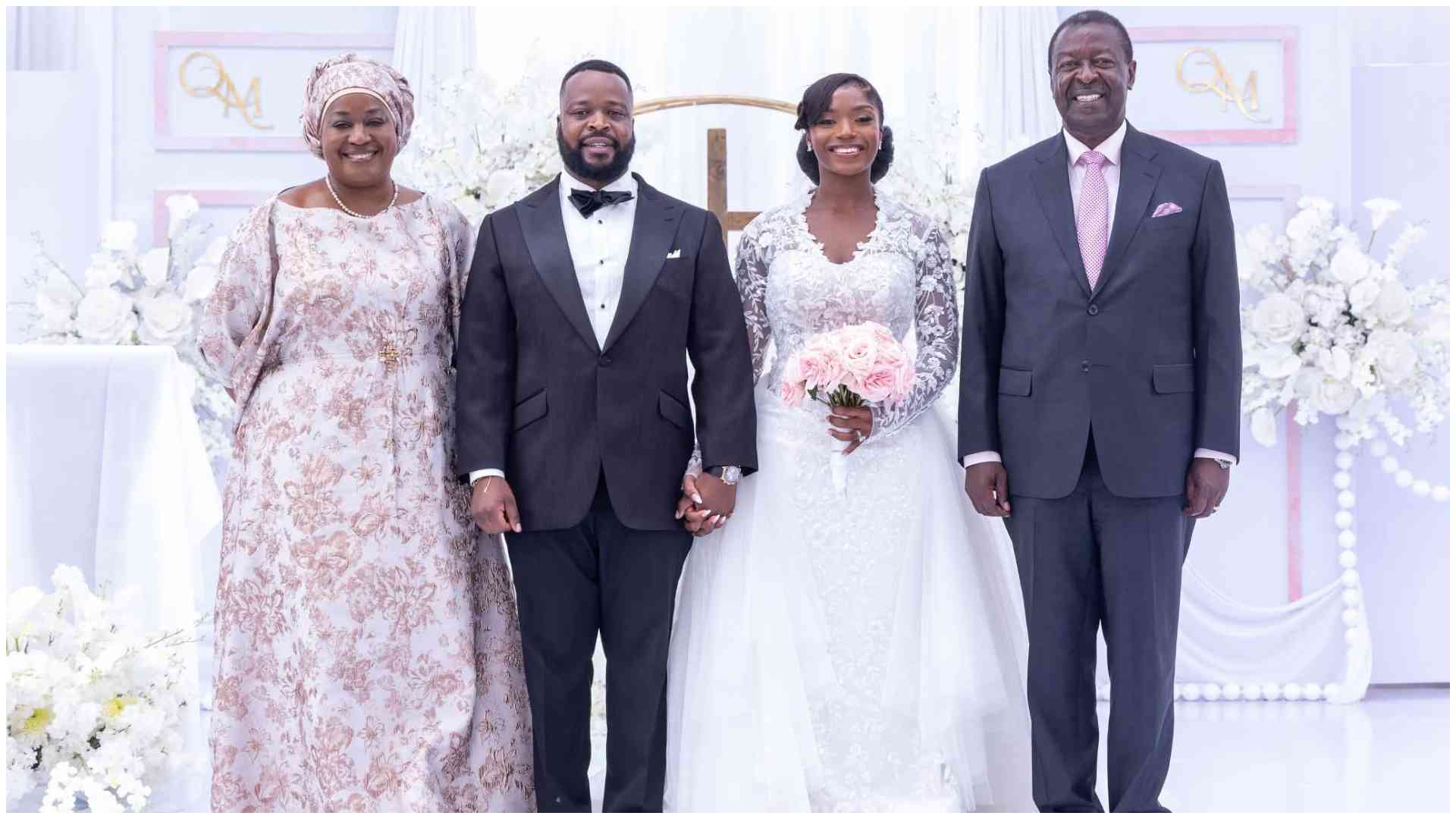
When ordinary Kenyans attend weddings, the highlight is often the food, the music, and the joy of two families becoming one. But when it comes to the unions of Kenya’s political and business dynasties, the story is written in a different script altogether.
For years, such weddings took place behind high gates, visible only to the chosen few. But the age of social media has cracked open the doors. Now, every table setting, designer suit, motorcade, and celebrity guest is broadcast in real time, feeding the public’s curiosity about the lives of the powerful. And Kenyans cannot look away.
To many, these weddings have become national spectacles: a fusion of culture, celebrity glamour, and soft political theatre. Luxury is expected, and it comes with a staggering price tag. Even the guest list becomes a political statement. Seating arrangements hint at alliances; invitation cards reveal which power blocs are warming up to each other.
These weddings do more than celebrate love. They reflect the aspirations and inequalities of Kenyan society, blurring the lines between politics, business, celebrity, and tradition. They show how elite families cement their place in the national imagination through ceremonies that dazzle with spectacle while quietly negotiating influence.
And when the head of state himself graces your son’s wedding, the stakes rise. Nothing is left to chance—not even the presidential speech. “The foundation of a nation is the foundation of a family,” President William Ruto declared over the weekend while attending one, drawing laughter from the crowd. “A nation is as strong as the families we build. So to all the men in this room above 25, get married. Wacha kuzunguka hapa — unatoka club hii unaingia ingine!”
From that moment, it was clear: these were not just weddings. They were statements. Here are some that recently captured national attention:
The Mudavadis
The wedding of Moses Budamba Mudavadi, son of Prime Cabinet Secretary Musalia Mudavadi, and his bride Qillian Ndeso Saiya transformed the Ulinzi Sports Complex in Lang’ata into a canvas of power and pageantry.
Qillian comes from an equally prominent lineage: her father, William Saiya, once served as GSU commandant, while her mother, Naomi Shiyonga, is a former nominated senator. Their union was as much a meeting of two powerful families as a celebration of youthful love. This was where President Ruto shared his two cents on men above 25.
The Hajjis
Far from Nairobi’s glare, Masalani in Ijara, Garissa County, hosted the dignified Nikkah ceremony of Mohammed Noordin Mohamed Y. Haji, son of NIS Director-General Noordin Haji.
Following Somali and Islamic tradition, the ceremony was intentionally understated, focusing on prayer, family, and sacred intimacy. The bride, Jamila Mohammed Abdulgader Al Sawae, did not make a public appearance—a gesture of cultural respect.
Yet the guest list revealed the family’s influence: Jubaland President Ahmed Madobe flew in for the event, and ODM leader Oburu Odinga also attended. For a day, power players from across the region set aside politics to honour the couple, with the President among them.
The Ntutus
In Narok, colour and culture took centre stage as Jordan Santayia, son of Governor Patrick Ole Ntutu, married Abigael Moriaso, daughter of former County Council chairman Solomon Moriaso. The red-themed celebration blended modern elegance with rich Maasai heritage.
The spectacle reaffirmed how traditional rites and contemporary luxury often coexist seamlessly in high-profile Kenyan weddings. The event was graced by the President and other prominent politicians.
The Chesangs
Trans Nzoia Senator Allan Chesang and his fiancée, Chanelle Kittony, sealed their union in a lavish traditional wedding in Kitale, just a day after Chesang delivered dowry to the prominent Kittony family.
Chanelle, the Public Works, Roads, and Infrastructure CEC in Trans Nzoia, brings her own distinguished lineage. She is the daughter of NSE board chairman Kiprono Kittony and granddaughter of veteran politician and women’s rights champion Zipporah Kittony. More than a ceremony, it was the merging of two influential dynasties, again attended by the President.
The Kiirs
Thiik Salva Kiir, son of South Sudan President Salva Kiir Mayardit, quietly wed his Kenyan partner Helen Njeri in a luxurious private ceremony in Eldoret. With only close family and friends as witnesses, the event showcased how even the region’s most prominent families sometimes choose intimacy over spectacle.
The Mutungas
Former Chief Justice Willy Mutunga is known for his public stature, but his family has always kept a low profile. That is why the wedding of his son, Wallimohammed “Al-Amin” Mutunga, might have gone unnoticed were it not for social media. A creative known for his work in photography and film, Al-Amin tied the knot in a quiet ceremony shared online by family friend and activist Boniface Mwangi. “Congratulations to my younger brother @Alamin_Mutunga_,” Mwangi wrote. “May Allah bless you and join you together in goodness.”
These weddings—lavish or intimate, traditional or modern—reveal the evolving choreography of power, culture, and influence in Kenya. And as long as social media continues to democratise the front-row experience, Kenyans will keep watching, analysing, admiring, and sometimes critiquing.