

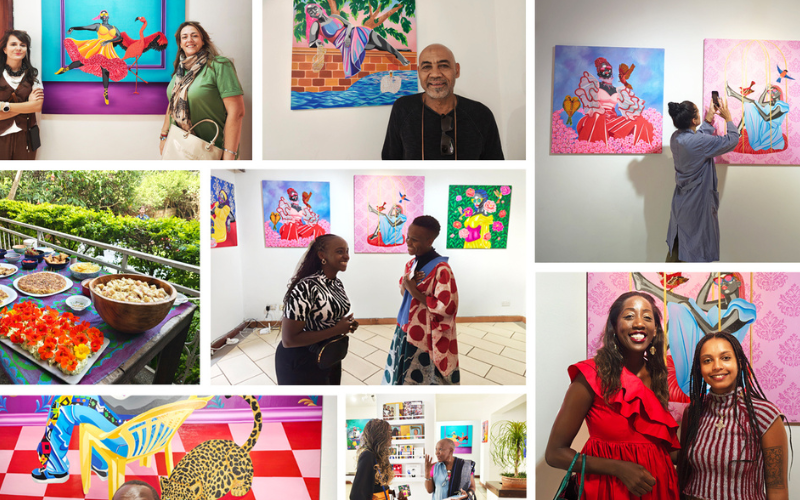
Angela Wambui’s first solo exhibition, Threads of Consciousness, opened on November 22 at Peponi Gardens in Westlands and runs until December 15.
Curated by Verónica Paradinas of GravitArt Gallery, the exhibition features 16 mixed-media colourful artworks that explore the interplay between the conscious and the unconscious.
In this body of work, Wambui combines acrylics, oils, and beadwork to create textured pieces that move between the visible and unseen. Her choice of materials is deliberate in expanding the story.
To her, oil stands for clarity and conscious thought. The acrylics and oils represent the tangible and visible world, while the beads depict the instinctive patterns of the subconscious and the unconscious world, like fears, vulnerabilities, and hidden aspects of self.
Through this duality, she creates serene pieces that examine introspection and selfhood. Animals and plants in many of her pieces represent the collective unconscious.
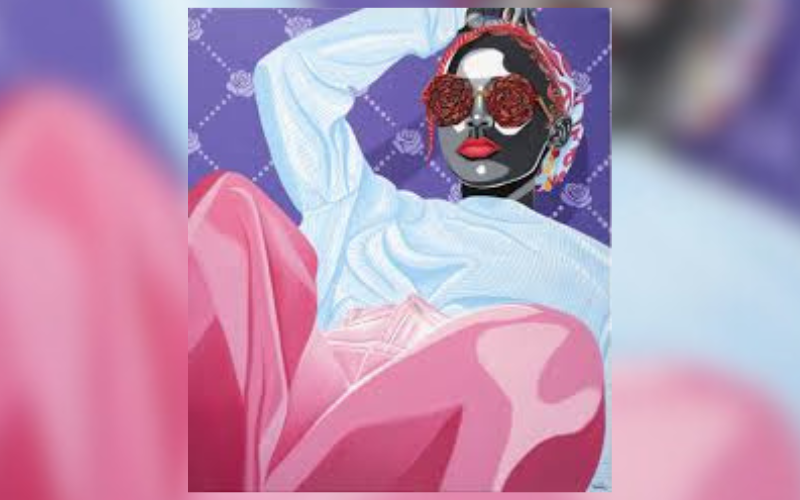
One of the pieces is Coffee?, in which she shows a woman staying present. She is seated holding a cup of coffee, and around her are flower patterns.
In Stillness, a woman is seated on grass holding a dragonfly. Here, she explores the fleeting nature of stillness, which also brings a sense of wonder and grounds us in its beauty.
She invites viewers to slow down and pay attention to what normally goes unseen in the rush of daily life. She chose a dragonfly to represent transformation and lightness.
In Graceful Dancers, she finds a resemblance between a ballerina and a flamingo. These two are figures of elegance, and this covers their endurance. The flamingo endures harsh climates and saline waters, while the ballerina goes through blisters and exhaustion for that perfect movement.
The Jungle We Live In presents a woman seated on a crocodile and surrounded by lush flowers and trees. This extends her interest in internal dualities by highlighting the coexistence of courage and fear, instinct and reason, in the human psyche.
“This exhibition feels like an unveiling of myself to the world, a moment of vulnerability and a powerful step into new beginnings. my practice focuses on bringing inner experiences into visual narratives,” Wambui says.
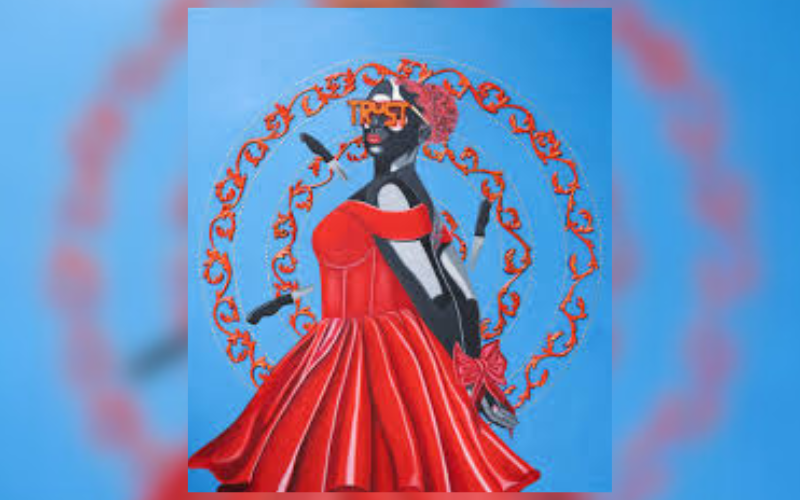
In the piece titled Trust, she shows a woman in a red gown shielded with flowers while knives are thrown at her. With this, she explores the balance of being vulnerable and having faith.
“Through this intimate exploration, trust becomes both an expression of courage and a quiet acknowledgement of fear. It captures the tension between openness and self-protection, revealing that genuine trust is not the absence of danger but the willingness to face it with hope,” Paradinas says.
Paradinas interprets Wambui’s artworks as open spaces for viewers to engage with themes of vulnerability, identity, and internal multiplicity in their own way.
“The works function as mirrors, proposing moments of reflection and healing where the boundary between the seen and unseen becomes porous,” she says.