

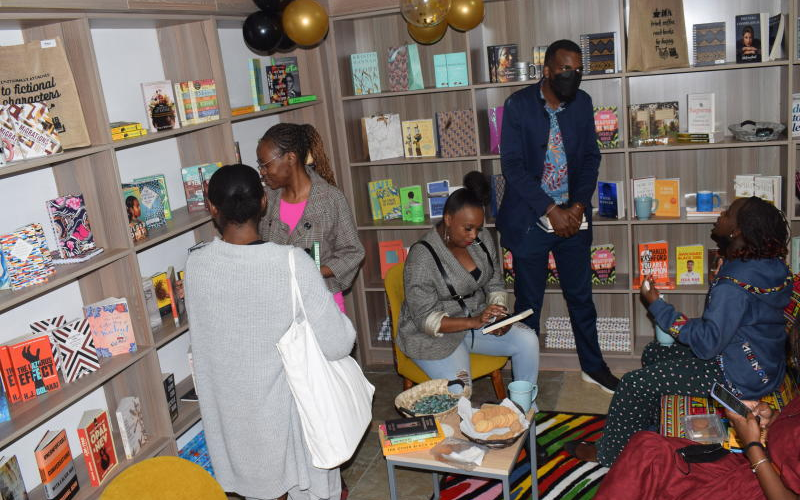
This is a perfect time to reach for a festive read. But a stroll along book aisles tells a story of the absence of Christmas-themed fiction by Kenyan authors for adults. So far, we only have Christmas Without Tusker by Meja Mwangi and A Special Christmas: Who Stole Baby Jesus? by Maureen Njuguna.
The perception of a holiday reading list for Lexa Lubanga, host of the annual Kenyan Readathon, is light reads that also allow for time for festivities. Lubanga has been thinking about how Kenyan fiction fits into the holiday season and the importance of festive-themed reading.
She has curated holiday-themed Kenyan titles to encourage readers to engage with them in a relaxed way to reflect the festive mood. In her list, most of these kinds of books are based on family sagas, humour, and political satire.
This approach, she says, helps readers discover new genres and styles, thus fostering a lifelong love for reading.
The holidays, known for rest and reflection, are a perfect time to get into relaxing reading plans. Lubanga adds that readers can explore themes and timing that reflect their personal surroundings and experiences, thus making it relatable.
Lubanga believes Kenyans have a distinct holiday reading culture, even if it is not always formally recognised.
She encourages diverse ways of engaging with local works to make reading enjoyable. Young readers are spoilt for choice with Christmas-themed or family-centred books that can cultivate a culture of reading.
She views that holiday-themed books are not only those about Christmas. Many Kenyan stories revolve around family and reunions, which hold the festive mood. Other elements include nostalgia, travel, and homecoming.
While there are still gaps specifically for festive Kenyan fiction, she says newer authors, especially those writing children’s books and poetry, are experimenting more openly with seasonal and celebratory storylines.
“Poetry, like the works of Jared Angira, like Tides of Time: Selected Poems, and poems by J.K.S. Makokha, even without explicit holiday settings, evokes reflective warmth associated with the season,” she says.
Personally, Lubanga likes books that you can read in one sitting for December. Romance and poetry take over her holiday reading time, as they are easy to consume amidst festivities. Long-form novels, she says, demand solitude, while festive reading leaves time to bond with family and friends.
Her go-to holiday pick is Christmas Without Tusker by Meja Mwangi, a title she rereads each year. It tells the story of the conflict between the men and women of Kambi, where the women need the men at home to celebrate Christmas.
The men realise they made a big mistake in allowing women to control the traditionally male-run bar business. The townspeople worry if there will be a Christmas without Tusker.
“Meja Mwangi’s humour makes the book an enjoyable read for the holiday season that resonates with many homes,” she says.
For light reads that don’t necessarily talk about Christmas but are ideal for the season, she recommends Best of Whispers by Wahome Mutahi since it would ease up on your heavy reading, and its humour is unmatched.
Back-Fence Talk and Other Vices, by Caroline Kinya Mbaya, is a collection of short stories that addresses different communities and their cultures, love and relationships.
What’s selling off the shelves at Nuria Bookstore presently are 50 Memos to Men and Sexorcised by Silas Nyanchwani, Joan Thatiah’s Confessions of Nairobi Men and Confessions of Nairobi Women, Big Little Fights by Jackson Biko, and the Unplugged series by Jacob Aliet, reflecting what readers are looking for.
Abdullahi Bulle, founder of Nuria Bookstore, explained that the few Christmas books for adults by Kenyan authors are because the market is still so small that seasonal books would mean less sales during other months.
Lubanga’s childhood encounter with Kenyan-authored books enabled her to consume oral literature such as folk tales and storytelling.
As she grew older, she got introduced to more serious written texts, and she became aware of the many notable works by Kenyan authors, which motivated her to pursue more of that.
“That is when I realised the importance of promoting local works in all their forms, whether printed books, digital writing, or oral traditions,” she says.
That resulted in her founding the Kenyan Readathon, an annual September initiative to encourage readers to explore Kenyan books and to share their reading progress with others.
The Readathon is now a pivotal cultural and literary campaign that intensifies her passion for supporting Kenyan literature, and she dreams of expanding it to a continental reading culture that values African stories.