

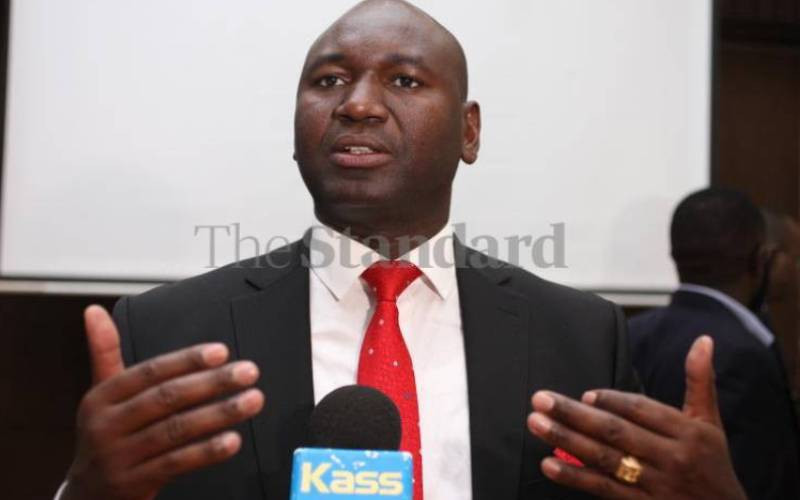
The government will reopen Grade 9 senior school placements for seven days starting Tuesday after widespread complaints from parents over mismatches between learner choices and available slots.
Basic Education Principal Secretary Julius Bitok said learners can adjust their school preferences through Grade 9 institutions or county education offices during the review period that runs until December 30.
The climbdown marks the first major crisis for Competency-Based Education (CBE), the new system replacing Kenya’s 44-year-old 8-4-4 structure.
Follow The Standard
channel
on WhatsApp
More than 1.13 million learners sat the Kenya Junior Secondary Education Assessment (KJSEA) in November, making this Kenya’s largest education transition.
Parents flooded social media with complaints after the Ministry of Education’s SMS system crashed repeatedly on Friday, returning error messages stating “requested info is unavailable” when families tried accessing placement results.
The Kenya Education Management Information System portal remained largely unresponsive through the weekend, forcing parents to show up at schools during the December holidays seeking clarity.
The technical meltdown compounded deeper concerns about the automated placement formula.
Parents with near-perfect-scoring children found them placed in subcounty day schools, triggering confusion over how the system ranked preferences against performance.
Confusion deepened over CBE’s new grading system, which replaced familiar A-to-E marks with qualitative descriptors like Exceeding Expectations and Meeting Expectations.
Top performers expressed dismay after being placed in Arts and Sports pathways despite choosing Science, Technology, Engineering and Mathematics (STEM).
“Being a pioneer undertaking, the government appreciates and empathises with parents, learners and other stakeholders’ anxieties and uncertainties around the transition to Grade 10,” noted Bitok in a statement on Sunday, December 21.
The ministry attributed placement discontent to fierce competition for popular schools, communication breakdowns between parents and institutions and variances between chosen pathways and assessment outcomes.
Under CBE, learners select from three pathways: STEM, Social Sciences or Arts and Sports. Each candidate submitted 12 school choices ranked by preference across four categories: national, extra-county, county and subcounty schools.
The ministry assessed learners using a staggered formula: 60 per cent from Grade 9 examinations, 20 per cent from Kenya Primary School Education Assessment (KPSEA) in Grade 6 and 20 per cent from continuous teacher evaluations in Grades 7 and 8.
About 59 per cent of candidates qualified for the STEM pathway, while 48 per cent qualified for Social Sciences and Arts and Sports, according to ministry data.
More than 600,000 learners chose STEM, 437,000 picked Social Sciences, and 124,000 opted for Arts and Sports.
An automated system will guide the review process, matching learner preferences with performance records and school capacity.
The ministry will also correct incorrect gender entries during the window.
Parents have demanded that the ministry publish a list of senior schools with available spaces to guide reapplication, warning that without such information, the exercise could disadvantage families without access to timely guidance.
Bitok urged stakeholders to engage constructively in the placement process as the government refines CBE.
Learners transition to universities in 2029.
Follow The Standard
channel
on WhatsApp
The government will reopen Grade 9 senior school placements for seven days starting Tuesday after widespread complaints from parents over mismatches between learner choices and available slots.
Basic Education Principal Secretary Julius Bitok said learners can
adjust their school preferences through Grade 9 institutions
or county education offices during the review period that runs until December 30.
The climbdown marks the first major crisis for Competency-Based Education (CBE), the new system replacing Kenya’s 44-year-old 8-4-4 structure.
Follow The Standard
channel
on WhatsApp
More than 1.13 million learners sat the Kenya Junior Secondary Education Assessment (KJSEA) in November, making this Kenya’s largest education transition.
Parents flooded social media with complaints after the
Ministry of Education’s SMS system crashed repeatedly on Friday
, returning error messages stating “requested info is unavailable” when families tried accessing placement results.
The Kenya Education Management Information System portal remained largely unresponsive through the weekend, forcing parents to show up at schools during the December holidays seeking clarity.
The technical meltdown compounded deeper concerns about the automated placement formula.
Parents with near-perfect-scoring children found them placed in subcounty day schools, triggering confusion over how the system ranked preferences against performance.
Confusion deepened over CBE’s new grading system, which replaced familiar A-to-E marks with qualitative descriptors like Exceeding Expectations and Meeting Expectations.
Top performers expressed dismay after being placed in Arts and Sports pathways despite choosing Science, Technology, Engineering and Mathematics (STEM).
“Being a pioneer undertaking, the government appreciates and empathises with parents, learners and other stakeholders’ anxieties and uncertainties around the transition to Grade 10,” noted Bitok in a statement on Sunday, December 21.
The ministry attributed placement discontent to fierce competition for popular schools, communication breakdowns between parents and institutions and variances between chosen pathways and assessment outcomes.
Under CBE, learners select from three pathways: STEM, Social Sciences or Arts and Sports. Each candidate submitted 12 school choices ranked by preference across four categories: national, extra-county, county and subcounty schools.
The ministry assessed learners using a staggered formula: 60 per cent from Grade 9 examinations, 20 per cent from Kenya Primary School Education Assessment (KPSEA) in Grade 6 and 20 per cent from continuous teacher evaluations in Grades 7 and 8.
Stay informed. Subscribe to our newsletter
About 59 per cent of candidates qualified for the STEM pathway, while 48 per cent qualified for Social Sciences and Arts and Sports, according to ministry data.
More than 600,000 learners chose STEM, 437,000 picked Social Sciences, and 124,000 opted for Arts and Sports.
An automated system will guide the review process, matching learner preferences with performance records and school capacity.
The ministry will also correct incorrect gender entries during the window.
Parents have demanded that the ministry publish a list of senior schools with available spaces to guide reapplication, warning that without such information, the exercise could disadvantage families without access to timely guidance.
Bitok urged stakeholders to engage constructively in the placement process as the government refines CBE.
Learners transition to universities in 2029.
Follow The Standard
channel
on WhatsApp
By David Njaaga