

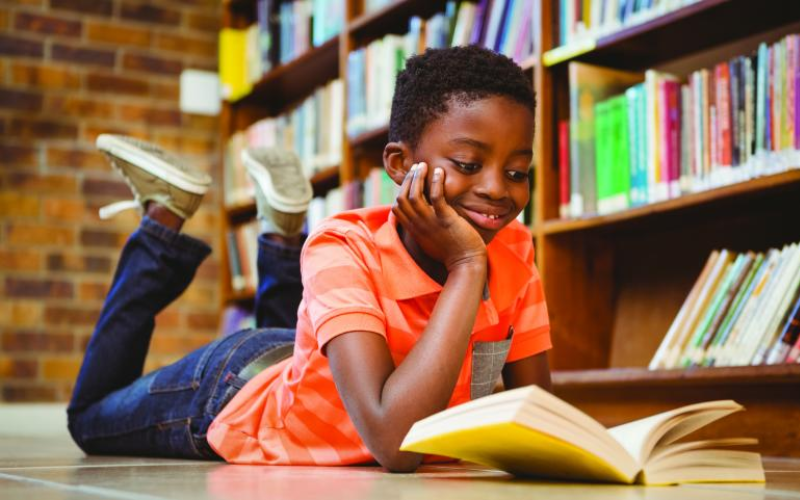
Before going with a child to a new social setting, an introverted one will likely need a conversation to prepare them for what to expect. Once they arrive, they will likely need more time to adapt before they socialise.
Children are typically expected to be socially open even without an established rapport. A reserved child preferring solitude is said to lack good social skills; therefore, their introversion is viewed as a flaw, something to be fixed.
Adults urge them to open up and greet strangers, with comments like, “Why don’t you speak?” or “You are shy,” which are detrimental to a child who may start internalising this personal attribute as something wrong with them.
In this instance, psychologist and counsellor Linah Ochieng’ advises parents to protect them instead of explaining their behaviour away when others question why a child is quiet. Constantly defending your child’s temperament can build people-pleasing habits that follow children into adulthood.
World Introvert Day, celebrated on January 2, a day after the busy holidays, was selected by Felicitas Heyne, a German psychologist and author, for introverts to enjoy rest and to increase awareness about introversion.
While much has been discussed about it, introverted children are rarely centred in the African context.
Many introverted children grow up trying to navigate environments that celebrate constant group participation; a parenting style equipped with information is needed.
Empowering an introverted child’s self-awareness and self-acceptance begins at home. Linah says that the parents’ first responsibility is to offer them their own spaces as they start to discover who they are.
But living in a socially stimulating world is one of the difficult realities introverted children face today for being reserved.
“Parents should not force children to socialise or play outside with others if they don’t wish to. Unfortunately, many parents do so because they don’t understand the kind of child they have,” says Linah.
She observes that the new competency-based curriculum, which makes group participation and teamwork compulsory and graded, leaves introverted children feeling unsupported and inadequate when, in reality, they are different.
Viewing that good participation does not always mean speaking up, she advises teachers to assign roles that allow introverted children to contribute without forcing them into constant social performance.
In addition, she says, teachers should put into practice the educational psychology they learnt during their training.
“These kinds of children listen carefully and think deeply. They are observant and thoughtful, and given space, their relationships tend to be deep,” she says.
An introverted child needs plenty of alone time to recharge their energy after being in social situations. Linah says that respecting solitude doesn’t mean isolation, as parents can encourage them to interact with their siblings or close friends, while serving the need for alone time helps maintain balance.
She says one of the concerns parents have is knowing whether a quiet child is introverted or emotionally distressed. Parents are urged to observe body language and comfort.
“If a child suddenly becomes withdrawn after being expressive, and that change is prolonged, it may be a concern,” she says.
She encourages parents to be approachable and emotionally available and says that when a child feels safe, they will open up in their own time. Creating a calm and predictable home environment is more effective than asking many questions, she says.
She says that adults forget that children are individuals, but they project their own expectations onto them. She adds that an introverted child may choose solitude because that is where they feel grounded.
“Introverted children will engage deeply when something matters to them. Once that engagement ends, they naturally go back to solitude to recharge,” she explains.
Linah says that routine and predictability give emotional safety to a child. When routines are absent, she says, children could feel disorganised, confused, and anxious.
“This applies to all children, but introverted children feel disruptions more intensely,” she says.
She adds that introverted children process stimulation deeply, with prolonged outings and forced social activities quickly exhausting them.
Overstimulation may show up as tantrums, withdrawal, crying, or sudden quietness, which may be mistaken as signs of bad behaviour, yet they are of discomfort. Constant pressure to socialise also affects self-esteem, and over time, children may begin associating social spaces with anxiety.
Linah explains that a healthy child eats well, sleeps well, plays comfortably even when alone, and is at ease.
Parents can raise confident introverted children by posing reassuring questions that allow children flexibility, such as, “Would you like to try? I’m here if you need support.”
“When supported well, introverted children develop strengths, like focusing deeply and bringing meaning and care to tasks,” she says.