

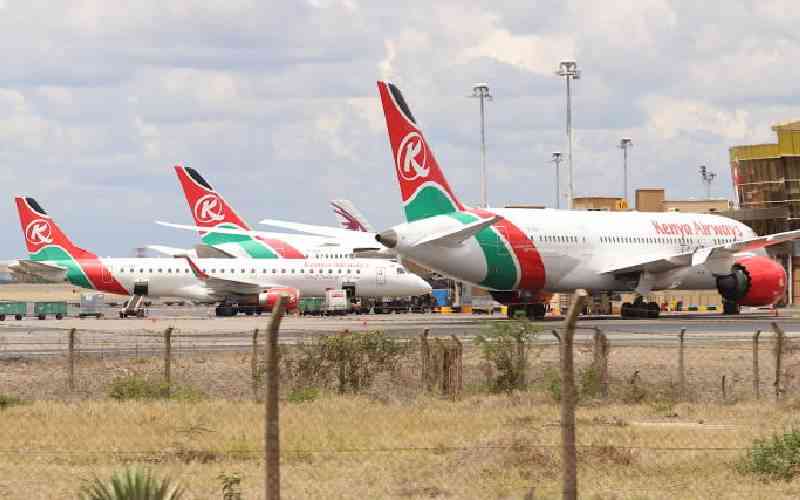
A hallmark of an airline’s operational excellence is the optimisation of its network. This is the disciplined pursuit of efficiency: Designing routes and allocating resources in ways that maximise value while minimising costs. It requires airlines to continually refine flight schedules, reshape route structures and deploy assets, most notably aircraft, with calculated intensity to extract the greatest return.
Put more plainly, network optimisation is the art of getting passengers and cargo to their destinations by the best possible combination of routes and timings while burning less fuel, using crews more productively and keeping other costs firmly in check. Kenya Airways (KQ), like many global carriers, has reshaped its route network as part of its post-pandemic recovery. It has withdrawn from routes with persistently weak load factors while consolidating flight and ground operations by redeploying capacity and increasing frequencies on its most profitable sectors. The result is a leaner, more efficient network calibrated to maximise returns rather than reach.
Even with a finely tuned network, some of the disruptions wrought by the pandemic persist. Chief among them is a global squeeze in the aviation supply chain. Aircraft sent for routine maintenance are taking longer to return to service, delayed by shortages of critical spare parts.
KQ has not been spared. Several aircraft due back in service have been held up, compounding operational strain. Within its network, optimised to the point of having little slack with no surplus aircraft to step in, disruptions in one sector quickly reverberated across others. This fragility was led bare last month. A Boeing 787 Dreamliner sustained significant engine damage following a bird strike at London Gatwick. Shortly thereafter, a Boeing 737 freighter suffered a similar incident at Nairobi’s Jomo Kenyatta International Airport with its windscreen shattered. Each episode, isolated in itself, rippled through an already tightly balanced network.
Follow The Standard
channel
on WhatsApp
Such incidents typically trigger a cascade of operational adjustments. Flights and passengers must be rescheduled; some passengers are downgraded when replacement aircraft are smaller than planned; others are re-booked onto later services; and in extreme cases, airlines provide meals and accommodation in accordance with international conventions governing passenger rights. Less visible, but no less consequential, are the additional contingencies that inevitably rise and demand resolution.
It takes far more than a cockpit crew to lift an aircraft into the air. At least 100 people are involved in a single successful departure ranging from pilots and engineers to loaders and a host of back-office professionals; analysts, accountants and sales staff among them. For KQ, which conducts roughly 110 take-offs and landings each day, this amounts to more than 3,300 man-hours expended daily.
Even a routine turnaround of a Boeing 787 Dreamliner, configured to carry up to 234 passengers, requires a minimum of 40 operational staff. The result is a stark ratio: One employee for six customers. By contrast, banking is far less labour-intensive. Central Bank of Kenya data from 2020 show one bank employee serving on average, 1,733 customers. Unsurprisingly, staff costs weigh heavily on airline finances.
These pressures intensify when operations are disrupted. Each passenger who must be rerouted, rescheduled or accommodated adds a burden on already stretched teams. Management’s response this year is pragmatic: Restore the entire fleet from maintenance to active service and induct new aircraft, some providing much-needed operational redundancy.
Captain Kamal is the Ag CEO of Kenya Airways
Follow The Standard
channel
on WhatsApp
A hallmark of an airline’s operational excellence is the optimisation of its network. This is the disciplined pursuit of efficiency: Designing routes and allocating resources in ways that maximise value while minimising costs. It requires airlines to continually refine flight schedules, reshape route structures and deploy assets, most notably aircraft, with calculated intensity to extract the greatest return.
Put more plainly, network optimisation is the art of getting passengers and cargo to their destinations by the best possible combination of routes and timings while burning less fuel, using crews more productively and keeping other costs firmly in check. Kenya Airways (KQ), like many global carriers, has reshaped its route network as part of its post-pandemic recovery. It has withdrawn from routes with persistently weak load factors while consolidating flight and ground operations by redeploying capacity and increasing frequencies on its most profitable sectors. The result is a leaner, more efficient network calibrated to maximise returns rather than reach.
Even with a finely tuned network, some of the disruptions wrought by the pandemic persist. Chief among them is a global squeeze in the aviation supply chain. Aircraft sent for routine maintenance are taking longer to return to service, delayed by shortages of critical spare parts.
KQ has not been spared. Several aircraft due back in service have been held up, compounding operational strain. Within its network, optimised to the point of having little slack with no surplus aircraft to step in, disruptions in one sector quickly reverberated across others. This fragility was led bare last month. A Boeing 787 Dreamliner sustained significant engine damage following a bird strike at London Gatwick. Shortly thereafter, a Boeing 737 freighter suffered a similar incident at Nairobi’s Jomo Kenyatta International Airport with its windscreen shattered. Each episode, isolated in itself, rippled through an already tightly balanced network.
Follow The Standard
channel
on WhatsApp
Such incidents typically trigger a cascade of operational adjustments. Flights and passengers must be rescheduled; some passengers are downgraded when replacement aircraft are smaller than planned; others are re-booked onto later services; and in extreme cases, airlines provide meals and accommodation in accordance with international conventions governing passenger rights. Less visible, but no less consequential, are the additional contingencies that inevitably rise and demand resolution.
It takes far more than a cockpit crew to lift an aircraft into the air. At least 100 people are involved in a single successful departure ranging from pilots and engineers to loaders and a host of back-office professionals; analysts, accountants and sales staff among them. For KQ, which conducts roughly 110 take-offs and landings each day, this amounts to more than 3,300 man-hours expended daily.
Even a routine turnaround of a Boeing 787 Dreamliner, configured to carry up to 234 passengers, requires a minimum of 40 operational staff. The result is a stark ratio: One employee for six customers. By contrast, banking is far less labour-intensive. Central Bank of Kenya data from 2020 show one bank employee serving on average, 1,733 customers. Unsurprisingly, staff costs weigh heavily on airline finances.
These pressures intensify when operations are disrupted. Each passenger who must be rerouted, rescheduled or accommodated adds a burden on already stretched teams. Management’s response this year is pragmatic: Restore the entire fleet from maintenance to active service and induct new aircraft, some providing much-needed operational redundancy.
Captain Kamal is the Ag CEO of Kenya Airways
Follow The Standard
channel
on WhatsApp
By George Kamal