

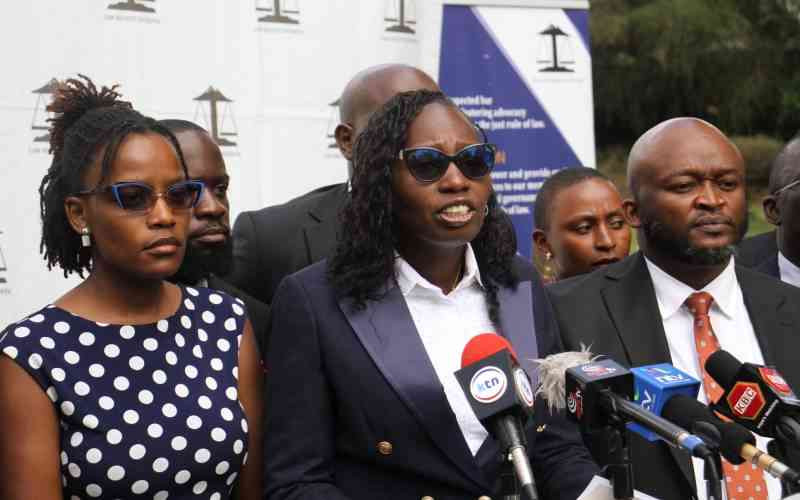
Over 18,000 lawyers in Kenya will have to wait until at least Friday January 23, 2026, to know their fate over engagement with public entities.
Despite a plea with the High Court, Judge Samwel Mohochi did not vary his decision of January 12, which barred all public entities from engaging private law firms and lawyers.
Over 100 lawyers, let by Faith Odhiambo, the President Law Society of Kenya (LSK), attended a virtual court session to unanimously challenge the order.
Follow The Standard
channel
on WhatsApp
Professor Tom Ojienda told off judge Mohochi for issuing the orders in the petition filed by Busia Senator Okiya Omtatah, Dr Magare Gikenyi, Laban Omusundi, among others.
“You have led lawyers into trouble! What you did was wrong and the order has a ripple effect that is detrimental to all the 47 counties,” Ojienda informed the judge.
He deposed that the order threatened legal practice and profession.
“You do not know what you have done. You should not have made those orders. You did bad, you have inconvenienced people and hurt them,” he deposed.
Lawyer Kipkoech Ngetich pointed out that engagements between government entities and private lawyers were provided for under public procurement and disposal act of 2020.
He said that the court had no authority to issue the order and the petition was improperly filed.
He said that the court risked overrunning the public procurement administrative review board, a constitutional institution put in place to handle external procurement.
Kipkoech submitted that Mohochi criminalised actions already undertaken, including legal payments for services rendered by law firms.
“The decision has negative influence across the practice of law and has subjected the over 18,000 lawyers to prejudice,” he deposed.
Lawyer Peter Wanyama alleged that public entities do not usually pay agency fees and it always forces lawyers to initiate a court proceeding to compel the payment of legal fees.
He said that they receive orders of mandamus issued by other judges and Mohochi’s order went against other orders issued by judges.
He insisted that lawyers get frustrated when following up on delayed payments, but they had been pointed out as accomplices to misuse of public funds.
“The legal fees for all services to public entities are always capped and no lawyer can be paid above the stipulated amounts,” he submitted.
Dr Muthomi Thiankolu pointed out that the orders should not have been issued without allowing law firms opportunities to defend themselves, because it had serious repercussions and created a crisis.
He further claimed that criminal allegations were stereotyped in the petition, as all lawyers were described as corrupt, despite there being honest lawyers.
Nairobi County, affected by the order, submitted that it only had 17 legal county attorneys who were presumably handling over 1,100 cases.
“The county is unable to comply with legitimate court orders, including that ordering payments of fees. It should be allowed to dispense its duties as provided by the law.”
In contrast, Lawyer Jacqueline Manani, representing the Public Service Commission supported Mohochi’s orders.
She deposed that the same ensured the public service was efficient and effective and promoted the values and principles of public service, to avoid wastage of public resources.
Manani argued that it was not efficient nor economic use of public money to engage private law firms when the government has employed attorneys.
“Where in-house counsels are unable to handle the cases, the same is escalated to the Attorney General, who procures external services,” she stated.
She stated that the procurement must be necessary. Further, she added that the government entities had pending bills to the law firm and it was unreasonable to continue engaging them.
“The court should only vary the orders to allow fees owed to lawyers to be paid, but stop new engagements,” she deposed.
The court temporarily barred all government entities from outsourcing legal services noting that they had the Attorney General, state counsels, solicitor general and county attorneys.
“The controller of budget and all public servants are barred from approving any vote or funds for the acquisition of external legal service,” the judge ruled.
In the petition, the Omtatah and others argue that outsourcing legal work wastes public money and violates the Constitution.
The hearing will continue on January 23, 2026.
Follow The Standard
channel
on WhatsApp
Over 18,000 lawyers in Kenya will have to wait until at least Friday January 23, 2026, to know their fate over engagement with public entities.
Despite a plea with the High Court, Judge Samwel Mohochi did not vary his decision of January 12, which
barred all public entities
from engaging private law firms and lawyers.
Over 100 lawyers, let by Faith Odhiambo, the President Law Society of Kenya (LSK), attended a virtual court session to unanimously challenge the order.
Follow The Standard
channel
on WhatsApp
Professor Tom Ojienda told off judge Mohochi for issuing the orders in the petition filed by Busia Senator Okiya Omtatah, Dr Magare Gikenyi, Laban Omusundi, among others.
“You have led lawyers into trouble! What you did was wrong and the order has a ripple effect that is detrimental to all the 47 counties,” Ojienda informed the judge.
He deposed that the order threatened legal practice and profession.
“You do not know what you have done. You should not have made those orders. You did bad, you have inconvenienced people and hurt them,” he deposed.
Lawyer Kipkoech Ngetich pointed out that engagements between government entities and private lawyers
were provided for
under public procurement and disposal act of 2020.
He said that the court had no authority to issue the order and the petition was improperly filed.
He said that the court risked overrunning the public procurement administrative review board, a constitutional institution put in place to handle external procurement.
Kipkoech submitted that Mohochi criminalised actions already undertaken, including legal payments for services rendered by law firms.
“The decision has negative influence across the practice of law and has subjected the over 18,000 lawyers to prejudice,” he deposed.
Lawyer Peter Wanyama alleged that public entities do not usually pay agency fees and it always forces lawyers to initiate a court proceeding to compel the payment of legal fees.
He said that they receive orders of mandamus issued by other judges and Mohochi’s order went against other orders issued by judges.
Stay informed. Subscribe to our newsletter
He insisted that
lawyers get frustrated
when following up on delayed payments, but they had been pointed out as accomplices to misuse of public funds.
“The legal fees for all services to public entities are always capped and no lawyer can be paid above the stipulated amounts,” he submitted.
Dr Muthomi Thiankolu pointed out that the orders should not have been issued without allowing law firms opportunities to defend themselves, because it had serious repercussions and created a crisis.
He further claimed that criminal allegations were stereotyped in the petition, as all lawyers were described as corrupt, despite there being honest lawyers.
Nairobi County, affected by the order, submitted that it only had 17 legal county attorneys who were presumably handling over 1,100 cases.
“The county is unable to comply with legitimate court orders, including that ordering payments of fees. It should be allowed to dispense its duties as provided by the law.”
In contrast, Lawyer Jacqueline Manani, representing the Public Service Commission supported Mohochi’s orders.
She deposed that the same ensured the public service was efficient and effective and promoted the values and principles of public service, to avoid wastage of public resources.
Manani argued that it was not efficient nor economic use of public money to engage private law firms when the government has employed attorneys.
“Where in-house counsels are unable to handle the cases, the same is escalated to the Attorney General, who procures external services,” she stated.
She stated that the procurement must be necessary. Further, she added that the government entities had pending bills to the law firm and it was unreasonable to continue engaging them.
“The court should only
vary the orders
to allow fees owed to lawyers to be paid, but stop new engagements,” she deposed.
The court temporarily barred all government entities from outsourcing legal services noting that they had the Attorney General, state counsels, solicitor general and county attorneys.
“The controller of budget and all public servants are barred from approving any vote or funds for the acquisition of external legal service,” the judge ruled.
In the petition, the Omtatah and others argue that outsourcing legal work wastes public money and violates the Constitution.
The hearing will continue on January 23, 2026.
Follow The Standard
channel
on WhatsApp
By Daniel Chege