

In moments of crisis, the instinct to speak quickly is understandable. Silence can be read as indifference, delay as evasion.
Yet speed in communication, particularly by political actors, carries its own risks. What the public encounters first are rarely the facts of an incident. It is the statements issued about it. Language, tone, timing, and framing quickly shape how responsibility, intent, and credibility are understood.
This is why crisis communication is not simply about responding. It is about responding well.
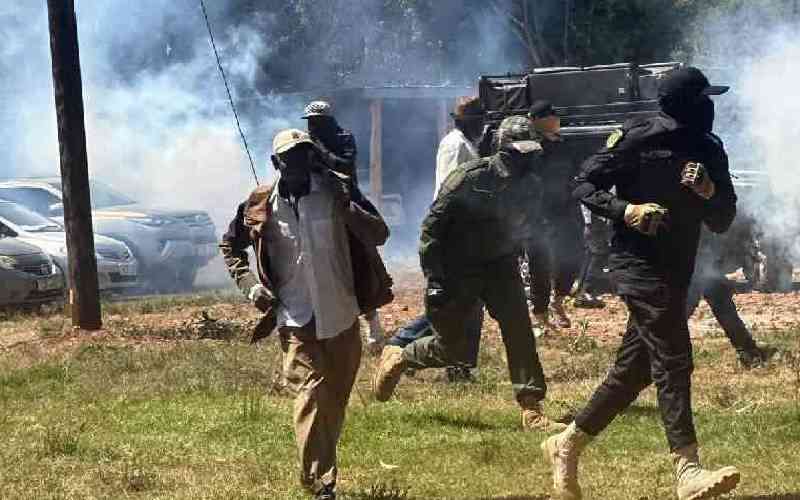
The recent disruption of a religious service in Othaya, Nyeri County, highlights the consequences of uncoordinated public communication. In the immediate aftermath, investigative authorities committed to establishing facts and conducting inquiries.
Follow The Standard
channel
on WhatsApp
At the same time, political statements entered the public space that leaned toward interpretation and attribution. These messages did not merely differ in emphasis. They pointed in different directions.
From a communication standpoint, this divergence matters. Public discourse does not operate as a collection of isolated statements. It functions as a system. When one voice signals investigation and due process while another signals conclusion or motive, the public is left to reconcile the contradiction. In such cases, communication does not clarify events. It unsettles them.
It is important to recognise that this is not primarily a question of intent. Political actors often speak to condemn violence, reassure supporters, or assert moral authority. However, political language does not convey itself as a personal expression. It is heard as institutional speech. When politicians speak, especially in moments of crisis, they are widely perceived as speaking on behalf of the state regardless of their intention.
This places a greater burden on political communication.
In the early hours following a disruptive event, uncertainty reaches its peak. Facts are incomplete. Emotions are heightened. Speculation spreads easily. Communication during this phase should therefore prioritise stability. That means limiting public statements to what is known, what is being done, and who is responsible for doing it. Interpretation, motive, and attribution are better left to processes designed to establish them.
Symbolic meaning
When political statements move too quickly into interpretation, even tentatively, they can complicate those very processes. Investigations risk being perceived as confirmatory rather than impartial. Institutions tasked with establishing facts are placed in an unfair position, expected to either validate or contradict narratives already circulating in the public domain.
This dynamic is especially sensitive when incidents occur in places of worship. Such spaces carry deep social and symbolic meaning. They are widely understood as sites of moral neutrality and collective belonging. Disruptions in these contexts are emotionally charged, and public communication following them must be especially careful. Language that appears to politicise such incidents, even indirectly, risks deepening division rather than restoring calm.
It is worth emphasising that coordinated communication does not mean uniformity of speech or suppression of political voice. Nor does it require silence. It requires sequencing. Investigative institutions should be allowed to speak first and establish the process. Reassurance should focus on constitutional protection, public safety, and due process. Political interpretation, if it must come, should follow facts rather than pre-empt them.
For communication professionals, this is a familiar principle. Effective crisis communication is not about being the first to issue a statement. It is about understanding how statements will be read, by whom, and in what context. Words carry weight beyond their immediate audience. In polarised environments, they are read relationally and competitively.
The lesson from Othaya is not that leaders should avoid speaking, but that they should speak with greater care. When political actors recognise the institutional weight of their words and allow the process to lead the narrative, communication supports governance rather than complicating it. In moments of crisis, that distinction matters more than speed.
Follow The Standard
channel
on WhatsApp
In moments of crisis, the instinct to speak quickly is understandable. Silence can be read as indifference, delay as evasion.
Yet speed in communication, particularly by political actors, carries its own risks. What the public encounters first are rarely the facts of an incident. It is the statements issued about it. Language, tone, timing, and framing quickly shape how responsibility, intent, and credibility are understood.
This is why crisis communication is not simply about responding. It is about responding well.
The recent disruption of a religious service in Othaya, Nyeri County, highlights the consequences of uncoordinated public communication. In the immediate aftermath, investigative authorities committed to establishing facts and conducting inquiries.
Follow The Standard
channel
on WhatsApp
At the same time, political statements entered the public space that leaned toward interpretation and attribution. These messages did not merely differ in emphasis. They pointed in different directions.
From a communication standpoint, this divergence matters. Public discourse does not operate as a collection of isolated statements. It functions as a system. When one voice signals investigation and due process while another signals conclusion or motive, the public is left to reconcile the contradiction. In such cases, communication does not clarify events. It unsettles them.
It is important to recognise that this is not primarily a question of intent. Political actors often speak to condemn violence, reassure supporters, or assert moral authority. However, political language does not convey itself as a personal expression. It is heard as institutional speech. When politicians speak, especially in moments of crisis, they are widely perceived as speaking on behalf of the state regardless of their intention.
This places a greater burden on political communication.
In the early hours following a disruptive event, uncertainty reaches its peak. Facts are incomplete. Emotions are heightened. Speculation spreads easily. Communication during this phase should therefore prioritise stability. That means limiting public statements to what is known, what is being done, and who is responsible for doing it. Interpretation, motive, and attribution are better left to processes designed to establish them.
Symbolic meaning
When political statements move too quickly into interpretation, even tentatively, they can complicate those very processes. Investigations risk being perceived as confirmatory rather than impartial. Institutions tasked with establishing facts are placed in an unfair position, expected to either validate or contradict narratives already circulating in the public domain.
This dynamic is especially sensitive when incidents occur in places of worship. Such spaces carry deep social and symbolic meaning. They are widely understood as sites of moral neutrality and collective belonging. Disruptions in these contexts are emotionally charged, and public communication following them must be especially careful. Language that appears to politicise such incidents, even indirectly, risks deepening division rather than restoring calm.
It is worth emphasising that coordinated communication does not mean uniformity of speech or suppression of political voice. Nor does it require silence. It requires sequencing. Investigative institutions should be allowed to speak first and establish the process. Reassurance should focus on constitutional protection, public safety, and due process. Political interpretation, if it must come, should follow facts rather than pre-empt them.
For communication professionals, this is a familiar principle. Effective crisis communication is not about being the first to issue a statement. It is about understanding how statements will be read, by whom, and in what context. Words carry weight beyond their immediate audience. In polarised environments, they are read relationally and competitively.
The lesson from Othaya is not that leaders should avoid speaking, but that they should speak with greater care. When political actors recognise the institutional weight of their words and allow the process to lead the narrative, communication supports governance rather than complicating it. In moments of crisis, that distinction matters more than speed.
Stay informed. Subscribe to our newsletter
Follow The Standard
channel
on WhatsApp
By Francis Wachira