

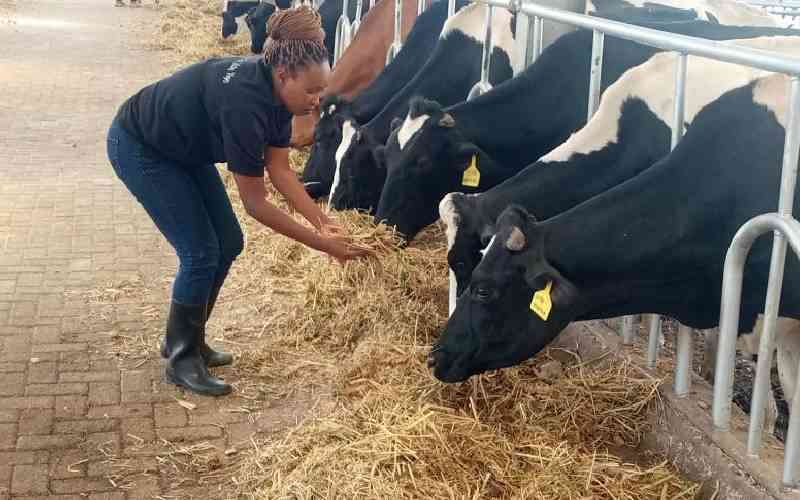
Kenya’s dairy sector is widely celebrated as one of Africa’s most dynamic. With a strong culture of milk consumption and thousands of households relying on dairy farming, the country has all the ingredients for high productivity. Yet, despite this potential, many farmers still experience modest yields compared to what their cows can achieve under consistent and optimal conditions. While conversations often focus on breeds, artificial insemination, or disease control, one foundational factor quietly shapes daily output, the feed quality.
Why feed quality matters more than many realise
Follow The Standard
channel
on WhatsApp
Milk production depends on the right balance of energy, protein, fibre, minerals, and vitamins. When this balance is both correct and consistent, cows convert feed into milk efficiently. When it fluctuates, productivity drops—regardless of breed or genetics. Many Kenyan farmers are not necessarily underfeeding their animals. The challenge lies in the wide variations in feed composition from batch to batch. This inconsistency directly affects milk yields, animal health, and long-term fertility.
A sector historically held back by fragmentation
Kenya’s feed industry has long been characterised by fragmented production, variable raw materials, and uneven quality control practices. Seasonal fluctuations in maize, wheat, and oilseed availability add further unpredictability.
The results include fluctuating milk output, digestive challenges in cows, increased veterinary interventions and hidden economic losses through wasted inputs and underperformance
Even farmers who have invested in improved breeds and housing feel the impact when feed quality is unstable.
Local manufacturing: Strengthening reliability and consistency
The sector is now seeing positive shifts. Increased investment in local feed manufacturing is helping improve quality assurance and strengthen regulatory oversight. Producing feeds locally allows for more consistent formulations, better alignment with Kenyan raw materials, improved traceability and testing and greater predictability for farmers throughout the year
This evolution is practical, structural, and directly aligned with the needs of dairy farmers.
How De Heus Kenya contributes to the solution
As part of this shift, De Heus Kenya is investing in large-scale local manufacturing to enhance consistency and nutritional precision. But the contribution goes beyond producing high-quality feed. A key part of the De Heus Kenya approach is farmer support. Nutrition works best when paired with guidance on proper ration planning, stage-specific feeding strategies, on-farm assessment and monitoring and tools to help farmers measure outcomes
By combining quality feed with practical advisory services, De Heus helps farmers make feeding decisions that translate directly into better productivity.
Unlocking Kenya’s dairy potential
As Kenya pursues food security and agricultural transformation, improving feed quality and consistency stands out as one of the most effective ways to unlock higher milk yields. It may not attract the same attention as major infrastructure projects, but it has a direct, measurable impact on farm profitability. Treating feed as a strategic input—rather than a secondary cost—can reshape the economics of dairy farming across the country. And through high feed standards and farmer-focused support, companies like De Heus are helping move the sector closer to its full potential.
The writer is a dairy expert at De Heus Kenya
Follow The Standard
channel
on WhatsApp
Why feed quality matters more than many realise
Follow The Standard
channel
on WhatsApp
Milk production depends on the right balance of energy, protein, fibre, minerals, and vitamins. When this balance is both correct
and consistent
, cows convert feed into milk efficiently. When it fluctuates, productivity drops—regardless of breed or genetics. Many Kenyan farmers are not necessarily underfeeding their animals. The challenge lies in the wide variations in feed composition from batch to batch. This inconsistency directly affects milk yields, animal health, and long-term fertility.
A sector historically held back by fragmentation
Kenya’s feed industry has long been characterised by fragmented production, variable raw materials, and uneven quality control practices. Seasonal fluctuations in maize, wheat, and oilseed availability add further unpredictability.
The results include fluctuating milk output, digestive challenges in cows, increased veterinary interventions and hidden economic losses through wasted inputs and underperformance
Even farmers who have invested in improved breeds and housing feel the impact when feed quality is unstable.
Local m
anufacturing: Strengthening r
eliability and c
onsistency
The sector is now seeing positive shifts. Increased investment in local feed manufacturing is helping improve quality assurance and strengthen regulatory oversight. Producing feeds locally allows for more consistent formulations, better alignment with Kenyan raw materials, improved traceability and testing and greater predictability for farmers throughout the year
This evolution is practical, structural, and directly aligned with the needs of dairy farmers.
How De Heus Kenya contributes to the solution
As part of this shift, De Heus Kenya is investing in large-scale local manufacturing to enhance consistency and nutritional precision. But the contribution goes beyond producing high-quality feed. A key part of the De Heus Kenya approach is farmer support. Nutrition works best when paired with guidance on proper ration planning, stage-specific feeding strategies, on-farm assessment and monitoring and tools to help farmers measure outcomes
By combining quality feed with practical advisory services, De Heus helps farmers make feeding decisions that translate directly into better productivity.
Stay informed. Subscribe to our newsletter
Unlocking Kenya’s dairy potential
As Kenya pursues food security and agricultural transformation, improving feed quality and consistency stands out as one of the most effective ways to unlock higher milk yields. It may not attract the same attention as major infrastructure projects, but it has a direct, measurable impact on farm profitability. Treating feed as a strategic input—rather than a secondary cost—can reshape the economics of dairy farming across the country. And through high feed standards and farmer-focused support, companies like De Heus are helping move the sector closer to its full potential.
The writer is a dairy expert at De Heus Kenya
Follow The Standard
channel
on WhatsApp
By Christine Korir