

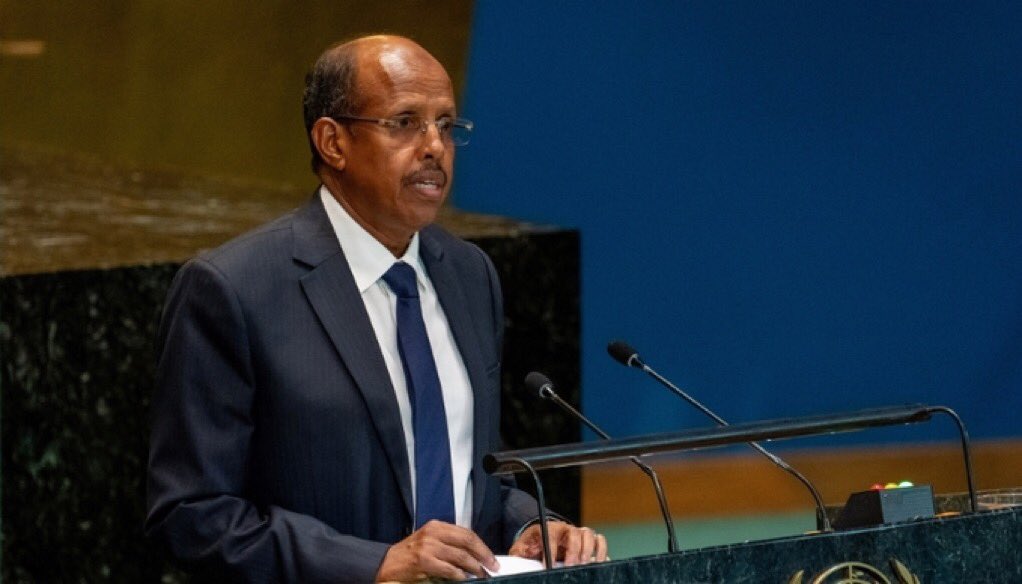
The Chairperson of the African Union Commission, Mahmoud Ali Youssouf, has expressed shock and sorrow over a deadly terrorist attack in Nigeria.
In a statement, Youssouf said he learned with “deep shock and profound sorrow” of the attack carried out on Tuesday, 3 February 2026, in the village of Woro, in Kwara State.
At least 162 innocent civilians were killed.
He condemned the incident “in the strongest possible terms,” describing it as a “heinous and barbaric act.”
He said the attack constitutes a “grave violation of human rights” and an “unacceptable assault on peace and security.”
The AU Chairperson reaffirmed the African Union’s “unwavering policy of zero tolerance for terrorism and violent extremism in all their forms and manifestations.”
Youssouf also extended “sincere condolences to the bereaved families and relatives of the victims,” and to the “brotherly people of the Federal Republic of Nigeria.”
He expressed the African Union’s “full solidarity with the Government of Nigeria and the authorities of Kwara State during this difficult time.”
The African Union reiterated its “steadfast commitment to continue supporting the people and Government of the Federal Republic of Nigeria” as they work to consolidate peace, security, and stability across the country.
According to the BBC, a Red Cross official in Kwara, Babaomo Ayodeji, told AFP that “reports said that the death toll now stands at 162, as the search for more bodies continues”.
Amnesty International said in a statement that over 170 people had died, noting many were shot at close range and some burnt alive.
The human rights group called for an investigation and said there was a “stunning absence of any form of security for the protection of lives”.
In recent months, jihadists – suspected to be from a Boko Haram splinter faction – have been active in Kwara, carrying out targeted killings, often riding in on motorcycles and attacking markets and vigilante groups set up to protect villagers.
In a press release on Wednesday, the state governor said the attack on the two villages was a result of recent counter-terrorism operations in the region.
AbdulRazaq believed it was “apparently to distract the security forces who have successfully hunted down several terrorist and kidnapping gangs”.