

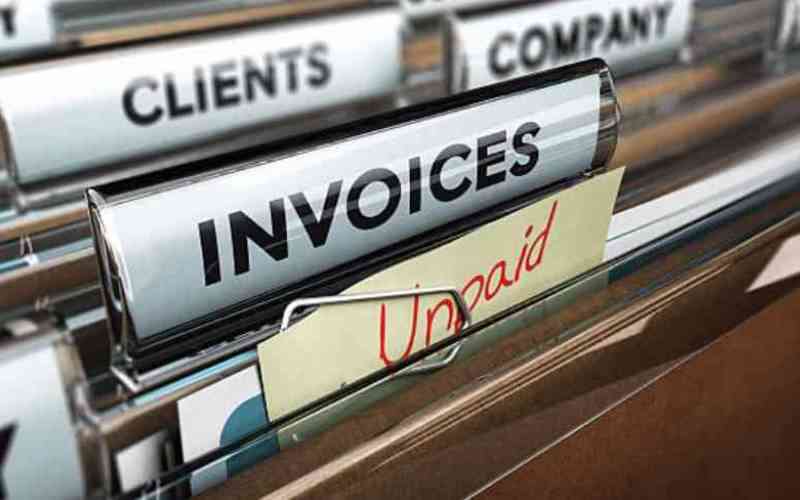
Business leaders urge swift government action on mounting pending bills. [File, Standard]
Business leaders have renewed pressure on the Government to urgently clear mounting pending bills, warning that delayed payments are choking cash flows, weakening enterprises and eroding confidence in public procurement.
Speaking during the Kenya National Chamber of Commerce and Industry (KNCCI) Annual General Meeting (AGM) held in Nairobi, private sector players called for faster settlement of verified claims and structural reforms to prevent the accumulation of new arrears.
KNCCI President Dr Erick Rutto said pending bills remain one of the most serious threats to enterprise sustainability, particularly for micro, small and medium-sized enterprises (MSMEs), which form the backbone of government supply chains.
Follow The Standard
channel
on WhatsApp
“Pending bills continue to constrain business liquidity, limit access to credit and slow down reinvestment,” Rutto said. “While we commend the Government for the recent release of Sh255 billion towards settling arrears, sustained action is needed to fully restore business confidence and protect enterprises.”
Industry estimates indicate that national and county governments together owe suppliers more than Sh600 billion in verified and disputed pending bills, accumulated over several financial years. The arrears cut across key sectors, including roads, health, education, security and county services, with MSMEs bearing the brunt of delayed payments.
Of the Sh255 billion recently released by the Treasury, Sh80 billion was allocated to the roads sector, with the balance distributed across other ministries, departments, agencies and county governments.
Rutto said KNCCI will continue engaging the National Treasury, line ministries and county governments to ensure timely verification and settlement of claims, clear and predictable payment timelines and reforms to stop the recurrence of pending bills.
“Clearing pending bills is not just about settling old debts. It is about restoring trust in public procurement, stabilising cash flows and safeguarding thousands of jobs tied to government contracts,” he said.
The National Treasury acknowledged that pending bills have for years strained business liquidity and undermined supplier confidence, particularly among MSMEs that rely heavily on public sector work.
Principal Secretary for Public Investments and Assets Management Cyrell Odede Wagunda said the Government has taken deliberate steps to address the problem under its fiscal consolidation programme.
“We fully recognise the burden pending bills place on businesses, especially MSMEs,” Wagunda said. “The release of Sh255 billion is a clear signal of the Government’s commitment. Going forward, our focus is on timely verification and settlement of legitimate claims, clear and predictable payment timelines, and structural reforms to prevent future accumulation.”
He said the Treasury is strengthening public finance management systems to improve budget discipline, procurement planning and accountability across national and county governments.
Beyond pending bills, KNCCI used the AGM to push for reforms aimed at lowering the cost of doing business, citing high licensing and compliance costs that disproportionately affect MSMEs.
According to the Chamber, businesses in Kenya require between 10 and 15 licences and permits on average, with regulatory compliance accounting for 20 to 30 per cent of MSME operating costs. KNCCI called for harmonisation and consolidation of licences, elimination of duplicate permits, adoption of digital single-window licensing platforms and implementation of a “One Business, One Licence” principle.
Access to finance also featured prominently, with the Chamber urging increased capitalisation of development finance institutions such as the Kenya Development Corporation and Kenya Industrial Estates, as well as targeted credit support for MSMEs.
KNCCI further proposed that government contracts of up to Sh5 billion be ring-fenced for local firms, including in construction and services, not just supply contracts. Wagunda said the proposal aligns with the Government’s local content agenda and is under active policy consideration, provided it does not compromise competitiveness or quality.
The AGM also highlighted procurement reforms, with KNCCI announcing a partnership with the National Treasury to build supplier capacity on the electronic Government Procurement (e-GP) system rolled out in July 2025. The system is expected to improve transparency, efficiency and value for money in public procurement.
“The success of e-GP depends on supplier readiness,” Wagunda said, welcoming KNCCI’s role in facilitating nationwide training and sensitisation.
On privatisation, the Treasury reiterated plans to divest from select state-owned enterprises, including the proposed Initial Public Offer of Kenya Pipeline Company, which it said would deepen capital markets, broaden public participation and ease pressure on public finances. KNCCI welcomed the move but cautioned that privatisation must ensure meaningful participation by local investors and avoid crowding out SMEs.
Dr Rutto said resolving pending bills remains central to restoring business confidence and unlocking private sector-led growth.
Follow The Standard
channel
on WhatsApp
Business leaders urge swift government action on mounting pending bills.
[File, Standard]
Business leaders have renewed pressure on the Government to urgently clear
mounting pending bills
, warning that delayed payments are choking cash flows, weakening enterprises and eroding confidence in public procurement.
Speaking during the Kenya National Chamber of Commerce and Industry (KNCCI) Annual General Meeting (AGM) held in Nairobi, private sector players called for faster settlement of verified claims and structural reforms to prevent the accumulation of new arrears.
KNCCI President Dr Erick Rutto said pending bills remain one of the most serious threats to enterprise sustainability, particularly for micro, small and medium-sized enterprises (MSMEs), which form the backbone of government supply chains.
Follow The Standard
channel
on WhatsApp
“Pending bills continue to constrain business liquidity, limit access to credit and slow down reinvestment,” Rutto said. “While we commend the Government for the recent release of Sh255 billion towards settling arrears, sustained action is needed to fully restore business confidence and protect enterprises.”
Industry estimates indicate that national and county governments together owe suppliers more than Sh600 billion in verified and disputed pending bills, accumulated over several financial years. The arrears cut across key sectors, including roads, health, education, security and county services, with MSMEs bearing the brunt of delayed payments.
Of the Sh255 billion recently released by the Treasury, Sh80 billion was allocated to the roads sector, with the balance distributed across other ministries, departments, agencies and county governments.
Rutto said KNCCI will continue engaging the National Treasury, line ministries and county governments to ensure timely verification and settlement of claims, clear and predictable payment timelines and reforms to stop the recurrence of pending bills.
“Clearing pending bills is not just about settling old debts. It is about restoring trust in public procurement, stabilising cash flows and safeguarding thousands of jobs tied to government contracts,” he said.
The National Treasury acknowledged that pending bills have for years strained business liquidity and undermined supplier confidence, particularly among MSMEs that rely heavily on public sector work.
Principal Secretary for Public Investments and Assets Management Cyrell Odede Wagunda said the Government has taken deliberate steps to address the problem under its fiscal consolidation programme.
“We fully recognise the burden pending bills place on businesses, especially
MSMEs
,” Wagunda said. “The release of Sh255 billion is a clear signal of the Government’s commitment. Going forward, our focus is on timely verification and settlement of legitimate claims, clear and predictable payment timelines, and structural reforms to prevent future accumulation.”
He said the Treasury is strengthening public finance management systems to improve budget discipline, procurement planning and accountability across national and county governments.
Beyond pending bills, KNCCI used the AGM to push for reforms aimed at lowering the cost of doing business, citing high licensing and compliance costs that disproportionately affect MSMEs.
According to the Chamber, businesses in Kenya require between 10 and 15 licences and permits on average, with regulatory compliance accounting for 20 to 30 per cent of MSME operating costs. KNCCI called for harmonisation and consolidation of licences, elimination of duplicate permits, adoption of digital single-window licensing platforms and implementation of a “One Business, One Licence” principle.
Stay informed. Subscribe to our newsletter
Access to finance also featured prominently, with the Chamber urging increased capitalisation of development finance institutions such as the Kenya Development Corporation and Kenya Industrial Estates, as well as targeted credit support for MSMEs.
KNCCI further proposed that government contracts of up to Sh5 billion be ring-fenced for local firms, including in construction and services, not just supply contracts. Wagunda said the proposal aligns with the Government’s local content agenda and is under active policy consideration, provided it does not compromise competitiveness or quality.
The AGM also highlighted procurement reforms, with KNCCI announcing a partnership with the National Treasury to build supplier capacity on the electronic Government Procurement (e-GP) system rolled out in July 2025. The system is expected to improve transparency, efficiency and value for money in public procurement.
“The success of e-GP depends on supplier readiness,” Wagunda said, welcoming KNCCI’s role in facilitating nationwide training and sensitisation.
On privatisation, the Treasury reiterated plans to divest from select state-owned enterprises, including the proposed Initial Public Offer of Kenya Pipeline Company, which it said would deepen capital markets, broaden public participation and ease pressure on public finances. KNCCI welcomed the move but cautioned that privatisation must ensure meaningful participation by local investors and avoid crowding out SMEs.
Dr Rutto said resolving pending bills remains central to restoring business confidence and unlocking
private sector-led growth
.
Follow The Standard
channel
on WhatsApp
By Sofia Ali