



President William Ruto has recently revealed a strategic process of getting Kenya to a First World economic status within ten years. His vision and goals are anchored on four thematic areas: the economy and agriculture, education, energy and transport, and infrastructure – logistics.
The cost of these four thematic areas is estimated to be Sh5 trillion ($38.6 billion). It is not over-ambitious for the leadership of any modern developing country like Kenya to aim high. We can learn from the most progressive “First World Nations”, large and small like Singapore and Switzerland.
Kenya belongs to the lower middle-income countries with current per capita income of only $2,200 in 2025, but aiming to rise to the per capita level of $22,800 within a decade.
It is better to miss a huge national goal than to barely achieve mediocre goals: plan for mediocre goals and that is what the country will get. There are six lessons Kenya can learn from the economic growth of Singapore.
Follow The Standard
channel
on WhatsApp
The first lesson is that nations transform their economic growth and infrastructure through pragmatic, strong ethical leaderships of excellence. Lee Kuan Yew’s own book, “Singapore: from Third World to First World”, says it all. Political democratic values, creating business friendly environment with low taxes and corruption free citizens bring about national growth to a First World status.
The Singapore People’s Action Party (PAP) are excellent students of the success of other countries. They knew what they did not want to be and what they never wanted to happen to their communities.
The second lesson is the art and practice of meritocratic governance based on the eight “P’s” of patriotism, people, performance, purpose, process, productivity, patience and persistence of nation building. The eight P’s drive the “four brains” – leadership of the nation to achieve great goals: the political brain: the three arms of the State, the intellectual brain, the elite brain and the common citizens’ brain.
The Third lesson is on effective progressive human capital and reliable talent pipelines. Through competitive education and public health policies, and good salaries, top talent were attracted to government jobs and the nation made a corruption-free country. Kenya’s own universities and our Ethics and Anti-Corruption Commission (EACC) and other institutions can benchmark with those counterpart institutions in Singapore.
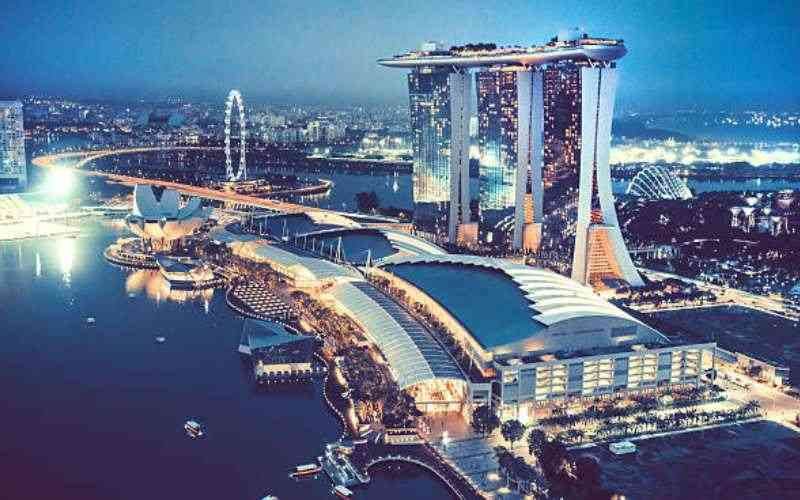
The Fourth lesson is how a nation becomes a First World through strategic investments in world-class infrastructure, road networks, and transportation hubs. Singapore is indeed an admirable nation on matters of exploiting its strategic location, infrastructure development and affordable housing.
The Fifth lesson is on how Singapore’s economy moved from import substitution to attracting Multinational Corporations (MNCs) for labour–intensive industries. The nation encouraged foreign investments, export-driven. Then the economy shifted to skill-intensive and knowledge based on sectors. The nation created sovereign wealth funds.
The Sixth lesson is how Singapore hugely gained from its strategic partnerships with other friendly countries such as UK, Australia, Malaysia and Indonesia. No nation is an island. Countries are reflections of their partners and friends. Kenya has a huge advantage here.
For the present phase of the nation’s budgetary needs of Sh5 trillion ($39 billion), Kenya can leverage on the goodwill and great magnanimity and vision of the country’s strategic alliances and friends.
There are unlimited opportunities today for us to achieve world-class goals. Let us dig the wells before we are thirsty and ensure the nation persists until all Kenyans succeed.
Follow The Standard
channel
on WhatsApp
By Billow Khalid