

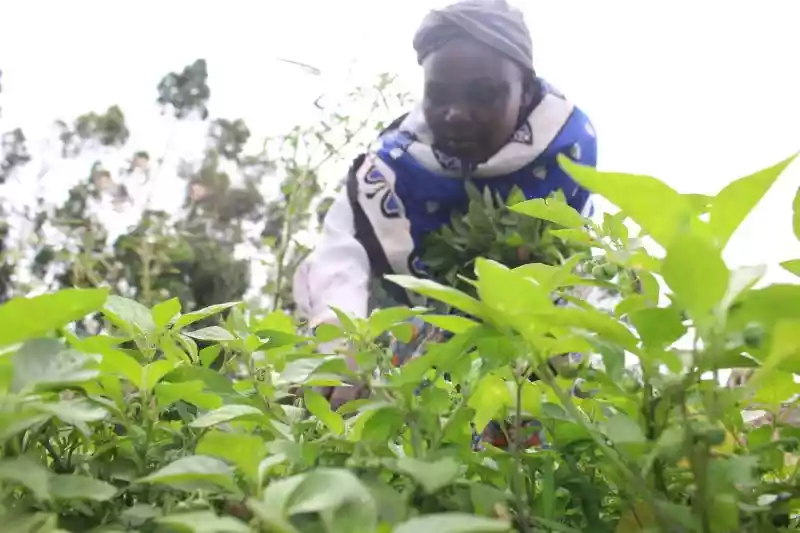
A vibrant array of indigenous foods, ranging from crunchy insects and traditional fermented drinks to fresh and processed crops, was on display at the National Museum of Kenya (NMK).
Also showcased were cooking and serving equipment made from gourds, as well as traditional attire.
Stealing the spotlight, however, were cakes made from termites and crickets. Their unusual ingredients sparked curiosity and excitement, drawing huge crowds.
At the center of the attention, Anne Nyandiala, from the Invertebrate Section of the Zoology Department at NMK, sliced the insect-infused cakes and handed portions to visitors. Faces lit with curiosity, some hesitated, others braced themselves, and a few cringed as they took the first bite, each chew revealing an unexpected texture and taste that left them both surprised and fascinated.
Follow The Standard
channel
on WhatsApp
Here, she says they are exhibiting insects for food and feed, specifically termites and crickets.
“We encourage communities to reflect on their lifestyles and consider returning to traditional diets. Historically, insects were part of our indigenous diet. Over time, this practice declined, especially due to the influence of Western lifestyles introduced during colonisation,” she told the visitors.
She was speaking during the grand launch of an international research project titled “Histories and Futures of Under-Utilised Crops Reimagined.”
The exhibition, held under the theme ‘Reviving Indigenous Crops in the Public Imagination,’ seeks to reintroduce nutritious, climate-resilient and culturally valuable crops into daily diets and agricultural practices.
The project, funded by the British Academy, is supported by a multidisciplinary team of researchers from the NMK, Moi University, the University of Lincoln and the University of Nottingham.
Visitors to the exhibition learned from experts about the health and nutritional value of indigenous foodstuffs, their drought resistance and importance for food security, and how young people are using technology and creativity to preserve cultural heritage.
Diana Chepkoech, a student from SOT Technical Training Institute showcased an innovation dubbed Heritage Bite, cookies made from finger millet flour, orange-fleshed sweet potatoes and African nightshade.
“These cookies are already a hit with the youth because they closely resemble other cookies in the market. The difference is that they are more nutritious because they are made from indigenous foods,” she says.
She adds that the cookies are rich in Vitamin A, gluten-free, making them suitable for people who are gluten-sensitive and contain fibre, which supports healthy digestion.
Prof Prisca Tanui of the Department of History, Political Science and Public Administration at Moi University says older generations are familiar with indigenous crops and continue to consume them.
“The danger lies with the younger generation. They tend to completely ignore these foods, saying they are not palatable, not tasty, take too long to cook or are sometimes bitter. As a result, they have not embraced them,” she says.
Tanui reveals that the sensitisation process they are undertaking aims to encourage young people to appreciate and adopt indigenous crops.
She explains that their research revealed that there were deliberate efforts to suppress indigenous food crops during the colonial period.
Colonial policies, driven by the need for labour, taxation and food for labourers, instead promoted maize production.
“Even school agricultural clubs were geared towards crops like kale and cabbage, at the expense of indigenous foods, which were labelled as traditional or backward. This mindset persists to date, where when you suggest indigenous vegetables, people dismiss them as poor man’s food,” Tanui explains.
The nutritional value of indigenous foods has prompted doctors to recommend them for conditions such as diabetes and blood-related illnesses.
Often, people are advised to consume brown grains and indigenous vegetables only after falling ill. However, calls were made for people to not to wait until disease strikes, they should incorporate these foods into their diets early, as a preventative measure.
Prof Esther Kioko, Principal Research Scientist–Insects at the National Museums of Kenya (NMK), says that while vegetables such as managu, saga, amaranth and terere are available in some supermarkets, many indigenous crops have gradually been forgotten.
The exhibition showcased several crops that are rarely found in commercial outlets, including Ethiopian dock which is now being revived.
“We are exploring how indigenous foods can be fully reintroduced into our current food systems, drawing from historical perspectives while also looking towards the future,” she explains.
She praises the youth actively involved in the project, noting that they have brought remarkable innovation to discussions around indigenous crops and foods.
One notable example is Derrick Kipng’enoh from SOT Technical Training Institute, who demonstrated creative uses of stinging nettle by making drinks and juices.
“Although many people associate it with pain because it stings, the students showed how it can be processed into powder that can be added to porridge or sprinkled onto food,” she says.
She adds that stinging nettle is very rich in iron and has great potential to improve people’s health.
Despite many health benefits of indigenous foods, Prof Kioko observes that many people still associate them with poverty, illness, or backwardness.
Yet indigenous foods are easy to research, readily available and provide essential nutrients needed to raise strong, healthy children, contributing to a healthy nation overall.
She urges communities to begin embracing indigenous foods through simple steps.
“Talking about indigenous foods at home, preparing some of these foods and sharing the knowledge with neighbours, children and young mothers is important. When preparing meals for children, we encourage parents not to rely only on refined foods,” she says.
Eating indigenous foods, she says, can help prevent lifestyle diseases before medical intervention becomes necessary. Healthy eating is a form of prevention.
On policy, Prof Kioko emphasises that strong food and nutrition policies are critical and that policymakers must be actively involved in these discussions.
Indigenous crops also play a key role in addressing climate change and food insecurity. With increasing droughts and rising temperatures, many indigenous crops have proven to be highly resilient.
Beyond food, these crops contribute to environmental sustainability. Some improve soil fertility by fixing nitrogen, while others support biodiversity by providing resources for pollinators such as bees, carpenter bees, among other insects.
Research has shown that crops like spider plant (saga) are pollinated by night-flying moths such as hawk moths, highlighting the important ecological relationships sustained by indigenous crops.
The stakeholders are urging the government to continue supporting and scaling up initiatives that promote indigenous crops.
Follow The Standard
channel
on WhatsApp
A vibrant array of indigenous foods, ranging from crunchy insects and traditional fermented drinks to fresh and processed crops, was on display at the National Museum of Kenya (NMK).
Also showcased were cooking and serving equipment made from gourds, as well as traditional attire.
Stealing the spotlight, however, were cakes made from termites and crickets. Their unusual ingredients sparked curiosity and excitement, drawing huge crowds.
At the center of the attention, Anne Nyandiala, from the Invertebrate Section of the Zoology Department at NMK, sliced the insect-infused cakes and handed portions to visitors. Faces lit with curiosity, some hesitated, others braced themselves, and a few cringed as they took the first bite, each chew revealing an unexpected texture and taste that left them both surprised and fascinated.
Follow The Standard
channel
on WhatsApp
Here, she says they are exhibiting insects for food and feed, specifically termites and crickets.
“We encourage communities to reflect on their lifestyles and consider
returning to traditional diets
. Historically, insects were part of our indigenous diet. Over time, this practice declined, especially due to the influence of Western lifestyles introduced during colonisation,” she told the visitors.
She was speaking during the grand launch of an international research project titled “Histories and Futures of Under-Utilised Crops Reimagined.”
The exhibition, held under the theme ‘Reviving Indigenous Crops in the Public Imagination,’ seeks to reintroduce nutritious, climate-resilient and culturally valuable crops into daily diets and agricultural practices.
The project, funded by the British Academy, is supported by a multidisciplinary team of researchers from the NMK, Moi University, the University of Lincoln and the University of Nottingham.
Visitors to the exhibition learned from experts about the health and nutritional value of indigenous foodstuffs, their drought resistance and importance for food security, and how young people are using technology and creativity to preserve cultural heritage.
Diana Chepkoech, a student from SOT Technical Training Institute showcased an innovation dubbed Heritage Bite, cookies made from finger millet flour, orange-fleshed sweet potatoes and African nightshade.
“These cookies are already a hit with the youth because they closely resemble other cookies in the market. The difference is that they
are more nutritious
because they are made from indigenous foods,” she says.
She adds that the cookies are rich in Vitamin A, gluten-free, making them suitable for people who are gluten-sensitive and contain fibre, which supports healthy digestion.
Prof Prisca Tanui of the Department of History, Political Science and Public Administration at Moi University says older generations are familiar with indigenous crops and continue to consume them.
“The danger lies with the younger generation. They tend to completely ignore these foods, saying they are not palatable, not tasty, take too long to cook or are sometimes bitter. As a result, they have not embraced them,” she says.
Stay informed. Subscribe to our newsletter
Tanui reveals that the sensitisation process they are undertaking aims to encourage young people to appreciate and adopt indigenous crops.
She explains that their research revealed that there were deliberate efforts to suppress indigenous food crops during the colonial period.
Colonial policies, driven by the need for labour, taxation and food for labourers, instead promoted maize production.
“Even school agricultural clubs were geared towards crops like kale and cabbage, at the expense of indigenous foods, which were labelled as traditional or backward. This mindset persists to date, where when you suggest indigenous vegetables, people dismiss them as poor man’s food,” Tanui explains.
The nutritional value of indigenous foods
has prompted doctors
to recommend them for conditions such as diabetes and blood-related illnesses.
Often, people are advised to consume brown grains and indigenous vegetables only after falling ill. However, calls were made for people to not to wait until disease strikes, they should incorporate these foods into their diets early, as a preventative measure.
Prof Esther Kioko, Principal Research Scientist–Insects at the National Museums of Kenya (NMK), says that while vegetables such as managu, saga, amaranth and terere are available in some supermarkets, many indigenous crops have gradually been forgotten.
The exhibition showcased several crops that are rarely found in commercial outlets, including Ethiopian dock which is now being revived.
“We are exploring how indigenous foods can be fully reintroduced into our current food systems, drawing from historical perspectives while also looking towards the future,” she explains.
She praises the youth actively involved in the project, noting that they have brought remarkable innovation to discussions around indigenous crops and foods.
One notable example is Derrick Kipng’enoh from SOT Technical Training Institute, who demonstrated creative uses of stinging nettle by making drinks and juices.
“Although many people associate it with pain because it stings, the students showed how it can be processed into powder that can be added to porridge or sprinkled onto food,” she says.
She adds that stinging nettle is very rich in iron and has great potential to improve people’s health.
Despite many health benefits of indigenous foods, Prof Kioko observes that many people still associate them with poverty, illness, or backwardness.
Yet indigenous foods are easy to research, readily available and provide essential nutrients needed to raise strong, healthy children, contributing to a healthy nation overall.
She urges communities to begin
embracing indigenous foods
through simple steps.
“Talking about indigenous foods at home, preparing some of these foods and sharing the knowledge with neighbours, children and young mothers is important. When preparing meals for children, we encourage parents not to rely only on refined foods,” she says.
Eating indigenous foods, she says, can help prevent lifestyle diseases before medical intervention becomes necessary. Healthy eating is a form of prevention.
On policy, Prof Kioko emphasises that strong food and nutrition policies are critical and that policymakers must be actively involved in these discussions.
Indigenous crops also play a key role in addressing climate change and food insecurity. With increasing droughts and rising temperatures, many indigenous crops have proven to be highly resilient.
Beyond food, these crops contribute to environmental sustainability. Some improve soil fertility by fixing nitrogen, while others support biodiversity by providing resources for pollinators such as bees, carpenter bees, among other insects.
Research has shown that crops like spider plant (saga) are pollinated by night-flying moths such as hawk moths, highlighting the important ecological relationships sustained by indigenous crops.
The stakeholders are urging the government to continue supporting and scaling up initiatives that promote indigenous crops.
Follow The Standard
channel
on WhatsApp
By Nanjinia Wamuswa