

There is a story that is quietly told in the former Northern Frontier District (now north eastern Kenya) that Somalis are a proud warrior race. That they are too proud that they can’t keep the peace.
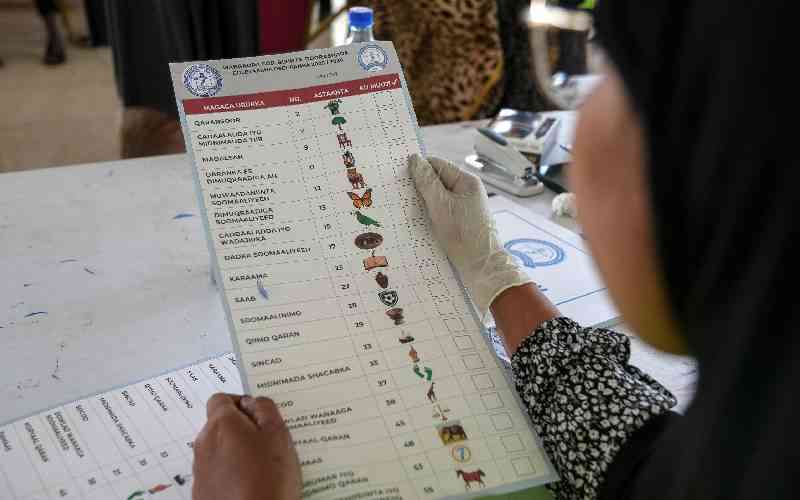
This week, Somalia and Mogadishu in particular were playing host to the national consultative conference bringing together opposition leaders under the banner of the Somali Future Council, plus leaders of the federal member states.
Follow The Standard
channel
on WhatsApp
The consultative conference had been sought by SFC at their meeting last December in Kismayo and gave President Hassan Sheikh Mohamud a January 20, 2026, ultimatum to convene the talks on Somalia’s constitutional reforms and the electoral process or they would embark on a parallel process.
The government-led consultation meeting was set for February 1, 2026, in Mogadishu. President Mohamud was expected to open the conference within the compound that also hosts the Aden Abdulle international airport and the UN compound in Somalia.
But instead of the highly anticipated conference taking off, the country woke up to a stand-off after President Mohamud ordered planes carrying the security staff of the Presidents of Puntland and Jubaland to turn back mid-flight, denying them permission to land in Mogadishu.
The decision sent shockwaves through diplomatic circles, with the United Nations and the United Kingdom calling for sobriety from all the leaders in Somalia.
The United Nations Transitional Assistance Mission in Somalia (UNTMIS) confirmed that advance teams from Puntland and Jubaland could not arrive for the forum due to a lack of technical clearances.
It was not the first time that leaders of the federal member states had travelled to Mogadishu with their security detail. Critics of Mohamud were quick to point out when he lost elections to Mohamed Abdullahi Farmaajo, he used to move with a large contingent of armed security at times confronting government troops.
Diplomats who had spent days planning for the consultative meeting were aghast at the decision taken by the president.
The flights were essential for the meeting to take place, as the president of each federal member state attending the talks wanted to feel safe.
It should not be lost to keen observers that there is no love lost between President Mohamud and the leaders of Puntland and Jubaland.
It is not lost to most observers that the two leaders, Ahmed Mohamed Islam Madobe of Jubaland and Said Abdullahi Deni of Puntland, have been steadfast in opposing the political decisions taken by President Mohamud regarding the forthcoming elections slated for the month of May this year.
The two leaders and the opposition under the banner of SFC have clashed with the federal government over plans to transition the country to a one-person, one-vote electoral system. They prefer the long-tested indirect election practised since 2004. Indeed, the two presidents have been the force behind the threat to have a parallel electoral system to that being pushed by Mogadishu.
Diplomats in Mogadishu went into high gear with a view to salvaging the consultative conference. Within hours after his ban on the security detail, Mohamud reversed his “ban” on the flights carrying the security detail for the two presidents.
While the numbers for the security detail for both presidents were scaled down, the move left many puzzled and asking why the government in Mogadishu had banned the flights in the first place.
But the flight incident is just one among many that have drawn suspicion from the opposition and the leaders of the federal states of Puntland and Jubaland.
A week ago, a joint sitting of the upper and lower houses of Somalia’s parliament ended in chaos after President Mohamud’s side introduced sweeping constitutional amendments covering five chapters. The Speaker was forced to end the sitting and adjourn the House indefinitely.
Previously, President Mohamud amended four chapters of the constitution without consultation as well as unilaterally handpicking an election commission that is to oversee the May polls.
Many view the president as being provocative rather than a leader who is pushing for consensus in a nation as fragile as Somalia.
With the talks scuttled and the diplomatic community pushing for their resumption, ordinary Somalis must be holding their breath and hoping that the situation does not escalate to what was witnessed in 2022 as politicians tussled on election date, leading to street battles.
President Mohamud is on record saying the consultative conference would tackle all issues on the agenda. The talks are aimed at strengthening national unity and implementing a democracy based on consultation and compromise.
Meanwhile, the devastating drought in the Horn of Africa is not relenting. An estimated 6.5 million people, including 2.5 million children across Ethiopia, Somalia and Kenya, are affected
The drought caused by failed rains in 2024 and last year has led to the displacement of many families in search of food and water. With the scarcity of resources, health concerns have also gripped the region.
The United Nations and other international organisations are mobilising resources, but the response has been slow and lethargic. The sight of women, children and animals hit by the drought is haunting. Mankind should rise to support the Horn of Africa in addressing this urgent call.
Follow The Standard
channel
on WhatsApp
This week, Somalia and Mogadishu in particular were playing host to the national consultative conference bringing together opposition leaders under the banner of the Somali Future Council, plus leaders of the federal member states.
Follow The Standard
channel
on WhatsApp
The consultative conference had been sought by SFC at their meeting last December in Kismayo and gave President Hassan Sheikh Mohamud a January 20, 2026, ultimatum to convene the talks on Somalia’s constitutional reforms and the electoral process or they would embark on a parallel process.
The government-led consultation meeting was set for February 1, 2026, in Mogadishu. President Mohamud was expected to open the conference within the compound that also hosts the Aden Abdulle international airport and the UN compound in Somalia.
But instead of the highly anticipated conference taking off, the country woke up to a stand-off after President Mohamud ordered planes carrying the security staff of the Presidents of Puntland and Jubaland to turn back mid-flight, denying them permission to land in Mogadishu.
The decision sent shockwaves through diplomatic circles, with the United Nations and the United Kingdom calling for sobriety from all the leaders in Somalia.
The United Nations Transitional Assistance Mission in Somalia (UNTMIS) confirmed that advance teams from Puntland and Jubaland could not arrive for the forum due to a lack of technical clearances.
It was not the first time that leaders of the federal member states had travelled to Mogadishu with their security detail. Critics of Mohamud were quick to point out when he lost elections to Mohamed Abdullahi Farmaajo, he used to move with a large contingent of armed security at times confronting government troops.
Diplomats who had spent days planning for the consultative meeting were aghast at the decision taken by the president.
The flights were essential for the meeting to take place, as the president of each federal member state attending the talks wanted to feel safe.
It should not be lost to keen observers that there is no love lost between President Mohamud and the leaders of Puntland and Jubaland.
It is not lost to most observers that the two leaders, Ahmed Mohamed Islam Madobe of Jubaland and Said Abdullahi Deni of Puntland, have been steadfast in opposing the political decisions taken by President Mohamud regarding the forthcoming elections slated for the month of May this year.
The two leaders and the opposition under the banner of SFC have clashed with the federal government over plans to transition the country to a one-person, one-vote electoral system. They prefer the long-tested indirect election practised since 2004. Indeed, the two presidents have been the force behind the threat to have a parallel electoral system to that being pushed by Mogadishu.
Stay informed. Subscribe to our newsletter
Diplomats in Mogadishu went into high gear with a view to salvaging the consultative conference. Within hours after his ban on the security detail, Mohamud reversed his “ban” on the flights carrying the security detail for the two presidents.
While the numbers for the security detail for both presidents were scaled down, the move left many puzzled and asking why the government in Mogadishu had banned the flights in the first place.
But the flight incident is just one among many that have drawn suspicion from the opposition and the leaders of the federal states of Puntland and Jubaland.
A week ago, a joint sitting of the upper and lower houses of Somalia’s parliament ended in chaos after President Mohamud’s side introduced sweeping constitutional amendments covering five chapters. The Speaker was forced to end the sitting and adjourn the House indefinitely.
Previously, President Mohamud amended four chapters of the constitution without consultation as well as unilaterally handpicking an election commission that is to oversee the May polls.
Many view the president as being provocative rather than a leader who is pushing for consensus in a nation as fragile as Somalia.
With the talks scuttled and the diplomatic community pushing for their resumption, ordinary Somalis must be holding their breath and hoping that the situation does not escalate to what was witnessed in 2022 as politicians tussled on election date, leading to street battles.
President Mohamud is on record saying the consultative conference would tackle all issues on the agenda. The talks are aimed at strengthening national unity and implementing a democracy based on consultation and compromise.
Meanwhile, the devastating drought in the Horn of Africa is not relenting. An estimated 6.5 million people, including 2.5 million children across Ethiopia, Somalia and Kenya, are affected
The drought caused by failed rains in 2024 and last year has led to the displacement of many families in search of food and water. With the scarcity of resources, health concerns have also gripped the region.
The United Nations and other international organisations are mobilising resources, but the response has been slow and lethargic. The sight of women, children and animals hit by the drought is haunting. Mankind should rise to support the Horn of Africa in addressing this urgent call.
Follow The Standard
channel
on WhatsApp
By David Okwembah