

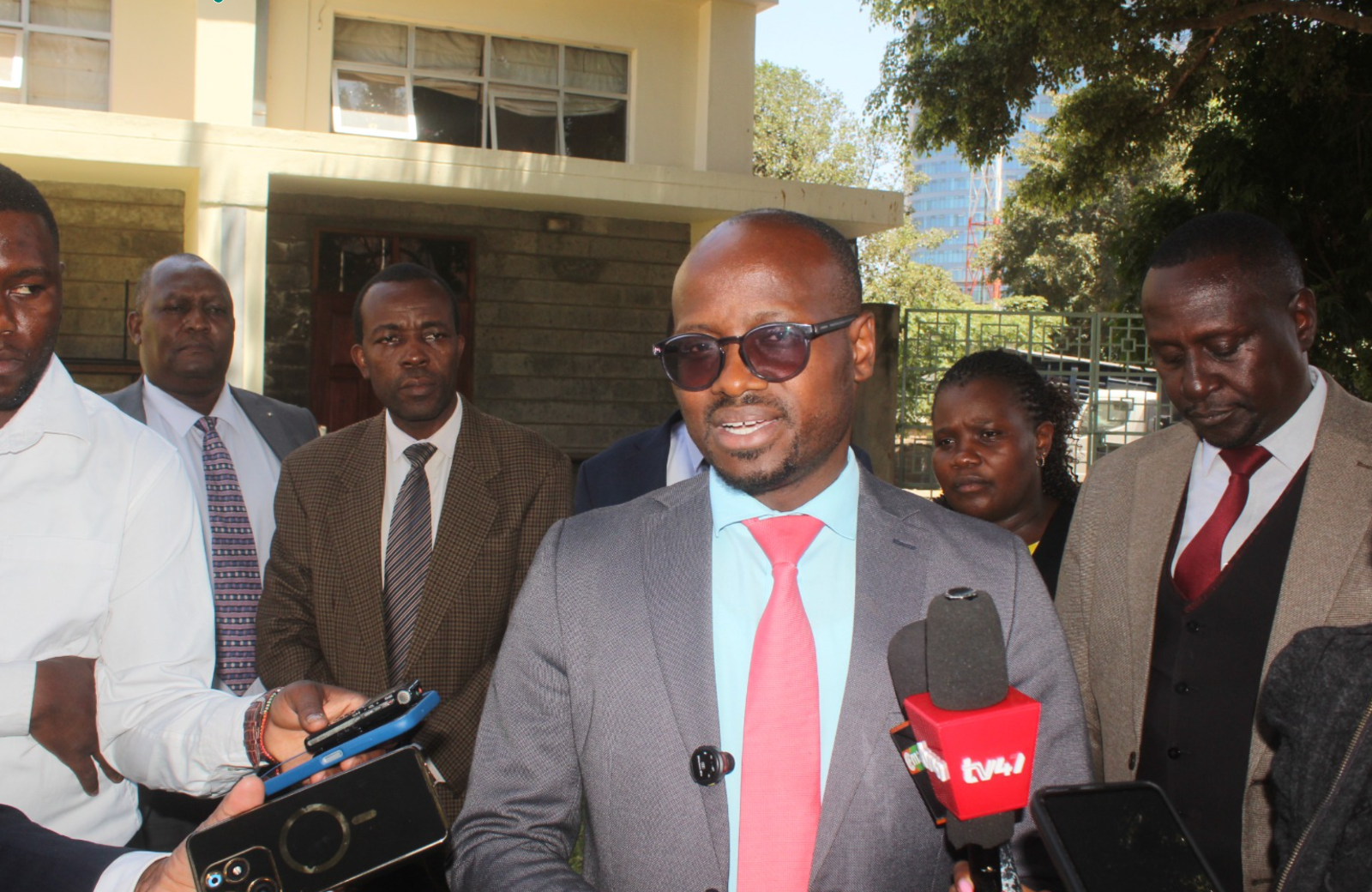
General Secretary and CEO of the Christian Health Association of Kenya (CHAK) Dr. Chris Wekesa Barasa speaks to the media.Faith-based health providers have urged the government and local partners to fast-track new funding arrangements to protect millions of patients from the impact of shrinking health aid and delayed domestic health payments.
Christian Health Association of Kenya (CHAK) and partners have called for concrete solutions to global health aid cuts and delayed domestic payments, warning that facilities serving vulnerable communities risk closure if financing gaps persist. The appeal came during a consultative forum in Nairobi on Tuesday bringing together religious leaders, government officials, development partners and policymakers to discuss the shifting global health financing landscape.
Convened under the theme “Positioning Faith-Based Health Systems in Kenya for the Changing Global Political and Funding Landscape,” the forum sought to craft a joint position on how faith-based organizations (FBOs) can survive and thrive under new funding models.
The forum was organized by CHAK on behalf of the Kenya Expanded Faith-Based Health Services Consortium, an umbrella bringing together major Christian and other faith networks that jointly deliver about 40 percent of Kenya’s health services.
Dr. Chris Wekesa Barasa, CHAK General Secretary and CEO, said health care financing remains the biggest challenge facing mission and church-owned facilities as external funding shrinks and domestic resource mobilization mechanisms struggle. He warned that billions of shillings owed to FBO facilities under the Social Health Authority (SHA) and the defunct National Health Insurance Fund (NHIF) schemes have not been disbursed, leaving hospitals unable to pay staff and at “the brink of closure
“As long as we have billions of shillings still not disbursed within the system, then our facilities that we proudly represent are actually on the brink of closure,” he said, noting that faith-based providers are owed about KShs 10 billion in pending claims. He appealed to the Treasury and health authorities to release cleared claims faster and in lump sums to stabilize service delivery, especially surgical and chronic care service.
Consortium leaders stressed that FBOs are ready to pivot into new government-to-government (G2G) and domestic funding frameworks as global donors like PEPFAR, CDC and USAID adjust their modes of support.
Titus Munene M’maeti the Head of Commercial services at the Mission for Essential Drugs and Supplies (MEDS) in Kenya and a member of the consortium said the platform was formed to “coalesce and share experiences” so that faith actors can engage government as a unified bloc in future health financing arrangements.
Bishop John Warari said FBOs remain on the frontline of service delivery, education and emergency aid, particularly in remote and hard-to-reach areas where faith-run facilities are often the only health providers. He described the forum as a “unified voice” urging government and partners to deepen investment in faith-based systems, arguing they combine strong community trust, local presence and growing data and digital capacities.
They linked the forum directly to the need for a sustainable, locally anchored response to global aid cuts and funding volatility. They argued that a well-functioning health insurance system and structured public–faith partnerships could cushion Kenyans from future external funding shocks while advancing universal health coverage (UHC).
“We are available to engage so that we can continue serving the more than 40 percent of the population that we reach with services through this expanded consortium,” Dr Barasa said, calling for fresh dialogue on fixing SHA rollout challenges while preserving gains made towards UHC.