



Audio By Vocalize
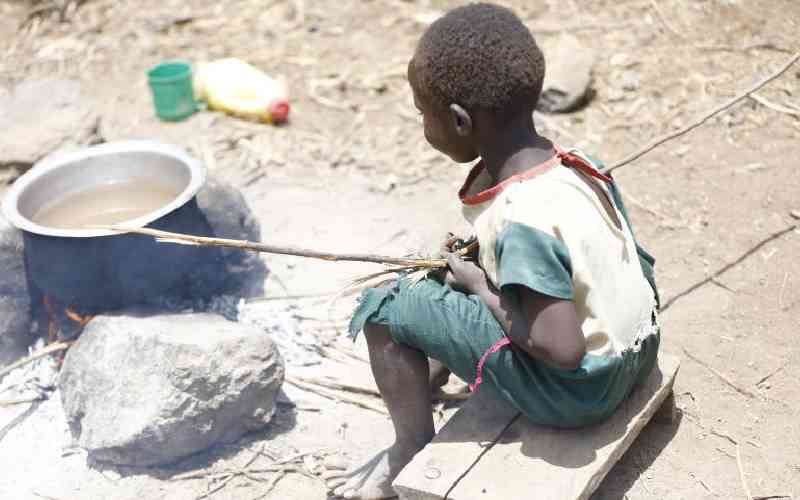
Across the country, a silent crisis is tightening its grip on ordinary citizens. More than 3.3 million Kenyans are facing hunger, not because the land has failed, but because leadership has. Parents are skipping meals so their children can eat. Families are surviving on one meal a day. In some homes, hunger has become routine, an expected part of life.
At the same time, students under the new education system are yet to fully report to school. There are no books, we have inadequate classrooms, overwhelmed teachers, and confused parents struggling to keep up with rising costs. Education, which should be the great equaliser, is becoming another marker of inequality.
And yet, money exists. Every financial year, billions of shillings are disbursed to county governments. These funds are meant to bring services closer to the people, such as food security, education support, healthcare, water, agriculture, and social protection. Instead, what many Kenyans see are inflated tenders, stalled projects, questionable procurement deals, endless foreign trips, and governors living in obscene luxury.
This is not just mismanagement. It is a moral failure.
While children sit on classroom floors without textbooks, leaders debate allowances. While families line up for relief food, county officials drive past in convoys. While youth stare into an uncertain future, public funds disappear into private pockets.
Devolution was sold to Kenyans as a solution, a way to correct historical marginalisation and empower communities. Instead, in many countries, it is simply decentralised corruption. Governors have become mini-presidents, surrounded by loyalists, protected by compromised assemblies, and insulated from accountability.
Human cost
County assemblies, whose constitutional role is oversight, have too often become rubber stamps. Oversight bodies release reports that gather dust. Investigations drag on until public anger fades. Arrests, when they happen, rarely lead to convictions. The message to citizens is clear: suffering has no urgency, but power protects itself swiftly.
Meanwhile, the human cost keeps rising. Hunger is not abstract. It is a child who cannot concentrate in class. It is a mother diluting porridge so it can last longer. It is a farmer unable to afford inputs while officials steal agricultural funds. It is a teacher forced to improvise lessons without materials. It is a young person losing hope, one unfulfilled promise at a time.
Poverty is spreading not because Kenyans are lazy, but because systems are predatory. Public resources are treated as political rewards rather than public trust. Leadership has been reduced to speeches, press conferences, and social media performances, while lives unravel quietly in villages, estates, and informal settlements
What makes this tragedy worse is how normalised it has become. Hunger is now a statistic. Poverty is background noise. Outrage comes and goes with the news cycle. But hunger does not pause. A child cannot wait for the next budget cycle or the next election.
True leadership is measured by outcomes, not ribbon-cutting ceremonies, not motorcades, not political alliances, but by whether citizens can eat, learn, access healthcare, and live with dignity.
Governors must be held accountable for every shilling entrusted to them. County assemblies must remember who they represent. Oversight institutions must act independently and decisively.
Ms Kondoa is a communications specialist
Follow The Standard
channel
on WhatsApp
Across the country, a silent crisis is tightening its grip on ordinary citizens. More than 3.3 million Kenyans are facing hunger, not because the land has failed, but because leadership has. Parents are skipping meals so their children can eat. Families are surviving on one meal a day. In some homes, hunger has become routine, an expected part of life.
At the same time, students under the new education system are yet to fully report to school. There are no books, we have inadequate classrooms, overwhelmed teachers, and confused parents struggling to keep up with rising costs. Education, which should be the great equaliser, is becoming another marker of inequality.
And yet, money exists. Every financial year, billions of shillings are disbursed to county governments. These funds are meant to bring services closer to the people, such as food security, education support, healthcare, water, agriculture, and social protection. Instead, what many Kenyans see are inflated tenders, stalled projects, questionable procurement deals, endless foreign trips, and governors living in obscene luxury.
This is not just mismanagement. It is a moral failure.
While children sit on classroom floors without textbooks, leaders debate allowances. While families line up for relief food, county officials drive past in convoys. While youth stare into an uncertain future, public funds disappear into private pockets.
Devolution was sold to Kenyans as a solution, a way to correct historical marginalisation and empower communities. Instead, in many countries, it is simply decentralised corruption. Governors have become mini-presidents, surrounded by loyalists, protected by compromised assemblies, and insulated from accountability.
Human cost
County assemblies, whose constitutional role is oversight, have too often become rubber stamps. Oversight bodies release reports that gather dust. Investigations drag on until public anger fades. Arrests, when they happen, rarely lead to convictions. The message to citizens is clear: suffering has no urgency, but power protects itself swiftly.
Meanwhile, the human cost keeps rising. Hunger is not abstract. It is a child who cannot concentrate in class. It is a mother diluting porridge so it can last longer. It is a farmer unable to afford inputs while officials steal agricultural funds. It is a teacher forced to improvise lessons without materials. It is a young person losing hope, one unfulfilled promise at a time.
Poverty is spreading not because Kenyans are lazy, but because systems are predatory. Public resources are treated as political rewards rather than public trust. Leadership has been reduced to speeches, press conferences, and social media performances, while lives unravel quietly in villages, estates, and informal settlements
What makes this tragedy worse is how normalised it has become. Hunger is now a statistic. Poverty is background noise. Outrage comes and goes with the news cycle. But hunger does not pause. A child cannot wait for the next budget cycle or the next election.
True leadership is measured by outcomes, not ribbon-cutting ceremonies, not motorcades, not political alliances, but by whether citizens can eat, learn, access healthcare, and live with dignity.
Governors must be held accountable for every shilling entrusted to them. County assemblies must remember who they represent. Oversight institutions must act independently and decisively.
Ms Kondoa is a communications specialist
Stay informed. Subscribe to our newsletter
Follow The Standard
channel
on WhatsApp
By Dina Lilly Kondoa