



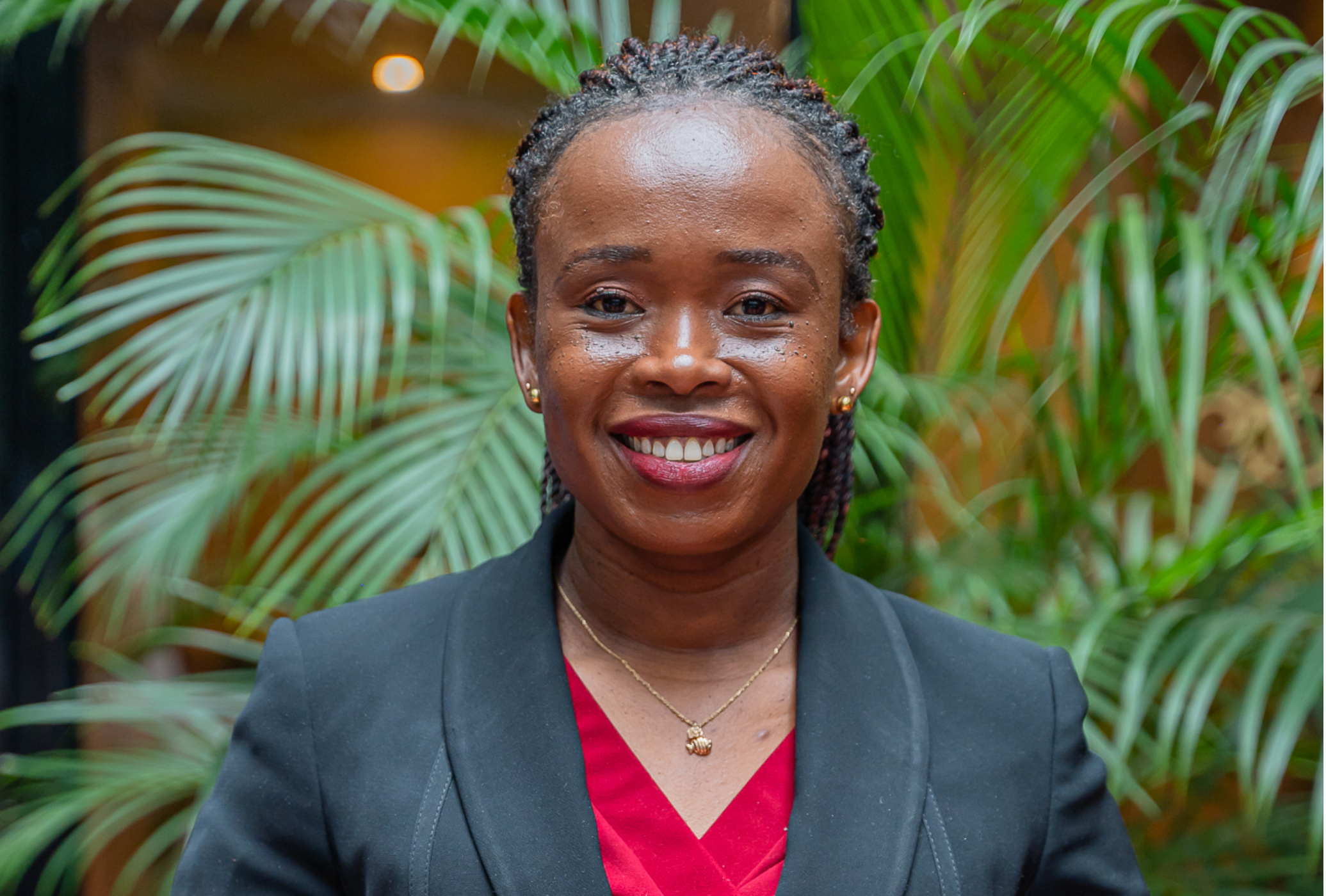
Dr Supa Tunje. She is the president of the Kenya Pediatric Association (KPA).
The health of a nation is often revealed by how well it treats its children. As President of the Kenya Paediatric Association, Dr Supa Tunje has earned a reputation as a catalyst for change — passionate, tireless, and unwavering in her belief that every child in Kenya deserves access to the highest attainable standard of healthcare.
Inspired by the dedication of paediatricians and child-health professionals across the country, she leads with purpose, championing evidence-based care, equity, and innovation to pursue a healthier, more hopeful future for Kenya’s children. Her leadership blends advocacy with action, pushing boundaries to secure a healthier future for the nation’s youngest citizens.
Affectionately known as “Supa DC” by her colleagues, Dr Tunje’s path into medicine began after she completed high school and earned admission to the University of Nairobi’s medical school. She graduated in 2003 with a degree in medicine and surgery and subsequently served as a medical officer in various public hospitals nationwide. It was there, in crowded wards and overstretched clinics, that she encountered the plight of society’s youngest patients dependent on adults to navigate a health system not built with them in mind. Children and adolescents’ vulnerability drew her to paediatrics. She returned to the University of Nairobi to pursue a master’s in paediatrics and child health.
As a paediatrician, Tunje built a reputation for diligence that soon led to her appointment as head of a hospital, a role that drew her into administration and management and gave her a clear view of how policies affected her work as a paediatrician. During this time, she noted one particular group of sick children that was consistently left behind: children with neurological disorders such as cerebral palsy, developmental delays, and epilepsy, among other neurological conditions. Many were fully dependent on their caregivers and would remain so for the rest of their lives, yet the system offered little sustained support for them or their families. The gap troubled her. It took Tunje back to school, this time to Aga Khan University to specialise as a neurologist. Today, she is one of only about twenty neurologists in Kenya.
As a neurologist, she recognises that treatment doesn’t end with clinical care. Her patients often need physical, occupational, and speech therapy, mobility aids such as walkers and wheelchairs, complex medication regimens, and in some cases a special diet – services that come at a fee. Too often, caregivers are left to shoulder these costs alone, straining family finances and forcing impossible trade-offs far beyond the clinic walls.
Dr Tunje is categorical that with timely, high-quality care during pregnancy, labour, and delivery – along with effective resuscitation and management for newborns too small or too sick – much of this lifelong burden could be avoided. For her, prevention is not an abstraction; it is a moral and medical imperative.
Confronted daily with the toll borne by children and their caregivers – and with the investments required to prevent that suffering – Tunje turned increasingly toward advocacy. She took on a leadership role within a local branch of the Kenya Medical Association, serving as secretary and pressing for the rights of both patients and health care providers. This role set her on a broader trajectory, culminating in her election as president of the Kenya Pediatric Association (KPA). In that role, she now represents paediatricians nationwide, working to improve health care standards for all newborns, children, and adolescents. Through networking, collaborating with partners and stakeholders, and engaging the government, she pushes for systemic changes that address the needs of all children and the frontline workers who serve them.
“After I completed my studies in pediatric neurology, I opted to work in the country’s public sector despite having a multitude of opportunities to work elsewhere. Many of the families who care for children with neurological disorders cannot afford health care in the private sector. By working in the public sector, I ensure that they have access to a neurologist, which gives them hope to live.” Dr Tunje says. “Through my networks, I have also established a system that supports these families from low socioeconomic backgrounds to access advanced neurological diagnostics, facilitated by the Kenya Paediatric Association and the Gertrudes Foundation.”
A Dual Passion: Clinical Care and Policy Advocacy
For years, there has been a disconnect, with those tasked with policy development far removed from the clinics and wards where it would be enforced. Dr Tunje has pushed against that divide. Looking back, her career is defined as much by advocacy as by clinical practice.
“When you personally translate a policy you have helped create into practice, you gain firsthand information on whether the policy is fit-for-purpose. Because you, as a healthcare worker, were involved in the policy development, that drives you to implement it during service delivery, which eventually improves the health outcomes of patients,” she states. Her point is simple but insistent: practitioners belong at the health policy table.
In recent years, as president of KPA, her work has extended to representing the association at national and global stages, where she shows up for her profession at forums marking key newborn and child health events. She has emerged as a forceful advocate for the newborn in EWENE – insisting that even as attention rightly centers on mothers, the newborn must not be treated as an afterthought. “No mother gets pregnant expecting to lose their baby,” she states, her voice edged with urgency and conviction. “We cannot separate the mother and the baby. The mother needs to be there so that the baby can grow and thrive. However, for a generation to continue, the baby needs to live.”
Life Beyond the Hospital
When she is not immersed in her demanding professional life, Tunje retreats to the rhythm of home. A wife and mother of three, she channels her experience into mentoring her children, nurturing in them leadership and a sense of purpose. She balances her professional life with her personal roles, finding joy in family, home, and hobbies like reading, baking, and crocheting.
She also loves spending time outdoors, staying fit, and having coffee with friends. Her participation in her church – once as a singer in her church choir and now as one of the First-Aid team members – speaks to a grounded, well-rounded character that carries through every facet of her life.