

Audio By Vocalize
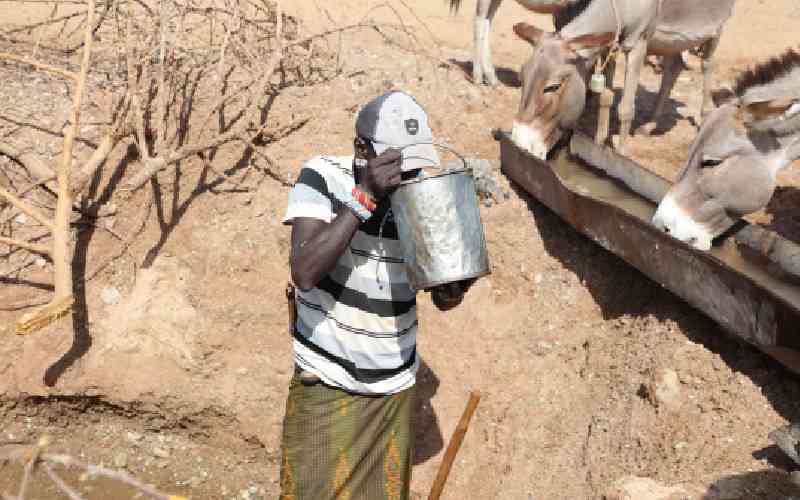
A pastoralist drinks water after watering his donkeys at Laresoro River in drought-hit Samburu County. [Wilberforce Okwiri, Standard]
As Lent unfolds, Christians across Kenya enter 40 days of prayer, fasting and almsgiving. Traditionally, this season is about personal renewal, strengthening prayer, practicing restraint and examining conscience. But Lent also asks a civic question: How do we treat the most vulnerable among us, including animals?
If a nation’s greatness is measured by how it treats its animals, then Lent must call us beyond private devotion, and toward humane laws, responsible ownership, and everyday acts of mercy.
Across our towns, estates and villages, stray dogs roam in search of food. Abandoned kittens hide in drainage systems. Working animals endure long hours with little care. Shelters like the Kenya Society for the Protection and Care of Animals and Nairobi Feline Sanctuary remain overstretched and underfunded, quietly carrying a persistent animal welfare burden that rarely makes headline news.
Fasting is not only abstaining from food. It creates margin in time, in spending and in attention. The Church teaches that what is saved should be redirected to those in need. Yet “the needy” is often defined narrowly as human. Animals, too, depend on human responsibility. Their vulnerability stems from abandonment, neglect, uncontrolled breeding, lack of vaccination, and weak enforcement of welfare standards.
This is not an appeal to sentiment. It is an appeal to stewardship. Genesis 1:28 calls humanity to exercise dominion responsibly, while Proverbs 12:10 reminds us that “the righteous care for the needs of their animals.” These verses underscore that compassion is not optional; it is integral to faith.
Kenya’s stray animal populations number in the tens of thousands especially in urban centres. Rabies is estimated to cause up to 2,000 human deaths annually. Vaccination, sterilisation and responsible ownership are urgent public health needs, not luxuries. Addressing these realities requires more than sympathy. It requires discipline and a cultural shift.
A ’40 Days of Kindness’ approach could anchor Lent in practical discipline. Small acts matter: Placing clean water outside during extreme heat; feeding stray animals; supporting vaccination and sterilisation drives; reporting cruelty; offering shelter during heavy rain; and teaching children humane treatment of animals. Compassion practiced consistently shapes culture. When kindness becomes routine rather than occasional, it strengthens public health, reinforces responsible ownership, and deepens our collective moral character
Some argue human suffering must take precedence. Kenya indeed faces unemployment, food insecurity and healthcare challenges. Yet compassion is not finite. Animal welfare intersects directly with public interest: Vaccination reduces disease risk, sterilisation lowers stray management costs, humane education nurtures empathy in youth, proper waste management reduces animal scavenging and environmental contamination and responsible ownership reduces neighbourhood conflict and public safety concerns.
A society that normalises neglect gradually erodes its moral reflex. Indifference tolerated in one sphere inevitably seeps into others. Lent is an opportunity to recalibrate and bring belief into alignment with conduct, to choose action over apathy and to embrace measurable responsibility in our stewardship of life.
Policy reform and enforcement remain essential. Although Kenya’s animal protection framework anchored in the Prevention of Cruelty to Animals Act (CAP 360) and the Wildlife Conservation and Management Act (2013), provides a legal foundation, outdated provisions, uneven enforcement capacity, limited resources, and low public awareness dilute its impact, particularly for domestic and farm animals.
Strengthening municipal sterilisation programmes, institutionalising school-based humane education, and sustaining mass vaccination campaigns would yield measurable gains, but lasting progress ultimately depends on a cultural shift that must be practiced, not merely legislated.
Forty days is long enough to begin forming new habits and reshaping conscience. The goal is not to rescue every abandoned animal, but to refuse indifference and accept responsibility where we can. Let fasting feed more than ourselves, redirecting what we save toward acts of mercy. Let almsgiving move beyond convenience and become intentional. Let repentance influence how we exercise care for the voiceless in our homes, streets, and communities.
The writer is an Animal Welfare Advocate and Founder of Whisker Wonders Kenya (Pet Blog)
Follow The Standard
channel
on WhatsApp
A pastoralist drinks water after watering his donkeys at Laresoro River in drought-hit Samburu County.
[Wilberforce Okwiri, Standard]
As Lent unfolds, Christians across Kenya enter 40 days of prayer, fasting and almsgiving. Traditionally, this season is about personal renewal, strengthening prayer, practicing restraint and examining conscience. But Lent also asks a civic question: How do we treat the most vulnerable among us, including animals?
If a nation’s greatness is measured by how it treats its animals, then Lent must call us beyond private devotion, and toward humane laws, responsible ownership, and everyday acts of mercy.
Across our towns, estates and villages, stray dogs roam in search of food. Abandoned kittens hide in drainage systems. Working animals endure long hours with little care. Shelters like the Kenya Society for the Protection and Care of Animals and Nairobi Feline Sanctuary remain overstretched and underfunded, quietly carrying a persistent animal welfare burden that rarely makes headline news.
Fasting is not only abstaining from food. It creates margin in time, in spending and in attention. The Church teaches that what is saved should be redirected to those in need. Yet “the needy” is often defined narrowly as human. Animals, too, depend on human responsibility. Their vulnerability stems from abandonment, neglect, uncontrolled breeding, lack of vaccination, and weak enforcement of welfare standards.
This is not an appeal to sentiment. It is an appeal to stewardship. Genesis 1:28 calls humanity to exercise dominion responsibly, while Proverbs 12:10 reminds us that “the righteous care for the needs of their animals.” These verses underscore that compassion is not optional; it is integral to faith.
Kenya’s stray animal populations number in the tens of thousands especially in urban centres. Rabies is estimated to cause up to 2,000 human deaths annually. Vaccination, sterilisation and responsible ownership are urgent public health needs, not luxuries. Addressing these realities requires more than sympathy. It requires discipline and a cultural shift.
A ’40 Days of Kindness’ approach could anchor Lent in practical discipline. Small acts matter: Placing clean water outside during extreme heat; feeding stray animals; supporting vaccination and sterilisation drives; reporting cruelty; offering shelter during heavy rain; and teaching children humane treatment of animals. Compassion practiced consistently shapes culture. When kindness becomes routine rather than occasional, it strengthens public health, reinforces responsible ownership, and deepens our collective moral character
Some argue human suffering must take precedence. Kenya indeed faces unemployment, food insecurity and healthcare challenges. Yet compassion is not finite. Animal welfare intersects directly with public interest: Vaccination reduces disease risk, sterilisation lowers stray management costs, humane education nurtures empathy in youth, proper waste management reduces animal scavenging and environmental contamination and responsible ownership reduces neighbourhood conflict and public safety concerns.
A society that normalises neglect gradually erodes its moral reflex. Indifference tolerated in one sphere inevitably seeps into others. Lent is an opportunity to recalibrate and bring belief into alignment with conduct, to choose action over apathy and to embrace measurable responsibility in our stewardship of life.
Policy reform and enforcement remain essential. Although Kenya’s animal protection framework anchored in the Prevention of Cruelty to Animals Act (CAP 360) and the Wildlife Conservation and Management Act (2013), provides a legal foundation, outdated provisions, uneven enforcement capacity, limited resources, and low public awareness dilute its impact, particularly for domestic and farm animals.
Strengthening municipal sterilisation programmes, institutionalising school-based humane education, and sustaining mass vaccination campaigns would yield measurable gains, but lasting progress ultimately depends on a cultural shift that must be practiced, not merely legislated.
Forty days is long enough to begin forming new habits and reshaping conscience. The goal is not to rescue every abandoned animal, but to refuse indifference and accept responsibility where we can. Let fasting feed more than ourselves, redirecting what we save toward acts of mercy. Let almsgiving move beyond convenience and become intentional. Let repentance influence how we exercise care for the voiceless in our homes, streets, and communities.
The writer is an Animal Welfare Advocate and Founder of Whisker Wonders Kenya (Pet Blog)
Stay informed. Subscribe to our newsletter
Follow The Standard
channel
on WhatsApp
By Cecilia Kimuyu