

The venue hummed with energy. Drummers set a slow, grounding rhythm as excited visitors weaved through aisles lined with colourful banners promising safaris, sunsets and luxury lodges. The scent of freshly brewed Kenyan coffee lingered in the air, a subtle reminder that travel often begins with small pleasures.
Amid the lively tapestry at the Magical Kenya Travel Expo, one booth stood quietly magnetic. No glittering posters. No aggressive sales pitch.
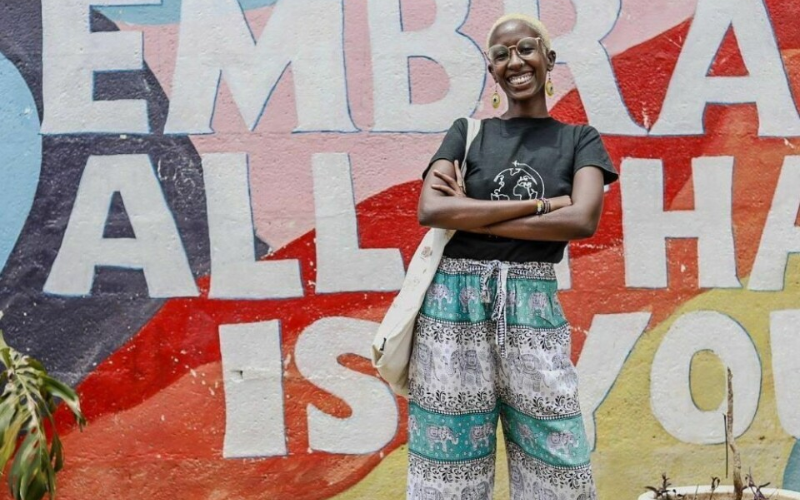
“Welcome to my corner office,” said the woman at the booth, extending her business card: The Travelling Wakili, Njeri Gachuhi.
For years, Njeri balanced high-stakes litigation with long hours in court. Case files, submissions and client meetings filled her days. She was diligent, respected and meticulous, yet beneath the professional polish, a quiet unrest grew.
“Law grounded me, but travel freed me, and I discovered that both are forms of justice, one for society, one for the self,” she said.
There were mornings she arrived at court before the city had fully awakened, files tucked under her arm, mind already rehearsing arguments. Lunch breaks meant returning client calls. Weekends dissolved into preparation for Monday hearings. On paper, it was progress, partnership track whispers, complex briefs, and professional respect. But somewhere between adjournments and affidavits, a softer question surfaced: Was this success, or simply endurance?
Her first solo trip to Lamu shifted her perspective. Sunrise over the Indian Ocean cast golden streaks across turquoise waters as the call to prayer mingled with the gentle lapping of waves.
In that stillness, Njeri realised she had been running, from exhaustion and from the question of fulfilment. Travel, she discovered, was a way back to herself.
In 2018, she posted photos from a backpacking trip to Zimbabwe on Instagram. Friends, family and strangers responded with enthusiasm. “Can I join your next trip?” they asked. The idea began to take shape.
A small experiment in Homa Bay in 2019 brought 15 travellers, friends and strangers together. The spark caught fire.
By February 2020, she had handed in her resignation. A month later, the pandemic paused the world. In the stillness, she refined her vision: The Travelling Wakili, a boutique travel company built around safety, inclusion and intentional experiences.
She remembers watching a group share stories by the lakeshore at sunset, lawyers, creatives and corporate professionals who arrived as acquaintances and left as something softer. Someone proposed a sunrise hike. Another offered to cook breakfast. Laughter travelled easily across the water.
“That was the moment I realised I was not just organising trips. I was creating space for rest, for honesty, for connection,” she recollects.
The lawyer in her recognised structure. The traveller recognised the possibility.
“Each trip is intimate, immersive and deliberately small with no more than ten participants to ensure genuine connection, from wellness retreats in Limuru to heritage walks in Naivasha, from coastal kayaking in Watamu to the Galentine’s Samburu trip, every journey carries intention,” says Njeri.
She explains that many women grew up hearing the world was unsafe. “I wanted to show it could be safe, enriching and soul-stirring if we travel consciously.”
Her clientele includes women and young professionals. Every guide, accommodation and itinerary is vetted, every moment curated. Her company motto captures it: “Travel with strangers, go home with friends.”
The proof, she says, lies in what she calls “stories from the road”. A young lawyer joined a Turkana trip seeking perspective and returned inspired to advocate for girls’ education. A couple reconnected on a safari in Amboseli after years apart. A solo female traveller found confidence kayaking along Kenya’s coast, learning to trust herself in unfamiliar waters.
Her approach underscores that travel is not only about luxury lodges or wildlife safaris. It can also be about mindfulness, storytelling, culture and community.
By collaborating with local guides, artisans and farmers, her trips channel benefits directly into communities while offering travellers authentic engagement.
As global travel conversations increasingly centre on sustainability and experience-driven journeys, her model feels timely. Smaller groups reduce environmental strain. Partnering with local hosts keeps revenue circulating locally. Storytelling replaces spectacle.
She sees herself as part of a new generation of African travel curators reframing tourism not as extraction, but exchange, facilitating encounters between visitor and host, between professional ambition and personal restoration.
She believes travel mirrors life. “You get lost, you find your way, you learn to trust the journey,” she says.
At the expo, she shared a photo of herself kayaking along the coast, clear water, sun glinting off gentle waves, small islands in the distance.
“I am my first client,” she smiled. “If it works for me, it can work for others.”
Travelling Wakili notes
Start small. Explore your town, a new café, a nature trail, and a local museum. Small adventures build confidence.
Travel with intention. Ask, “Why this trip?” Rest, connection or rediscovery. Purpose makes journeys transformative.
Safety without fear. Research destinations, share itineraries, but do not let fear keep you home. Freedom and caution can coexist.
Pack empathy. Every place has its heartbeat. Listen, learn and respect the local story.
Collect moments, not mileage. True value lies in experiences, reflection and human connection.
Solo travel is growth. Travelling alone is an exercise in trust, self-awareness and resilience.
Community is key. Even on solo journeys, connection emerges. Fellow travellers often become friends for life.
Rediscover Africa. Kenya and the continent are filled with untapped, soulful destinations. Seek them deliberately.