

Audio By Vocalize
In Kenya, the comportment of former heads of state is not left to custom alone but is codified in statute. The Presidential Retirement Benefits Act 2003 sets out a clear framework intended to preserve institutional decorum and guard against the blurring of past and present authority.
Under its provisions, a retired president may not hold office in a political party beyond six months after leaving power, an interval designed to ease transition rather than entrench continued partisan influence. Nor may former incumbents negotiate or strike agreements on behalf of the government, receive intelligence briefings, or access the State House without invitation. Moreover, they remain bound by the Official Secrets Act, which prohibits the disclosure of confidential state information.
The intent is plain: Retirement marks not merely a change of title but a decisive withdrawal from the instruments of executive authority to preclude abuse of influence by restricting former presidents’ abilities to exploit their former positions for personal gain or to direct current government decisions.
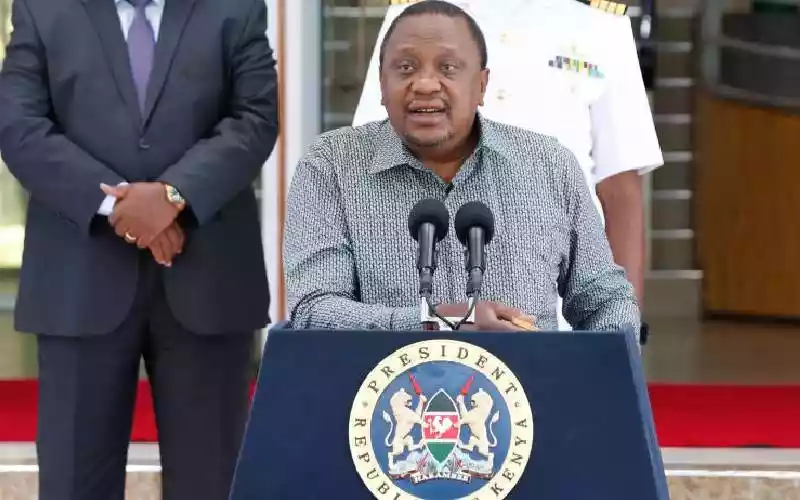
Retired President Uhuru Kenyatta has not, in any formal sense, transgressed the conventions that typically govern the conduct of former heads of state. He has not violated the decorum traditionally expected of those who once occupied the highest office. Yet politics is rarely confined to questions of legality. It is also a theatre of perception, and here, ambiguity thrives.
What invites conjecture is the impression that Mr. Kenyatta has, at times, overreached himself in exercising his undoubted right to comment on national affairs. In a country where former presidents are expected to recede into stately retirement, his interventions have been interpreted by some as edging beyond reflection into reproach.
His pointed criticism of the Kenya Kwanza administration led by President William Ruto has, fairly or otherwise, been read as amplifying public discontent. At a time when many Kenyans are frustrated by the slow pace at which pressing economic and social challenges are being addressed, such remarks risk being construed not merely as commentary but as a spark to popular anger. Whether this amounts to statesmanship or to shadow-boxing with a successor is a matter of political judgment. What is clear is that in Kenya’s febrile climate, even measured words from a former president carry uncommon weight.
In candour, much of the government’s present predicament can be traced to Uhuru’s tenure. He assumed office at a moment when the economy was expanding at close to double-digit rates. Yet by the end of his decade in power, growth had faltered and the economy was shrinking. This reversal followed a spree of prodigious public borrowing, much of it channeled into grand infrastructure schemes whose promised dividends for ordinary citizens proved elusive.
According to media reports, tensions between Uhuru and Ruto have escalated into a public spat so acute that a regional head of state has reportedly intervened. Such spectacle ill serves national cohesion, particularly as Kenya grapples with economic strain and fractious politics. Perhaps the former President needs a reminder that an exit from power is not an encore.
Prudence and precedent counsel restraint. His predecessors, Daniel Moi and Mwai Kibaki, retreated into dignified reserve upon leaving office. Their studied silence and low profiles offered stability, sparing the republic the turbulence of perpetual rivalry at the summit.
Mr. Khafafa is a public policy analyst
Follow The Standard
channel
on WhatsApp
In Kenya, the comportment of former heads of state is not left to custom alone but is codified in statute. The Presidential Retirement Benefits Act 2003 sets out a clear framework intended to preserve institutional decorum and guard against the blurring of past and present authority.
Under its provisions, a retired president may not hold office in a political party beyond six months after leaving power, an interval designed to ease transition rather than entrench continued partisan influence. Nor may former incumbents negotiate or strike agreements on behalf of the government, receive intelligence briefings, or access the State House without invitation. Moreover, they remain bound by the Official Secrets Act, which prohibits the disclosure of confidential state information.
The intent is plain: Retirement marks not merely a change of title but a decisive withdrawal from the instruments of executive authority to preclude abuse of influence by restricting former presidents’ abilities to exploit their former positions for personal gain or to direct current government decisions.
Retired President Uhuru Kenyatta has not, in any formal sense, transgressed the conventions that typically govern the conduct of former heads of state. He has not violated the decorum traditionally expected of those who once occupied the highest office. Yet politics is rarely confined to questions of legality. It is also a theatre of perception, and here, ambiguity thrives.
What invites conjecture is the impression that Mr. Kenyatta has, at times, overreached himself in exercising his undoubted right to comment on national affairs. In a country where former presidents are expected to recede into stately retirement, his interventions have been interpreted by some as edging beyond reflection into reproach.
His pointed criticism of the Kenya Kwanza administration led by President William Ruto has, fairly or otherwise, been read as amplifying public discontent. At a time when many Kenyans are frustrated by the slow pace at which pressing economic and social challenges are being addressed, such remarks risk being construed not merely as commentary but as a spark to popular anger. Whether this amounts to statesmanship or to shadow-boxing with a successor is a matter of political judgment. What is clear is that in Kenya’s febrile climate, even measured words from a former president carry uncommon weight.
In candour, much of the government’s present predicament can be traced to Uhuru’s tenure. He assumed office at a moment when the economy was expanding at close to double-digit rates. Yet by the end of his decade in power, growth had faltered and the economy was shrinking. This reversal followed a spree of prodigious public borrowing, much of it channeled into grand infrastructure schemes whose promised dividends for ordinary citizens proved elusive.
According to media reports, tensions between Uhuru and Ruto have escalated into a public spat so acute that a regional head of state has reportedly intervened. Such spectacle ill serves national cohesion, particularly as Kenya grapples with economic strain and fractious politics. Perhaps the former President needs a reminder that an exit from power is not an encore.
Prudence and precedent counsel restraint. His predecessors, Daniel Moi and Mwai Kibaki, retreated into dignified reserve upon leaving office. Their studied silence and low profiles offered stability, sparing the republic the turbulence of perpetual rivalry at the summit.
Mr. Khafafa is a public policy analyst
Follow The Standard
channel
on WhatsApp
By Leonard Khafafa