

Audio By Vocalize

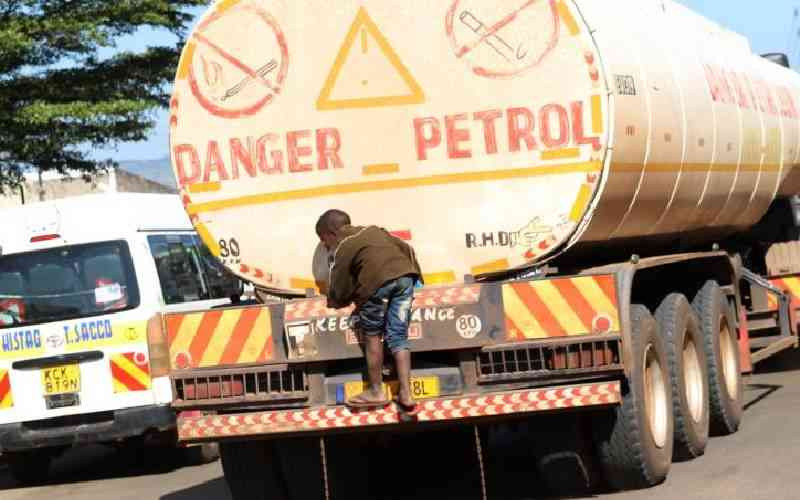
Accidents and incidents in the petroleum sector cost Kenya’s economy more than Sh197 million in direct losses between July and December 2025. According to statistics analysed by the Energy and Petroleum Regulatory Authority (EPRA), 83 percent of these accidents occurred during the transportation of petroleum products. These losses translate to consequences that extend far beyond the consignor and the consignee. They ripple across communities and public systems, revealing a shared vulnerability that demands collective responsibility.
Accidents involving petroleum create heavy financial losses arising from damaged infrastructure, lost product, business interruptions and legal liabilities. Further, the environment suffers serious degradation due to soil, surface and groundwater contamination. Most tragically, lives are lost and families permanently altered through life-threatening injuries, fatalities and long-term disabilities. These human costs translate into broader economic burdens of disrupted supply chains, job losses, increased insurance premiums, and a strain on healthcare facilities.
Safety is a shared responsibility by the petroleum transport company, the driver, the consignee, regulatory entities and the public in general. Accidents will more often result from unsafe incidents ignored over time and ultimately progress to actual occurrences. These incidents are technically classified as near misses. It is a regulatory requirement for licensees in the sector to keep a record of near misses, the main objective being the development and implementation of robust mitigation measures aimed at preventing real occurrences.
Human factors remain one of the leading causes of accidents involving petroleum transportation. To this end, petroleum transport companies are required by the Petroleum (Licensing of Petroleum Road Transportation Business) Regulations, 2025, to implement structured journey management plans for petroleum deliveries. The plans outline safe routes based on risk assessment, designated rest points, communication protocols, and contingency measures in the event of an accident. Route planning and documentation, to a great extent, reduce the likelihood of accidents and poor response during emergencies.
Monitoring driver behaviour is a key emphasis in the regulations and hence, petroleum transporters are required to put in place resilient Transport Safety Management Systems (TSMS). These systems require companies engaged in petroleum road transportation to institutionalise safety across their operations, including the use of tracking systems that are GPS-enabled for their fleets. Drivers are expected to adhere to approved routes, comply with speed limits and rest requirements, and follow operational safety procedures at loading, transit and offloading points. This moves the sector away from informal, ad-hoc driving practices to a disciplined, accountable transport system where safety decisions are deliberate, documented, and auditable.
A TSMS typically includes policies on risk assessment, incident reporting, preventive maintenance, driver training, fatigue management, emergency preparedness, and continuous improvement. By embedding safety into corporate governance structures, the regulations shift responsibility from the driver alone to the company, ensuring that safety is managed systematically rather than reactively.
Investigations conducted on the various accidents involving petroleum transportation reveal the need for stakeholder collaboration to implement safety practices throughout the value chain. Such collaboration can be achieved through capacity building for individual petroleum transport companies and sector players to achieve enhanced surveillance. The consignees must also demand compliance from their logistics partners, while insurance companies should incentivise safe practices through strict policies.
The Petroleum (Licensing of Petroleum Road Transportation Business) Regulations, 2025 provide a structured approach to enhancing safety in the petroleum road transportation setting, clear requirements for licensing, vehicle standards, driver competence, including requirements for defensive driving, operational procedures, and compliance monitoring. The duty of care is upon all of us, policymakers, regulators, oil marketing companies, petroleum transportation companies, and other road users, to ensure effectiveness in the implementation of the regulations.
Follow The Standard
channel
on WhatsApp
By Edward Kinyua