

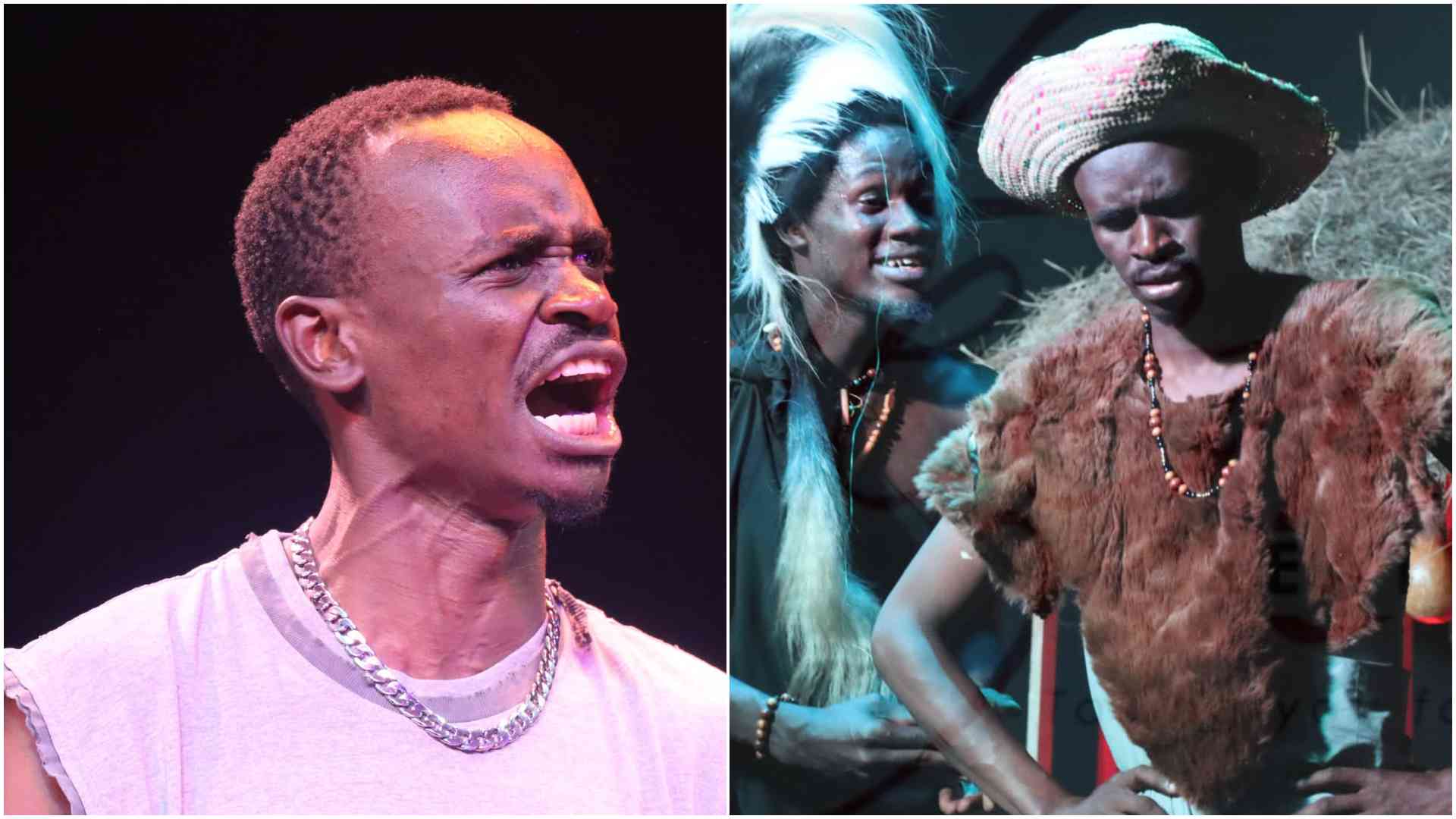
Victor Muyekwe, founder of Chisaina Arts, saw his production Niqabi Ninja receive nominations for Best Two-Hander Production, Best Performance by a Female Actor in a Leading Role in a Play and Best Performance by a Female Actor in a Monologue at the recently concluded 2026 Kenya Theatre Awards.
Through Chisaina Arts, Muyekwe plans to stage five productions this year, including a Swahili two-hander titled Dereva na Makanga, which he has written, alongside plays with other playwrights.
Muyekwe began performing poems and choral verses in church, later advancing to solo verse competitions in primary school, where he consistently excelled and reached national festival levels.
One of his earliest memorable performances came at 12 years old in an improvised church skit. Without a script, he was given a concept and asked to perform. The experience carved out his storytelling and quick-thinking skills that have since influenced his directing style.
In high school, he continued to recognise his directing talent when he started simplifying to fellow actors what the director was saying. He also participated in drama festivals, and in 2015, he was awarded Best Narrator at county drama festivals, followed by Best Actor in Nandi County in 2016. At the time, he viewed performance only as a passion.
“I did not initially see it as a career. It was something I was talented in and enthusiastic about,” he recalls.
He wanted to become a lawyer, but that shifted when he saw that Kenyatta University was offering Theatre Arts and Film as a course, and this became the time he saw performing arts as a profession.
In 2019, he wrote his first professional script at the university titled The Bitter Fruit, which explored teenage pregnancy and the conflicts that it brings in families because the parents blame each other.
“I wrote it for my classwork, and I did not know I could write something good. It was amazing, and I scored well,” he says.
He then founded Chisaina Arts, a theatre production company that sought to give artists opportunities. Chisaina was his stage name, derived from his surname, which doesn’t exist in personal documents. After every performance of poetry and monologues online, he used to introduce himself as the CEO of Chisaina Arts long before the company existed.
The idea became reality in the aftermath of the COVID-19 pandemic, when acting opportunities dwindled.
“I realised I had scripts. I could direct and produce my own shows,” he says.
In 2022, Chisaina Arts staged its first production outside the university setting, The Bitter Fruit and The Cougar. He collaborated with friends, and the company evolved into a structured production house.
“In the beginning, I did not have systems. I was just calling friends and telling them that we have a play we need to stage,” he says.
He has since produced more than 15 shows while mentoring early-career performers. One of the things that he did not like as a young actor was seeing talented performers dismissed without guidance. Through Chisaina Arts, he sought to create a more supportive environment where artists are mentored.
“A lot of people are not in good shape when you meet them for the first time. It is because they did not have someone to believe in them and give them a chance. The more they create, the better they become,” he says.
He continues: “Several artists mentored through the company have since earned award nominations and wins,” he says, beaming with pride.
Chisaina Art’s work centres on socially conscious storytelling, staging productions that have explored themes such as teenage pregnancy, gender-based violence, corruption, epilepsy and political accountability. Since 2023, his works have been centred on themes.
“Art is not only entertainment. I want audiences to leave having learned something. Theatre is advocacy, employment, and a tool capable of expanding and changing public imagination,” he says.
This approach informed productions such as Beyond Silence: JM Kariuki Chronicles, staged in 2023 and restaged in 2025. The play depicted how, while times have changed, the country is gripped with the same socio-political issues that have recently been addressed in the Gen-Z protests.