

Audio By Vocalize

The release of Preliminary Investigation Report 01/03/2024 by the Aircraft Accident Investigation Department is a watershed moment for aviation law in Kenya. While the report disclaims the purpose of apportioning “blame or liability,” its factual disclosures provide an evidentiary foundation for what will likely be a landmark case in the law of torts and statutory duty.
On March 5, 2024, a Cessna 172M (5Y-NNJ) and a Dash 8 (5Y-SLK) occupied the same space at 6,100 feet over Nairobi National Park. The resulting collision claimed two lives and destroyed an aircraft. As a legal practitioner, the report reveals three critical areas of exposure that the Kenya Civil Aviation Authority (KCAA) and the respective operators must answer for. The primary legal defence in midair collisions typically rests on the “See-and-Avoid” principle enshrined in the Kenya Civil Aviation (Rules of the Air) Regulations. Under Visual Flight Rules, the ultimate responsibility for separation lies with the pilot-in-command.
The report notes that the Dash 8 PIC had visual contact with the Cessna at the “8 o’clock position” but judged it “well clear.” In litigation, this judgment call will be subjected to the “Reasonable Pilot Standard.” A court must decide whether it was negligent for a highly experienced airline transport pilot licence holder to proceed with a climb while a training aircraft was in close proximity. Conversely, the doctrine of vicarious liability will apply to Ninety Nines Flying School, as the instructor on the Cessna bore a heightened duty to monitor blind spots during the upwind leg of their circuit.
While pilots fly the planes, the KCAA’s Air Traffic Control (ATC) is mandated by law to “prevent collisions between aircraft” and “maintain an orderly flow of traffic.” The transcript reveals that ATC cleared the Dash 8 for takeoff on Runway 14 while the Cessna was already on the upwind leg of Runway 07. This created a crossing conflict. Legally, providing “traffic information” does not fully discharge the state’s duty of care if the sequencing itself was inherently hazardous. If it is proven that the controller’s instructions placed the aircraft on a collision course, the KCAA faces significant exposure for breach of statutory duty—a claim that is often difficult to shield behind sovereign immunity.
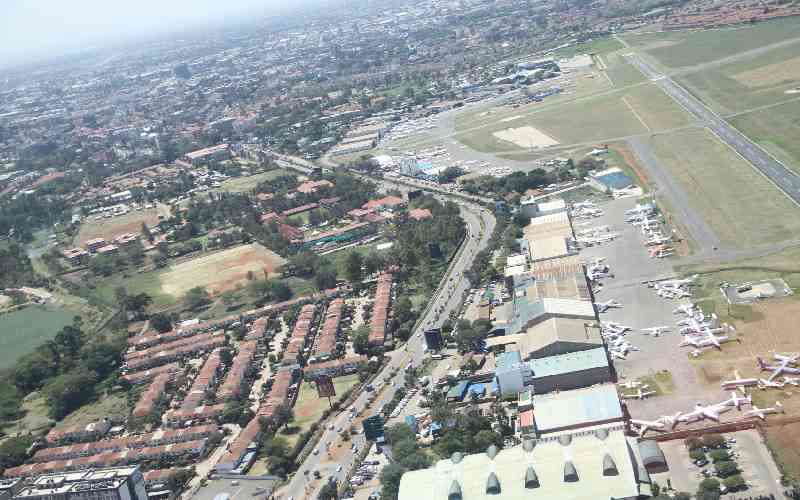
Perhaps the most legally significant finding is found in Section 1.17.4. The report discloses that an operator had reported at least 10 cases of conflicting traffic in the 12 months preceding the accident.
In the law of negligence, this establishes Actual Notice. The KCAA was aware of the congestion at Wilson Airport and the frequency of “near-misses.” In tort law, failing to act upon known risks can elevate a claim from simple negligence to gross negligence. The families of the deceased could argue that the KCAA’s failure to implement revised departure corridors or enhanced radar monitoring after being warned of the danger constituted a reckless disregard for human life.
The physical evidence—specifically the 99mm section of the Dash 8’s de-icing boot found at the Cessna’s crash site—serves as a “silent witness.” It confirms the point of impact was the Cessna’s tail plane. From a litigation standpoint, this suggests the Dash 8 may have overtaken or climbed through the Cessna’s path, which traditionally places a heavier burden of proof on the overtaking aircraft to justify its manoeuvres. This preliminary report is merely the opening argument. As the final report nears, the legal focus will shift from what happened to why the systemic safeguards failed. For the aviation industry, the 10 prior reports of conflicting traffic are a smoking gun that may ultimately force an overhaul of how Nairobi’s skies are managed.
Mr Nabutola is a Nairobi lawyer
Follow The Standard
channel
on WhatsApp
By Abel Nabutola