



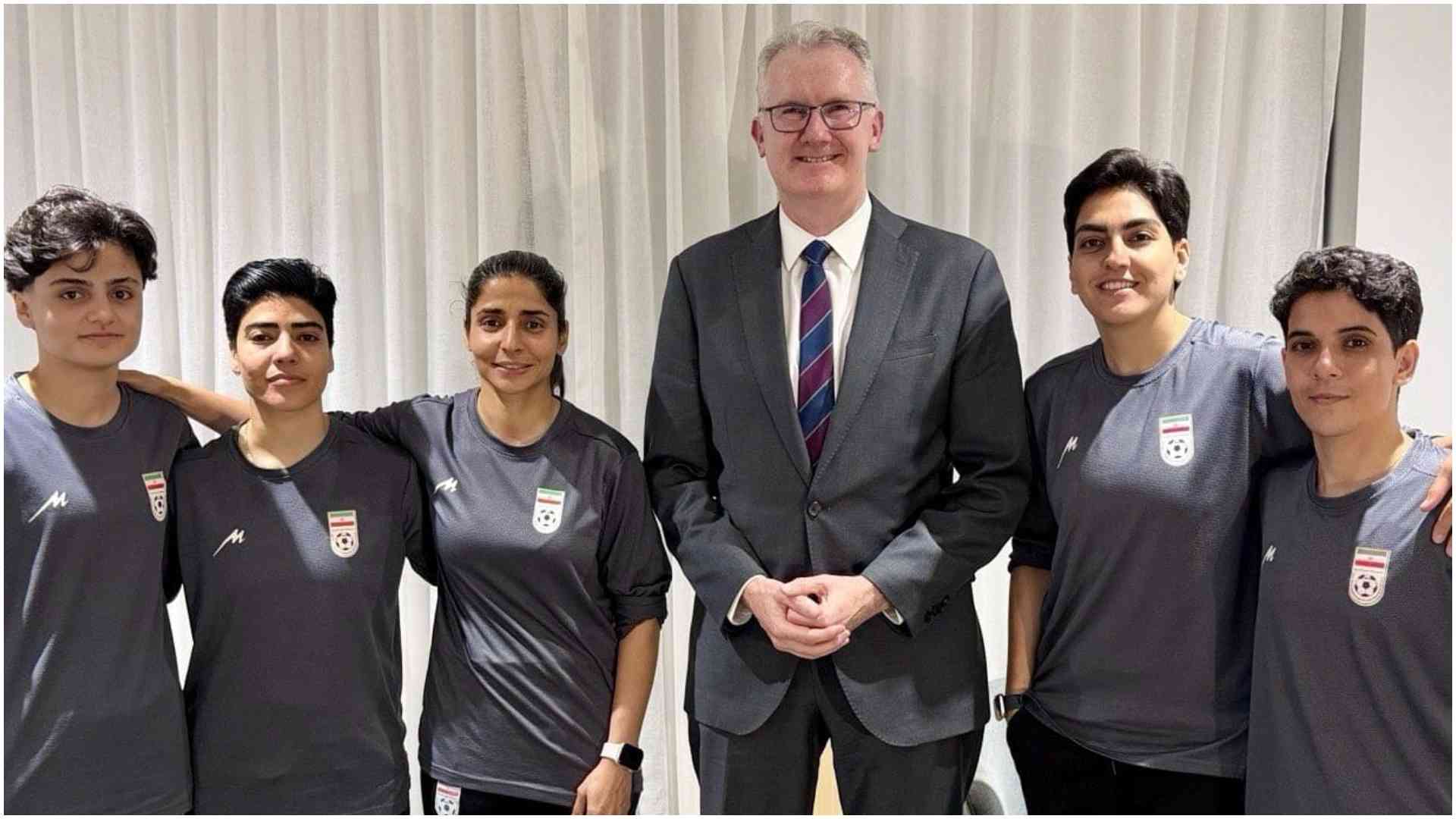
Five players from Iran’s women’s national football team have been granted humanitarian visas in Australia after reportedly seeking protection over fears they could face punishment if they returned home.
The players made headlines after refusing to sing Iran’s national anthem before their opening match at the AFC Women’s Asian Cup 2026 currently being held in Queensland.
According to Al Jazeera, Australia’s Home Affairs Minister Tony Burke confirmed that the government had granted humanitarian visas to the athletes and assured them they would be safe in the country.
“They are welcome to stay in Australia, that they are safe here, and they should feel at home here,” Burke said on Monday.
The five players granted visas include team captain Zahra Ghanbari, midfielders Fatemeh Pasandideh, Zahra Sarbali Alishah and Mona Hamoudi, as well as defender Atefeh Ramezanizadeh.
While the five have now been granted protection, the rest of the Iranian squad remains at a team hotel on the Gold Coast as they continue participating in the tournament.
Burke also revealed that Australia has offered assistance to other team members should they choose to remain in the country.
The controversy erupted when the Iranian players stood silently during their national anthem ahead of a match against South Korea Women’s National Football Team.
The act quickly triggered outrage back home, with a commentator on state broadcaster Islamic Republic of Iran Broadcasting describing the protest as the “pinnacle of dishonour.”
The situation rapidly gained international attention.
Us President Donald Trump said he had spoken with Australian Prime Minister Anthony Albanese about the players’ safety.
Trump warned that forcing the athletes to return to Iran would be a “terrible humanitarian mistake,” suggesting they could face danger if sent back.
He later praised Australia’s handling of the matter, saying Albanese was “doing a very good job having to do with this rather delicate situation.”
However, Trump noted that some players might still choose to return home due to fears for their families.
“Some, however, feel they must go back because they are worried about the safety of their families,” he said.
Australian officials confirmed that the five players left their team hotel discreetly with police assistance.
Iran’s semi-official Fars News Agency reported that the athletes departed through the back entrance of the hotel while authorities in Tehran attempted to determine their whereabouts.
Human rights advocates welcomed Australia’s decision to grant the visas.
Meanwhile, the global footballers’ union FIFPRO said concerns remain for the safety of the remaining players and urged authorities to ensure all members of the team understand their rights and can make decisions freely.