

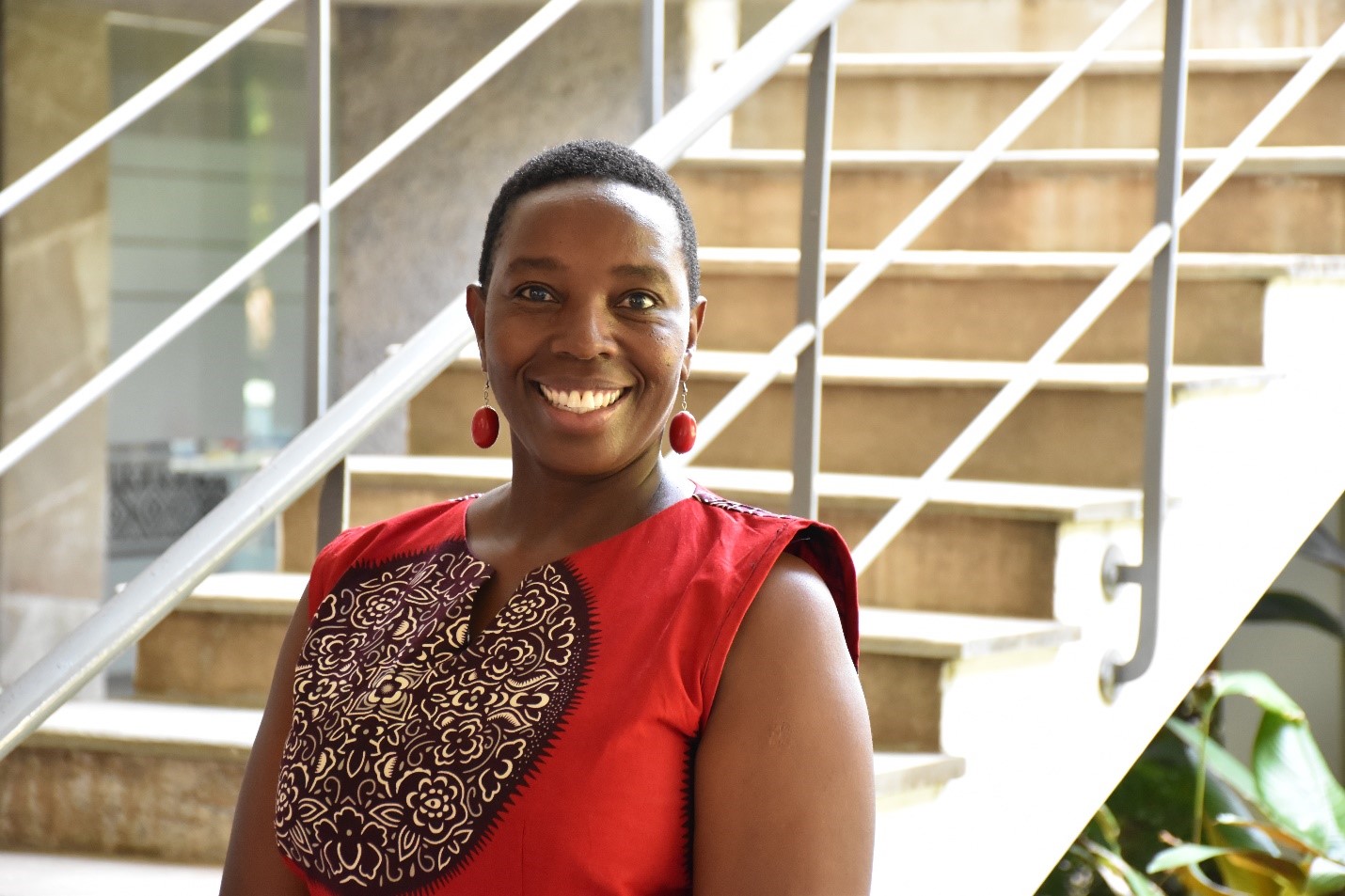
Prof Dorcas Kamuya leads the Health Systems and Research Ethics Department at the KEMRI-Wellcome Trust Research Programme in Kilifi.
When scientists search for answers in laboratories, Prof Dorcas Kamuya asks a different set of questions: Are the people who participate in research protected? Who owns the data? Will the discoveries benefit the communities where the studies take place?
At the KEMRI-Wellcome Trust Research Programme in Kilifi, Kamuya leads the Health Systems and Research Ethics Department. This team works to ensure that scientific breakthroughs are guided by fairness, transparency, and respect for communities.
As the world marks International Women’s Day on March 8, the Kenyan bioethicist says Africa must not only participate in global research but also shape the ethical rules that govern it.
But the path to that leadership role was not obvious. Kamuya says she grew up loving books and questioning what was fair and just, yet she had little exposure to research careers or mentors who could point her in that direction. It was only after working with researchers in Kilifi more than two decades ago that she discovered how science could help answer some of the social questions she had long been curious about.
She is now part of a growing generation of African women scientists shaping conversations that were once dominated elsewhere. For Kamuya, the rise of women in research is not just about representation, but about bringing new perspectives to questions that affect millions of people.
In this interview with The Star ahead of International Women’s Day, Prof Kamuya reflects on the path that led her into bioethics, the difficult choices young researchers face, and her hopes and fears about the future of research in Africa.
Here are the excerpts of the conversation:
If you had to explain your job to a 17-year-old, what would you say?
My job is multi-pronged. I am a researcher, a head of a scientific department, a leader and a mentor/supervisor. My main role involves undertaking research to inform on the ethical and socio-cultural considerations for research undertaken in our kind of settings. I lead and collaborate with other researchers in several studies, including those that are about pandemic ethics, ethics of emerging technologies, and vaccine equity studies, among others.
I also lead one of the four scientific departments at our Programme. The Health Systems and Research Ethics (HSRE) Department’s main aim is to generate evidence to inform efficient and resilient health systems in LMIC. Research teams in the department undertake diverse studies, including those aimed at providing on health financing and tracking progress towards achieving Universal Health Coverage. Other teams are focusing on evidence to strengthen evidence-informed health policy making, while others are looking at health service delivery in our health care systems. And the research group that I lead examines how to strengthen the ethical conduct of research, especially on emerging technologies and new types of study designs. We also support our programme to ensure that all activities that we undertake are ethically conducted, and we have an engagement platform that engages communities, stakeholders and publics about our research.
Another component of my work is to support capacity building in research in our context, through various ways, including on-the-job training of staff, supervising master’s and PhD students and junior researchers.
When you were younger, did you imagine yourself leading conversations about ethics, science, and emerging technologies, or did this path surprise you? What turning point changed everything?
I was always interested in science, but I did not have mentors around people who could guide me on a research career pathway; in fact, I did not know that there was such a pathway until later in life. While I pursued non-health-related science subjects in my early education, I always knew, and my parents and siblings always said, that I loved reading books and that I was always very keen on what was fair and just. I guess that is true for almost everybody.
My turning point was when I interacted with researchers at KWTRP – at the time, I had been involved in a project that promoted empowerment projects in communities in Kilifi. The KWTRP was keen to set up an engagement programme, and I was interested in furthering my studies, specifically masters at the time. Joining the programme provided me with a first-hand experience of the contribution that researchers can make in our parts of the world. Over 20 years later, and a significant contribution to research, I see so clearly the role of context- relevant research, and I am so hopeful for the young researchers who have opportunities that we otherwise did not have.
Biobanking can shape the future of medicine, but it also raises questions about ownership and consent. What fears do you personally have about how genetic data from African communities could be misused, and what safeguards give you confidence?
This is really an important question. Biobanking involves the sharing of samples and associated anonymised data for research purposes. Before any sharing of these, there are rigorous systems that must review and approve any sharing. The informed consent of the participant, whose data or samples might be shared, is utmost; it must be explicit and authentic.
Thus, different types of samples can be stored in a biorepository, and can be shared in the process of biobanking. For example, in Kenya, a milk biobank was set up to provide life-saving nutrition to vulnerable children.
With regard to genetic studies generally, the contribution from African ancestry is still very low. This means that an important information gap exists. This can be on how our bodies respond to therapeutics (medicines, vaccines, etc), or the interaction of environment with genetics, or even the genetic predisposition to certain health risk factors. These are important gaps that need to be addressed. However, in addressing these, we must also pay attention to the issues that might arise. An approach that we have used includes building capacities in the country and on the continent to undertake the research that needs to be done in these countries. This minimises the potential to share some of the sensitive genetic information that could be used in the re-identification of individuals. The other is to promote collaborative research, so that data is shared across the collaborators. Still, any sharing of data and/or samples must first be approved by national review committees and regulators and institutional governance systems, and must abide by the Data Protection Commission guidelines.
Many young scientists enter research with idealism. From your experience, what ethical dilemmas do early-career researchers in a country like Kenya face?
I think many young scientists come with optimism and vigour to research, and this is a good thing. Research requires passion, dedication, optimism and being brave enough to think outside the box. There are many challenges and dilemmas; the funding landscape is very narrow and highly competitive, and the career choices could be limited. Research is about discovery; translational research might not be as exciting for funders, yet in our context, that might be the priority areas. Funding from our settings is very limited. And we often undertake research in communities that have so many unmet needs, it can be extremely challenging to still want to undertake research rather than completely switching professions. However, for those who enjoy independent thinking, reading, questioning, and being intellectually curious, it is a very rewarding profession.
Researchers conducting a focus group discussion in a community.
As a woman leading in global bioethics, what barriers have you encountered, subtle or overt, and how did you overcome them?
As you perhaps have noted, I am a hopeless optimist. There are many barriers that women researchers in our context face, but rather than focus on those, I would rather see them as challenges that can be addressed. I am extremely lucky to be in an environment that includes women researchers, African-led research and inclusivity, diversity and equity as core components of how it delivers its programmes. I am lucky to have had women research leaders who were and are still my mentors. Of course, there are many challenges, including those of research funding, publication track record, whether the proposed area of research is competitive globally, creating a work environment that is nurturing in such an extremely competitive field, work-life balance, especially for women researchers, and so on. The good thing is that the world of research is changing fast, and various levels and types of contribution are increasingly being recognised.
You’ve examined the responsibility of researchers working in resource-limited settings. What do you believe institutions owe to the young communities where research is conducted, beyond publishing papers?
We see research as collaborative, and that the research questions should aim to address priority areas of the community where that research is conducted, that is, it must be contextually relevant and have a social value. Research benefits are often far in the future and are meant for communities (rather than the individuals who participate). That is, it might take many years and many research studies to eventually discover a cure for a condition. Even though research benefits are often in the future, researchers in resource-constrained and underserved communities should consider carefully how they can respond to the vast unmet needs that they encounter. This requires engagement with communities and with key stakeholders, including, in our case, departments of health, and with funders. It is also really important that researchers are clear about their mandate and that they do not take over mandates that are meant for other stakeholders; hence the need for collaboration with key stakeholders.
Looking ahead 10 to 20 years, what is your greatest fear about the direction of global health research, especially as technologies like AI and machine learning accelerate?
One of the fears that I have is that Africa will continue lagging in discoveries and in research because we do not have enough funding coming from our region to support research. When major funders cut/reduce research funding, the impact is felt immediately in our region, and we lose highly qualified researchers. I worry about the narrative that we – Africans – always perpetuate about research. These negative views we have prevent us from making the contributions that we can make in the field; the idea that research is exploitative and that any discoveries are aimed at reducing our populations are narratives that must be challenged. We need to see research as informing our policies, and our discoveries as something to celebrate.
On this International Women’s Day, what gives you the most hope about the next generation of African women scientists and ethicists?
I have an extremely motivated and hard-working team of researchers (women and men) who every day challenge my/our way of thinking. The value and place of research in our contexts are changing; there is more understanding of what it contributes to. STEM in schools is giving our children an exposure that many of us never had when we were growing up. I am excited to see how women are occupying all professions, including previously male-dominated fields. This gives me hope for researchers and women researchers in our settings and globally.