



Audio By Vocalize
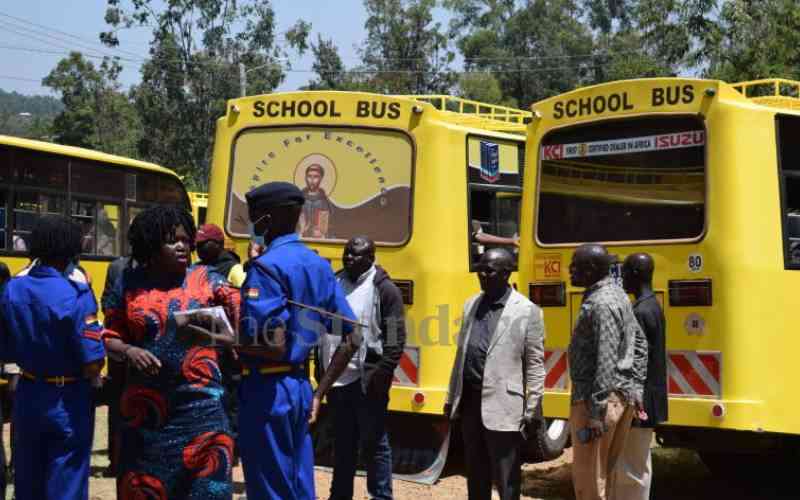
Road madness in Kenya is unbelievable. School buses, some privately owned but hired by schools, often overlap lanes, overtake recklessly, or block other motorists during drop-offs. In some cases, they compete with matatus for space on the road. These practices raise a fundamental question about the moral lessons that children learn from the adults responsible for their care and mentorship.
When those entrusted with the safety and character formation of young people openly disregard traffic laws and municipal regulations, the message conveyed to the next generation becomes deeply problematic.
Children learn values primarily through observation. Long before formal lessons on civic responsibility become meaningful, young people internalise the behavioural patterns of adults around them. If they repeatedly witness impatience, disregard for rules, or selective obedience to authority, these practices gradually become normalised. The issue, therefore, goes beyond road safety. It concerns our adult bad manners that we are passing to the next generation.
Educational pedagogy has consistently emphasised the formative power of example. The Montessori approach to education rests on the belief that children possess an inherent capacity to develop into responsible and ethical citizens when placed within an environment that models order, discipline, and respect. Maria Montessori insisted that the adult must embody the values being taught because the child learns through observation of behaviour as much as through formal instruction. In such an approach, moral formation is achieved through the consistency between what adults say and what they do.
Philosophical reflection arrives at a similar conclusion. Aristotle’s ethics emphasises that virtue develops through practice. In his Nicomachean Ethics, he argues that people become virtuous by repeatedly performing virtuous actions. Character is therefore formed through habits cultivated in everyday life. Aristotle also introduces the concept of phronesis, often translated as practical wisdom or sound judgment. This virtue enables individuals to discern the right course of action in specific situations and to act responsibly within the shared life of a community. Observing traffic rules, respecting public order, and exercising restraint are therefore not merely technical requirements of road use. They are practical expressions of moral judgment in everyday civic life.
From this perspective, when a driver entrusted with children chooses impatience rather than restraint, the decision is not only a matter of convenience. It reflects a failure of sound judgment and a missed opportunity to model responsible conduct
Theological traditions also underline the responsibility of adults to teach through example. The Book of Proverbs states: “Train up a child in the way he should go, and when he is old he will not depart from it,” (Proverbs 22:6). The “way” that children are trained in is the lived pattern of behaviour that surrounds them. Similarly, the Letter to the Ephesians instructs parents to bring up children “in the discipline and instruction of the Lord” (Ephesians 6:4). Discipline in this sense refers not to punishment but to the steady formation of character through guidance and example.
These insights from pedagogy, philosophy, and theology converge on a common principle. Moral values are transmitted most effectively through lived examples. Institutions may formulate rules, and schools may teach civic education, but the credibility of those lessons depends heavily on the behaviour children observe in daily life.
When the vehicles associated with the learning institutions display disregard for public regulations, the educational message becomes inconsistent. Children observe that the rules discussed in classrooms are not always respected outside them.
Responsibility for this situation does not rest solely with drivers. School administrators, parents, and law enforcement authorities all contribute to the environment within which children form their understanding of civic responsibility.
Respect for rules, patience in public spaces, and consideration for others are habits learned early and reinforced consistently. When these habits are neglected, the consequences appear later in many areas of public life.
If we expect the next generation to respect law, exercise sound judgment, and contribute positively to society, then we, the adults, have to demonstrate those same qualities in our ordinary conduct. The values children observe today will shape the civic character of society tomorrow.
Dr. Mokua is the Executive Director, Loyola Centre for Media and Communication
Support Independent Journalism
Stand With Bold Journalism.
Stand With The Standard.
Continue
→
Pay via
Secure Payment
Kenya’s most trusted newsroom since 1902
Follow The Standard
channel
on WhatsApp
Road madness in Kenya is unbelievable. School buses, some privately owned but hired by schools, often overlap lanes, overtake recklessly, or block other motorists during drop-offs. In some cases, they compete with matatus for space on the road. These practices raise a fundamental question about the moral lessons that children learn from the adults responsible for their care and mentorship.
When those entrusted with the safety and character formation of young people openly disregard traffic laws and municipal regulations, the message conveyed to the next generation becomes deeply problematic.
Children learn values primarily through observation. Long before formal lessons on civic responsibility become meaningful, young people internalise the behavioural patterns of adults around them. If they repeatedly witness impatience, disregard for rules, or selective obedience to authority, these practices gradually become normalised. The issue, therefore, goes beyond road safety. It concerns our adult bad manners that we are passing to the next generation.
Educational pedagogy has consistently emphasised the formative power of example. The Montessori approach to education rests on the belief that children possess an inherent capacity to develop into responsible and ethical citizens when placed within an environment that models order, discipline, and respect. Maria Montessori insisted that the adult must embody the values being taught because the child learns through observation of behaviour as much as through formal instruction. In such an approach, moral formation is achieved through the consistency between what adults say and what they do.
Philosophical reflection arrives at a similar conclusion. Aristotle’s ethics emphasises that virtue develops through practice. In his Nicomachean Ethics, he argues that people become virtuous by repeatedly performing virtuous actions. Character is therefore formed through habits cultivated in everyday life. Aristotle also introduces the concept of phronesis, often translated as practical wisdom or sound judgment. This virtue enables individuals to discern the right course of action in specific situations and to act responsibly within the shared life of a community. Observing traffic rules, respecting public order, and exercising restraint are therefore not merely technical requirements of road use. They are practical expressions of moral judgment in everyday civic life.
From this perspective, when a driver entrusted with children chooses impatience rather than restraint, the decision is not only a matter of convenience. It reflects a failure of sound judgment and a missed opportunity to model responsible conduct
Theological traditions also underline the responsibility of adults to teach through example. The Book of Proverbs states: “Train up a child in the way he should go, and when he is old he will not depart from it,” (Proverbs 22:6). The “way” that children are trained in is the lived pattern of behaviour that surrounds them. Similarly, the Letter to the Ephesians instructs parents to bring up children “in the discipline and instruction of the Lord” (Ephesians 6:4). Discipline in this sense refers not to punishment but to the steady formation of character through guidance and example.
These insights from pedagogy, philosophy, and theology converge on a common principle. Moral values are transmitted most effectively through lived examples. Institutions may formulate rules, and schools may teach civic education, but the credibility of those lessons depends heavily on the behaviour children observe in daily life.
When the vehicles associated with the learning institutions display disregard for public regulations, the educational message becomes inconsistent. Children observe that the rules discussed in classrooms are not always respected outside them.
Responsibility for this situation does not rest solely with drivers. School administrators, parents, and law enforcement authorities all contribute to the environment within which children form their understanding of civic responsibility.
Respect for rules, patience in public spaces, and consideration for others are habits learned early and reinforced consistently. When these habits are neglected, the consequences appear later in many areas of public life.
If we expect the next generation to respect law, exercise sound judgment, and contribute positively to society, then we, the adults, have to demonstrate those same qualities in our ordinary conduct. The values children observe today will shape the civic character of society tomorrow.
Dr. Mokua is the Executive Director, Loyola Centre for Media and Communication
Follow The Standard
channel
on WhatsApp
By Elias Mokua