

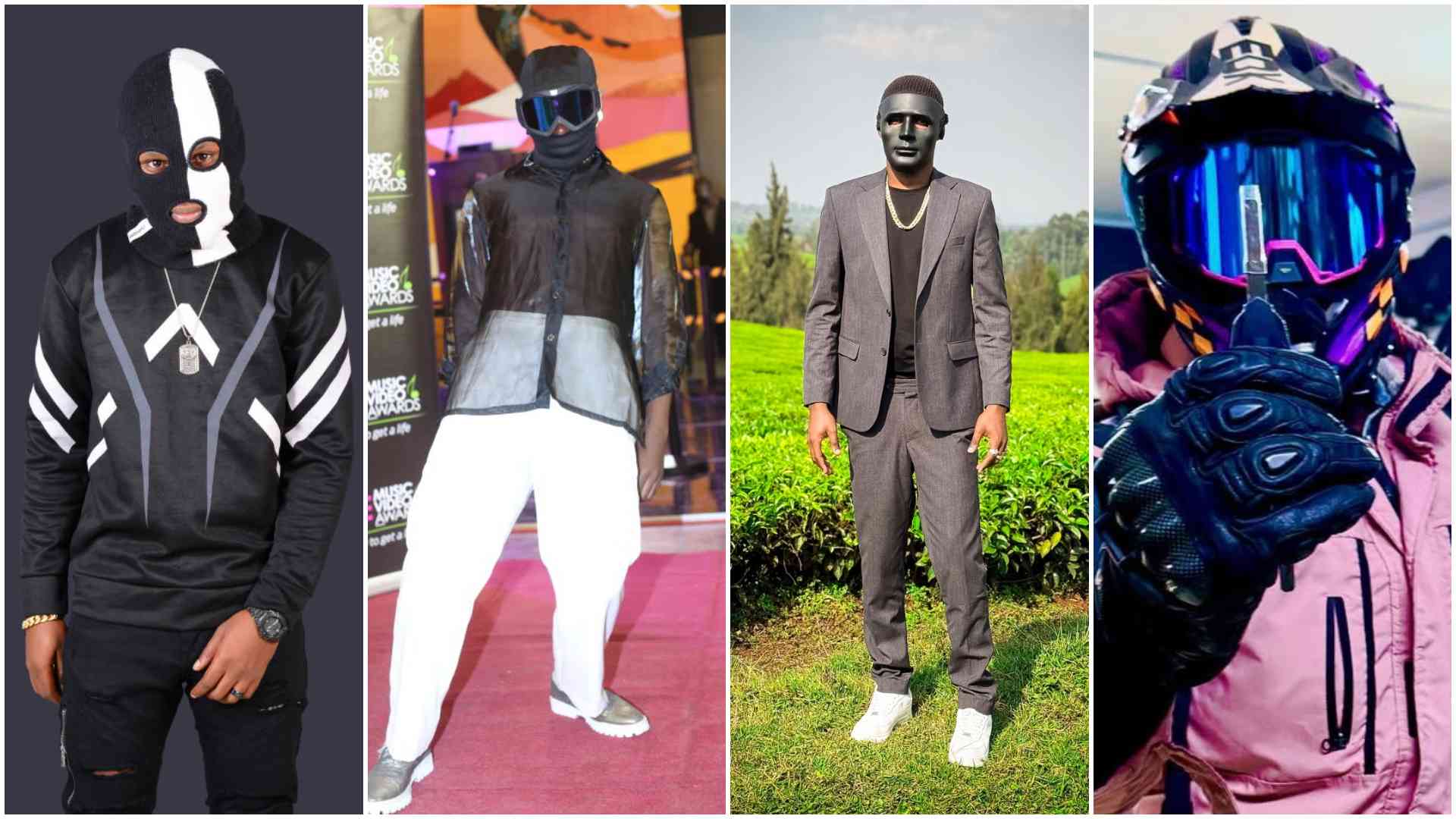
According to the 5-3-2 Rule on content strategy, effective celebrity marketing suggests 50 per cent curated (sharing paid-for content), 30 per cent original, and 20 per cent personal content.
If you take that into account, you start to realize some celebrities operate on their own rules, by masking up. This is contrary to what American rapper, J Cole, meant when he said, “You can’t reverse fame. You can lose all the money, but you’ll never lose people knowing you.”
But masking up has existed in showbiz, both in fiction and in real life.
From the exploits of the great Don Diego de la Vega who rode in his vigilante status as Zorro, to the caped campaigns of Batman, the era of the talented Sia, to the many wrestlers we grew up watching on KBC.
The difference is that the current expectation of celebrityhood, where the brand has to have a face, makes it an oddity, than the norm.
The Luchi
The Luchi is outside again, and guess what, he is still incognito. This time, he is alongside Rudra Kartel with Hype Ndogo, a good vibes jam.
The Luchi, who has an 8-5, is in his signature ski mask, accentuated with a full-face knit cotton balaclava, and a bucket hut, is still bubbling his head to the heavy drums of raggamuffin.
“Hype ndogo haijafanya nifure Kichwa,” Rudra says on the hook, as The Luchi leads the choreography, a talented dancer who has showcased his robotic moves since he dropped Run and Rivas in 2021, then the amazing Haiya with Brandy Maina.
When he dropped Rivas, he hadn’t figured out his ski mask look yet, so he had a balaclava and humongous, funky sunglasses.
Speaking on TV, he explained that the mask was for his audience to concentrate on his art, and not on him.
“I am the messenger. I don’t want people to care about who I am, people should care about the good vibes that come from the music.”
The Luchi without the mask is Chiluba, AKA The One, a professional dancer and choreographer who has travelled the globe to showcase his moves. In 2025, he was a judge at the Afrodance Experiece 3.0, the Battle Of The Moves.
On his very rich, colourful, and informative website, he says he is “dedicated to telling the rich African narrative through the universal language of dance.”
Other than running his own dance studio, and having worked on music videos for Sauti Sol, Nyashinski, Ali Kiba, Yemi Alade, and others, he is also a music producer who engineered his own song, Run.
XLVI K
He comes masked in a balaclava, and remains largely unidentified and a mystery, but he is a gospel artiste setting the bar high.
“There is absolutely no hidden goal, yet I choose to maintain my anonymity since what I do is not for me but for the person who resides inside of me. When my listeners hear my music, my major goal is for them to see Christ and not myself,” he says.
But his gangster look does not sit well with part of his fans and the gospel industry to some extent.
“Of course, there are some people who find it disturbing, while others assume that I have a burnt face. Others have embraced the look. But the most important thing as I said is that they should focus on the message.”
When he is not XLVI K, he is a financial engineer and an author.
Biker Brayo
He’s been offered Sh5 million to reveal his face. There are countless of video content online purporting to reveal who he is.
In two other incidences, footage emerges of random bikers said to be him, one who took of his helmet in honour of the late Raila Odinga.
But netizens will have to wait longer to know the identity of the sensational Biker Nairobi, a two-wheel merchant who has gained fame for every-day road content as he rides, road safety campaigns, acts of kindness on the streets, and has even rode his bike into a TV studio for an interview.
His family, friends and colleagues know who the five-year biker is, but according to him, he prefers it that way for the rest of us.
“My daily hustle is real estate, that is where I make my living. I have chosen to remain faceless because that way it gives me an identity and I can go about my normal life without drawing a lot of attention,” he was quoted saying.
Muhammad Ali, arguably the best boxer to have ever lived, once said “I wanted to use my fame and this face that everyone knows so well to help uplift and inspire people around the world,” and Biker Brayo, who also goes by Biker Nairobi had achieved just that, without a face.
He picks up strangers on the road and drops people at their destination without asking for anything, helps other riders to access fuel, and footage of kids running after his bike just to show how much influence he has in the streets.
Le’Laika
She is not masked up because she has a song called Dirty Secrets, or because she goes by Rosemary.
She is sassy, with an infectious and outstanding voice, a hardworking singer with a body of work who has sang with King kaka, signed to Sol generation, hosts Karaoke at K1 and performed at the hallowed Geco, among other spaces.
“Half-hidden, fully heard,” is how she describes herself, and she has the goods when she hits both the booth and the stage. Unlike most, who fully cover, she comes truly half covered, a sexy masquerade piece always on her face when she comes alive with music.
Speaking on a podcast about her mask identity, she explained, “I don’t need to hide my face, I choose to because it became my trademark.”
The Unknown Barber
On 13th March 2020, then Health Cabinet Secretary Mutahi Kagwe declared Kenya’s first Coronavirus patient, a 27-year-old lady who had travelled from the United States via London.
At the same time, as the country went into lockdown, an enterprising barber in Mombasa decided to create an identity from the order to mask up, by going all in.
His clients were skeptical at first, but by 2022, the anonymous barber, who operates from Mintos Saloon and Barbershop in Mwembe Tayari, was so famous, that he started getting featured on different media houses.
“I decided to hide my face just to be unique,” is his simple reason, no fluff or deep philosophy behind it. He opened and runs an Instagram account, while changing his masks to match his swagger.
By 2024, his fame had attracted fortune, and he was rumoured to be charging Sh 100,000 for bespoke, home services, while his rate card read Sh 300,000 for visits to the big city.
“As long as you can pay me, I shave anyone.”
Daft Punk
The decision to remain anonymous for so long in their career was not daft, no pun. It helped the French electronic dance music duo of Thomas Bangalter and Guy-Manuel de Homem-Christo to achieve fame and a huge following because it added mystery to the super talent that the two possessed.
There are reddit posts, blogs and sleuths that were dedicated to unmasking the award-winning and sound defining duo, who went through plastic Halloween masks, wigs, and black bags before settling on the cyberpunk look that became their global identity.
In an interview, Bangalter explained that the anonymity tapped into the idea “of being an average guy with some kind of superpower”, and that it was inspired by the 1974 film Phantom of the Paradise, in which the main character prominently wears a mask.
MF DOOM
There is 90s footage of the late British-American MC when he was still part of a group, KMD, with his brother Deejay Subroc, who died in 1993 after a car accident. Born Daniel Dumile, then known as Zev Love X, he can be seen with clarity, a fresh-faced teen by then, hungry for bars, and in love with the rap game.
Then he disappeared, only to emerge later as a villain, complete with an imposing and iconic mask inspired by the villain Doctor Doom that he would wear for the rest of his time on earth (he died in 2020).
On his mask, he said, “The ‘Doom’ thing is to be able to come at things with a different point of view. I decided the mask would just add to the mystique of the character as well as make Doom stand out”.
With album names like Operation Doomsday, Mm..Food and Madvillainy, he went all in into his artistic persona, he elaborated saying, “That villain represents anybody. Anybody can (wear) the mask. Can be the villain. Male or female, any race”.