

Audio By Vocalize
Allow me, ladies and gentlemen; especially those who left the classroom somewhere between the chalkboard and the football field to begin this discussion the way any professor would: With a lecture.
Not a quarrel. Not a shouting match. A lecture.
The recent circular from the Felix Koskei, led Public Service Commission attempting to “correct” the retirement age of professors from 74 to 70 has stirred predictable excitement. Some citizens; armed with confidence and perhaps the memory of a half-finished Standard Five exercise book, have asked:
“Why should professors be treated differently? Let everyone retire equally!”
Ah, equality.
A beautiful word. A noble idea. And sometimes, in debates like this, a spectacular misunderstanding.
So allow me to slow the lecture for those seated at the back of the national classroom; the ones who abandoned the marathon of education along the way. Some left because mathematics looked like witchcraft. Others because literature demanded thinking. A few simply discovered that books require a stubborn friendship.
And books, as we know, can be exhausting companions. But let us not confuse a personal exit with a universal rule.
Because the journey to professorship is not a stroll across a village path. It is a trek across intellectual mountain ranges. In Kenya alone, a scholar passes through several systems; colonial structures, the famous 8-4-4, and now CBC. Each stage stretches the mind a little further.
Primary school introduces the miracle of letters. Secondary school stretches the brain like a bowstring.
A university degree begins the excavation of knowledge. But that is merely the gate.
Beyond it lie the trenches: Master’s degrees, doctoral theses, conferences, peer-reviewed journals, sleepless nights arguing with philosophers who died centuries ago yet refuse to stop asking questions.
While some citizens perfected the art of roasting maize by the roadside, the professor was wrestling with Aristotle, arguing with Karl Marx, disagreeing with Michel Foucault, and occasionally sharing tea with William Shakespeare.
Knowledge accumulates slowly, like gold!
Anyone familiar with mining knows gold is not picked like ripe mangoes. It is crushed, washed, heated, purified, separated from stubborn rock and refined again until only brilliance remains.
Imagine then someone arriving with a shovel of ordinary soil and declaring: “Let us mix everything together. Gold and dirt should be equal.”
Even a pastoralist child knows milk from cows, goats, and camels ferments differently. Nature itself teaches distinctions.
Yet suddenly the intellectual life of a professor must be squeezed into the same administrative timetable that governs office files and clerical desks.
This is not equality.
It is intellectual confusion.
Democracy is magnificent when discussing roads or elections. But when discussing the life cycle of knowledge, democracy must occasionally sit quietly while expertise speaks.
You do not vote on the laws of physics. You do not crowd-source brain surgery. And you certainly do not shorten the lifespan of scholarship because someone believes retirement is a universal medicine.
A professor’s mind does not function like a government printer that stops at 5 pm. It sharpens with age. By 70, decades of reading, supervising, debating, and writing have produced something rare: Intellectual wisdom.
Even communities without formal schooling understand this. Among pastoral societies elders between 60 and 80 are the philosophers beneath the tree, narrating knowledge gathered across generations.
Age is not decline. Age is reflection.
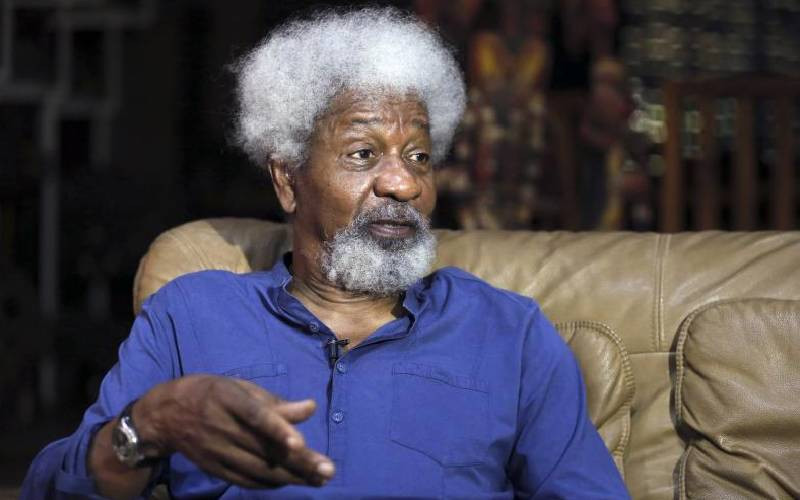
The great Nobel laureate Wole Soyinka once described the intellectual realm as a mysterious space between worlds (Ogun) a symbolic territory where the living converse with the dead across centuries. Only those who undergo the ritual of deep learning glimpse that terrain.
Professors live there. Their diet is not merely food. It is books, manuscripts, arguments, theories, archives, footnotes, and ideas that keep the brain alive long after the body begins negotiating with gravity.
Yet bureaucratic letters now attempt to place this intellectual life neatly inside an administrative envelope. It is a little like asking wolves to determine the retirement age of goats, not necessarily malicious, but clearly a misunderstanding of nature.
For years Kenya has tolerated a peculiar arrangement where ministers and policymakers, many respectable people make sweeping decisions about universities while standing safely outside the trenches of scholarship.
Some have never supervised a thesis. Some have never written a peer-reviewed article. Some have never experienced the lonely terror of defending a doctoral dissertation before scholars whose raised eyebrows alone can collapse a career.
Yet they confidently prescribe the lifespan of those who have. This is not wickedness. It is something simpler: Unfamiliarity.
Or, to put it gently, the educational equivalent of giving driving instructions from the back seat without touching the steering wheel.
Let us be honest. The word professor is not a decorative campaign title. It is the final rung of a ladder built over 30 or 40 years of relentless intellectual labour.
Knowledge does not expire at 70. Most professors carry entire libraries in their minds to the grave. Their final lectures are often their finest.
To speak of “retiring” such a mind is therefore linguistically awkward. Retirement suggests withdrawal from effort. But the professor’s effort is thinking. And thinking, if done well, does not obey government circulars.
So to those wondering why professors should be treated differently, this lecture remains open: Walk the road. Read the books. Write the theses. Debate the philosophers. Survive the peer reviewers.
Then perhaps, decades later, when the mind has learned to breathe inside libraries, we may meet again at the summit of scholarship. From there, the question of retirement will look very different.
Support Independent Journalism
Stand With Bold Journalism.
Stand With The Standard.
Continue
→
Pay via
Secure Payment
Kenya’s most trusted newsroom since 1902
Follow The Standard
channel
on WhatsApp
Allow me, ladies and gentlemen; especially those who left the classroom somewhere between the chalkboard and the football field to begin this discussion the way any professor would: With a lecture.
Not a quarrel. Not a shouting match. A lecture.
The recent circular from the Felix Koskei, led Public Service Commission attempting to “correct” the retirement age of professors from 74 to 70 has stirred predictable excitement. Some citizens; armed with confidence and perhaps the memory of a half-finished Standard Five exercise book, have asked:
“Why should professors be treated differently? Let everyone retire equally!”
Ah, equality.
A beautiful word. A noble idea. And sometimes, in debates like this, a spectacular misunderstanding.
So allow me to slow the lecture for those seated at the back of the national classroom; the ones who abandoned the marathon of education along the way. Some left because mathematics looked like witchcraft. Others because literature demanded thinking. A few simply discovered that books require a stubborn friendship.
And books, as we know, can be exhausting companions. But let us not confuse a personal exit with a universal rule.
Because the journey to professorship is not a stroll across a village path. It is a trek across intellectual mountain ranges. In Kenya alone, a scholar passes through several systems; colonial structures, the famous 8-4-4, and now CBC. Each stage stretches the mind a little further.
Primary school introduces the miracle of letters. Secondary school stretches the brain like a bowstring.
A university degree begins the excavation of knowledge. But that is merely the gate.
Beyond it lie the trenches: Master’s degrees, doctoral theses, conferences, peer-reviewed journals, sleepless nights arguing with philosophers who died centuries ago yet refuse to stop asking questions.
While some citizens perfected the art of roasting maize by the roadside, the professor was wrestling with Aristotle, arguing with Karl Marx, disagreeing with Michel Foucault, and occasionally sharing tea with William Shakespeare.
Knowledge accumulates slowly, like gold!
Anyone familiar with mining knows gold is not picked like ripe mangoes. It is crushed, washed, heated, purified, separated from stubborn rock and refined again until only brilliance remains.
Stay informed. Subscribe to our newsletter
Imagine then someone arriving with a shovel of ordinary soil and declaring: “Let us mix everything together. Gold and dirt should be equal.”
Even a pastoralist child knows milk from cows, goats, and camels ferments differently. Nature itself teaches distinctions.
Yet suddenly the intellectual life of a professor must be squeezed into the same administrative timetable that governs office files and clerical desks.
This is not equality.
It is intellectual confusion.
Democracy is magnificent when discussing roads or elections. But when discussing the life cycle of knowledge, democracy must occasionally sit quietly while expertise speaks.
You do not vote on the laws of physics. You do not crowd-source brain surgery. And you certainly do not shorten the lifespan of scholarship because someone believes retirement is a universal medicine.
A professor’s mind does not function like a government printer that stops at 5 pm. It sharpens with age. By 70, decades of reading, supervising, debating, and writing have produced something rare: Intellectual wisdom.
Even communities without formal schooling understand this. Among pastoral societies elders between 60 and 80 are the philosophers beneath the tree, narrating knowledge gathered across generations.
Age is not decline. Age is reflection.
The great Nobel laureate Wole Soyinka once described the intellectual realm as a mysterious space between worlds (Ogun) a symbolic territory where the living converse with the dead across centuries. Only those who undergo the ritual of deep learning glimpse that terrain.
Professors live there. Their diet is not merely food. It is books, manuscripts, arguments, theories, archives, footnotes, and ideas that keep the brain alive long after the body begins negotiating with gravity.
Yet bureaucratic letters now attempt to place this intellectual life neatly inside an administrative envelope. It is a little like asking wolves to determine the retirement age of goats, not necessarily malicious, but clearly a misunderstanding of nature.
For years Kenya has tolerated a peculiar arrangement where ministers and policymakers, many respectable people make sweeping decisions about universities while standing safely outside the trenches of scholarship.
Some have never supervised a thesis. Some have never written a peer-reviewed article. Some have never experienced the lonely terror of defending a doctoral dissertation before scholars whose raised eyebrows alone can collapse a career.
Yet they confidently prescribe the lifespan of those who have. This is not wickedness. It is something simpler: Unfamiliarity.
Or, to put it gently, the educational equivalent of giving driving instructions from the back seat without touching the steering wheel.
Let us be honest. The word professor is not a decorative campaign title. It is the final rung of a ladder built over 30 or 40 years of relentless intellectual labour.
Knowledge does not expire at 70. Most professors carry entire libraries in their minds to the grave. Their final lectures are often their finest.
To speak of “retiring” such a mind is therefore linguistically awkward. Retirement suggests withdrawal from effort. But the professor’s effort is thinking. And thinking, if done well, does not obey government circulars.
So to those wondering why professors should be treated differently, this lecture remains open: Walk the road. Read the books. Write the theses. Debate the philosophers. Survive the peer reviewers.
Then perhaps, decades later, when the mind has learned to breathe inside libraries, we may meet again at the summit of scholarship. From there, the question of retirement will look very different.
Follow The Standard
channel
on WhatsApp
By Changorok Joel