

Audio By Vocalize
Over the past year, the government has steadily moved towards privatisation as a central economic policy. Parliament and the President have talked about the selling of some State-owned corporations in positive terms, arguing that reducing government ownership of major companies will provide income that we so desperately need and reduce our reliance on debt. On paper, this makes sense as the burden of debt is crippling. But the question Kenyans must contend with is whether, beyond this flood of income, some national assets should in fact be treated as commodities for capital.
This debate has been brought sharply into focus by the latest development involving Safaricom, Kenya’s most profitable company. Parliament and the High Court this month approved the sale of a further 15 per cent government stake to Vodacom, the South African telecommunications group that already holds a large share in the company. If completed, the deal would give Vodacom majority control of a firm that has become deeply embedded in the daily lives of millions of Kenyans. Vodacom’s stake would rise to 55 per cent, whilst that of the government would fall to 20 per cent.
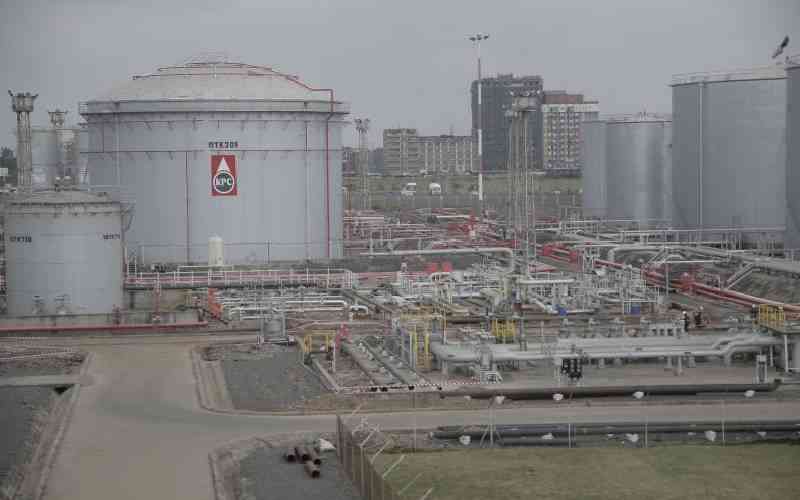
In the logic of privatisation, Kenya’s significant loss of ownership of a Kenyan company is secondary to financial calculation. As long as capital is raised, this is viewed as an overall win although so much national heritage is lost. Kenya has had numerous examples of this under the current regime, reflecting a broader shift in economic policy which has embraced privatisation as a means of raising funds and restructuring State participation in the economy. One of the clearest examples is the partial sale of Kenya Pipeline Company. The profitable entity, which provides fuel transportation services, was also successfully privatised through an initial public offering of 65 per cent of its shares to the public. Twenty per cent of this stake has been purchased by the Uganda National Oil Company, making it the second largest owner of KPC after the Kenya government.
The struggle to raise revenue is largely understandable, even as we witness too much money being lost to corruption. The billions raised through the sale of our national corporations can ease the burden of financing the nation, and reduce reliance on debt. However, to secure the future of citizens, there are some corporations and assets that cannot, under any circumstances, be sold to the highest bidder.
Energy, transportation and other public goods must remain primarily in the hands of the State if they are to serve the people. Selling such assets leaves the companies beholden to the shareholder, who will prioritise the financial growth of the company in order to grow their own pockets. State-owned corporations, however, should not have profit-making at the forefront of their minds. It is more important, for instance, for Kenyans to afford electricity for their homes, even if provision of this service comes at a loss to the corporation responsible for it.
Similarly, transportation should be affordable enough to make it possible for Kenyans to move smoothly, and so the nation must control its own railways, even if it makes a loss. For some other sectors, like healthcare and education, it should go without saying that the government should be the primary provider of these services. However in Kenya, with the breakdown of the public health and education sectors, this battle appears nearly lost. Most Kenyans fend for their own education and health at exorbitant and inhumane costs.
All said and done, there is nothing inherently wrong with the privatisation model. If anything, it drives much of the global economy and produces remarkable innovation by letting private entities in to improve services. However, privatisation must not take a capitalist approach as this then makes it seem like anything can be privatised if money can be found at the end of the deal. Kenya deserves to have control over its most crucial and treasured assets, and the government must therefore think about what is being lost as it rushes to sell everything.
Ms Njahira is an international lawyer
Support Independent Journalism
Stand With Bold Journalism.
Stand With The Standard.
Continue
→
Pay via
Secure Payment
Kenya’s most trusted newsroom since 1902
Follow The Standard
channel
on WhatsApp
Over the past year, the government has steadily moved towards privatisation as a central economic policy. Parliament and the President have talked about the selling of some State-owned corporations in positive terms, arguing that reducing government ownership of major companies will provide income that we so desperately need and reduce our reliance on debt. On paper, this makes sense as the burden of debt is crippling. But the question Kenyans must contend with is whether, beyond this flood of income, some national assets should in fact be treated as commodities for capital.
This debate has been brought sharply into focus by the latest development involving Safaricom, Kenya’s most profitable company. Parliament and the High Court this month approved the sale of a further 15 per cent government stake to Vodacom, the South African telecommunications group that already holds a large share in the company. If completed, the deal would give Vodacom majority control of a firm that has become deeply embedded in the daily lives of millions of Kenyans. Vodacom’s stake would rise to 55 per cent, whilst that of the government would fall to 20 per cent.
In the logic of privatisation, Kenya’s significant loss of ownership of a Kenyan company is secondary to financial calculation. As long as capital is raised, this is viewed as an overall win although so much national heritage is lost. Kenya has had numerous examples of this under the current regime, reflecting a broader shift in economic policy which has embraced privatisation as a means of raising funds and restructuring State participation in the economy. One of the clearest examples is the partial sale of Kenya Pipeline Company. The profitable entity, which provides fuel transportation services, was also successfully privatised through an initial public offering of 65 per cent of its shares to the public. Twenty per cent of this stake has been purchased by the Uganda National Oil Company, making it the second largest owner of KPC after the Kenya government.
The struggle to raise revenue is largely understandable, even as we witness too much money being lost to corruption. The billions raised through the sale of our national corporations can ease the burden of financing the nation, and reduce reliance on debt. However, to secure the future of citizens, there are some corporations and assets that cannot, under any circumstances, be sold to the highest bidder.
Energy, transportation and other public goods must remain primarily in the hands of the State if they are to serve the people. Selling such assets leaves the companies beholden to the shareholder, who will prioritise the financial growth of the company in order to grow their own pockets. State-owned corporations, however, should not have profit-making at the forefront of their minds. It is more important, for instance, for Kenyans to afford electricity for their homes, even if provision of this service comes at a loss to the corporation responsible for it.
Similarly, transportation should be affordable enough to make it possible for Kenyans to move smoothly, and so the nation must control its own railways, even if it makes a loss. For some other sectors, like healthcare and education, it should go without saying that the government should be the primary provider of these services. However in Kenya, with the breakdown of the public health and education sectors, this battle appears nearly lost. Most Kenyans fend for their own education and health at exorbitant and inhumane costs.
All said and done, there is nothing inherently wrong with the privatisation model. If anything, it drives much of the global economy and produces remarkable innovation by letting private entities in to improve services. However, privatisation must not take a capitalist approach as this then makes it seem like anything can be privatised if money can be found at the end of the deal. Kenya deserves to have control over its most crucial and treasured assets, and the government must therefore think about what is being lost as it rushes to sell everything.
Ms Njahira is an international lawyer
Follow The Standard
channel
on WhatsApp
By Njahira Gitahi