



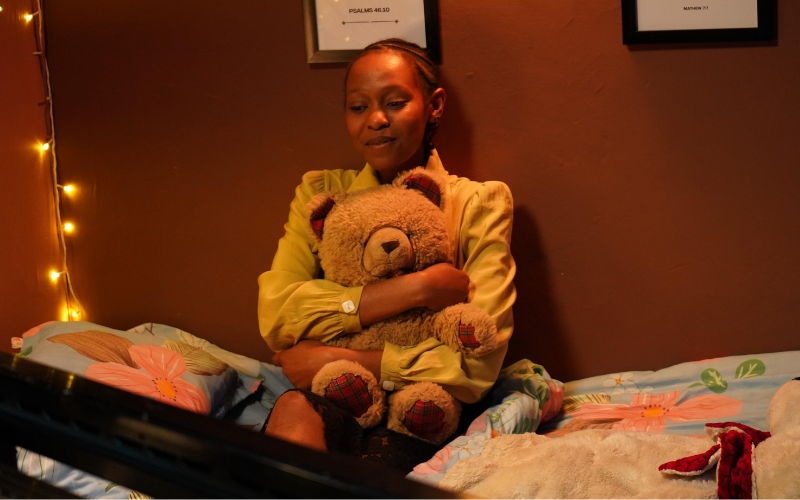
The Keeper of Quiet Things is set 100 years into the future and explores themes of government control, personal freedom, and human memory. The play will be staged at the Ukumbi Mdogo, Kenya Cultural Centre, on March 21.
This science fiction monologue performance, scripted by Brian Abudu, Lorna Lemi, and Martin Kigondu, is the second instalment in the ten-part theatre series titled What We Carry, an 11-month journey across Nairobi theatre stages that explores human contradictions.
Set in 2126, The Keeper of Quiet Things tells the story of Isani Vale, played by Lorna Lemi, a woman born into a family that keeps audio and video records spanning more than 100 years, chronicling the state of the world. A memory keeper, Isani secretly preserves these logs while working within a syndicate of curation houses.


In this imagined future, climate crises, global conflicts, and technological advances shape daily life. “We’ve had World War Three and Four; the ozone layer is affected, the sun is hidden, AI is advancing, and human memory is being harnessed to generate energy.
It’s a world where government control is pervasive, and my character, Isani, challenges that. She says things have to change,” Lorna says.
The play delves into governance, wealth gaps, and education systems that are neither failing nor succeeding. Lorna explains that it casts its gaze into the future, exposing the pressures of linear thinking, where parents push their children into 9-to-5 jobs they do not enjoy, trading entire lives for mortgages and money.

It poses a central question: what if you are born and your time is already accounted for? What else can happen?
Lorna says bringing the year 2126 to life as a solo performer, through sound, set and lighting design, costumes, makeup, and props that imagine the future, elevates the performance.
“The script really helps. When I internalise the story and immerse myself in that era, I can bring emotions as real and raw as possible. The director, Martin Kigondu, also plays a major role in helping me integrate my life into Isani’s,” she says.
Science fiction allows Lorna to examine the human condition through climate change, societal progression vis-à-vis degradation, governance, segregation vis-à-vis community, control, freedom over one’s own time, healing, and resource scarcity.

What We Carry, the series hosting The Keeper of Quiet Things, features multiple performance styles including musical theatre, storytelling, stand-up comedy, and dance, with Lorna as the sole performer. Naomi Mildred Gichuki is the head writer, and the series is positioned for festivals and touring.
“The title What We Carry came from the thought of all the things we live with but do not show. People carry grief, loss, love, and healing. The paradox and complexity of human life are present in every character. Even those who seem villainous have their own story and deserve grace,” she says.
Each play introduces a distinct character, story, and performance style, examining human complexity, the paradoxical capacity for love and destruction, strength and fragility, grace and self-sabotage. It also addresses alcoholism and coping mechanisms, grace, forgiveness, compassion, and mental health.

The series culminates in a tenth showcase where all nine characters converge into a single production, grappling with themes such as grief, mental health, alcoholism, and bipolar disorder.
The series’ inaugural monologue performance, Hard Hands, directed by Wakio Mzenge and staged in February, centred on a matriarch struggling to reconcile love with what she believes is best for her family.
“She realised she had been a little too hard on her people because she was never taught how to love. Audiences resonated with the character,” Lorna says.
The remaining eight productions to be staged throughout the year include musicals Tears of Gold and The Light-Bearer; the monologue The Weight of Love; storytelling pieces Because I Saw Her and Walls; a stand-up comedy titled The Business of Misery; and a movement and dance performance, Scapegoat.
“If a character’s love is music, it becomes a musical piece, and I work with practitioners of that genre. Dance, storytelling, or stand-up also takes the same form,” she says.