

Audio By Vocalize
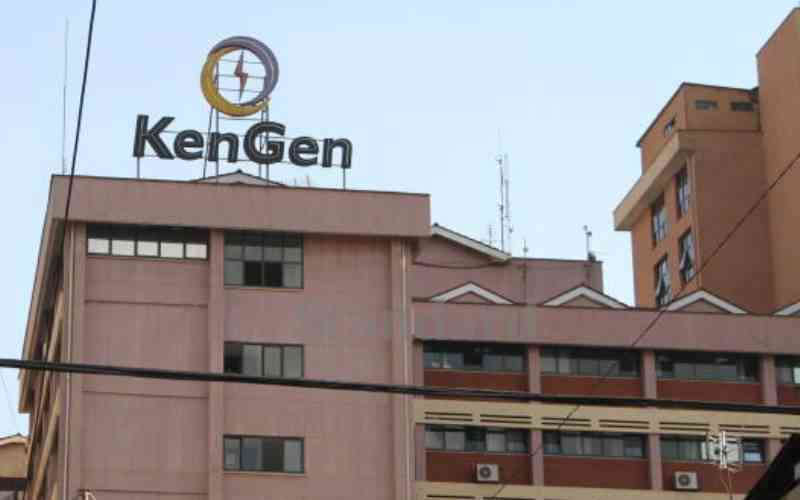
Parliamentary committees have called on the Kenya Electricity Generating Company (KenGen) to upgrade its power generation technology by transitioning from Heavy Fuel Oil (HFO) to Liquefied Natural Gas (LNG), in line with the country’s clean energy agenda.
The National Assembly Committees on Public Investment, Commercial Affairs, and Energy said the shift should be implemented before the Kipevu III power plant contract expires in 2031.
The move, they noted, is crucial to aligning Kenya’s energy sector with government policy that promotes environmentally friendly power generation.
The MPs made the remarks during an oversight visit to the Kipevu III thermal power plant in Mombasa, conducted as a follow-up to audit queries raised by the Office of the Auditor-General in the 2021/2022 financial year report.
The committee also confirmed that KenGen had since secured the plant’s title deed, addressing one of the audit concerns.
Legislators were informed that the Kipevu III plant, commissioned in 2011, has an installed capacity of 120 megawatts (MW), with 115MW supplied to the grid and 5MW used internally. The facility comprises seven thermal generation units, each with a capacity of 17MW.
Although designed to run on both HFO and LNG, the plant has operated exclusively on HFO since commissioning due to its lower cost.
However, MPs noted that HFO is significantly more harmful to the environment compared to LNG, raising concerns over its continued use.
The committees warned that failure to transition the plant or extend its operations beyond 2031 could trigger a power crisis in the coastal region. Kipevu III remains the only operational thermal power plant in the region following the shutdown of Kipevu I and Kipevu II after their power purchase agreements expired.
“The decommissioning of earlier plants has already affected the reliability and quality of power supply at the Coast,” the MPs observed, adding that Kipevu III currently plays a critical role in stabilising electricity supply.
Committee Chairperson David Pkosing emphasised the need to reassess the shutdown of Kipevu I and II to maximise energy production capacity. He further directed KenGen to adopt international standards in determining capacity payment mechanisms.
During the session, KenGen’s management, led by Engineer Julius Odumbe, explained that Kenya currently generates about 90 per cent of its electricity from clean energy sources.
However, legislators questioned why this has not translated into lower electricity costs for consumers.
The committees also called on the Energy and Petroleum Regulatory Authority to ensure a balanced approach in electricity generation and consumption across all sector players.
KenGen maintained that for Kipevu III to continue operating beyond 2031, there must be deliberate efforts to ensure the availability of LNG infrastructure in the country, warning that failure to act could jeopardise power stability in the coastal region.
Support Independent Journalism
Stand With Bold Journalism.
Stand With The Standard.
Continue
→
Pay via
Secure Payment
Kenya’s most trusted newsroom since 1902
Follow The Standard
channel
on WhatsApp
Parliamentary committees have called on the Kenya Electricity Generating Company (KenGen) to upgrade its power generation technology by transitioning from Heavy Fuel Oil (HFO) to Liquefied Natural Gas (LNG), in line with the country’s clean energy agenda.
The National Assembly Committees on Public Investment, Commercial Affairs, and Energy said the shift should be implemented before the Kipevu III power plant contract expires in 2031.
The move, they noted, is crucial to aligning Kenya’s energy sector with government policy that promotes environmentally friendly power generation.
The MPs made the remarks during an oversight visit to the Kipevu III thermal power plant in Mombasa, conducted as a follow-up to audit queries raised by the Office of the Auditor-General in the 2021/2022 financial year report.
The committee also confirmed that KenGen had since secured the plant’s title deed, addressing one of the audit concerns.
Legislators were informed that the Kipevu III plant, commissioned in 2011, has an installed capacity of 120 megawatts (MW), with 115MW supplied to the grid and 5MW used internally. The facility comprises seven thermal generation units, each with a capacity of 17MW.
Although designed to run on both HFO and LNG, the plant has operated exclusively on HFO since commissioning due to its lower cost.
However, MPs noted that HFO is significantly more harmful to the environment compared to LNG, raising concerns over its continued use.
The committees warned that failure to transition the plant or extend its operations beyond 2031 could trigger a power crisis in the coastal region. Kipevu III remains the only operational thermal power plant in the region following the shutdown of Kipevu I and Kipevu II after their power purchase agreements expired.
“The decommissioning of earlier plants has already affected the reliability and quality of power supply at the Coast,” the MPs observed, adding that Kipevu III currently plays a critical role in stabilising electricity supply.
Committee Chairperson David Pkosing emphasised the need to reassess the shutdown of Kipevu I and II to maximise energy production capacity. He further directed KenGen to adopt international standards in determining capacity payment mechanisms.
During the session, KenGen’s management, led by Engineer Julius Odumbe, explained that Kenya currently generates about 90 per cent of its electricity from clean energy sources.
However, legislators questioned why this has not translated into lower electricity costs for consumers.
The committees also called on the Energy and Petroleum Regulatory Authority to ensure a balanced approach in electricity generation and consumption across all sector players.
KenGen maintained that for Kipevu III to continue operating beyond 2031, there must be deliberate efforts to ensure the availability of LNG infrastructure in the country, warning that failure to act could jeopardise power stability in the coastal region.
Stay informed. Subscribe to our newsletter
Follow The Standard
channel
on WhatsApp
By Mate Tongola