

Audio By Vocalize
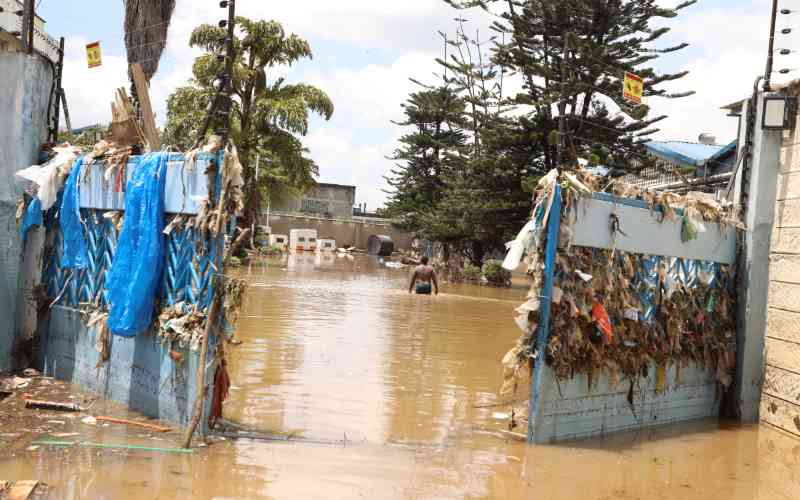
Over the past two weeks, flooded roads, submerged homes and displaced families have once again filled Kenya’s newspapers and television screens. The images are disturbing, and loss of life deeply painful.
Yet the most troubling aspect of Nairobi’s floods is not that they happened. It is that they surprise us. Heavy rainfall has always been part of the region’s climate. What turns rainfall into disaster is not the weather itself, but the condition of the systems meant to absorb it.
More than a decade ago, Nairobi developed a comprehensive blueprint for managing future growth. The Nairobi Integrated Urban Development Master Plan, launched in 2014 with international support, examined the city’s infrastructure, land use, transport, and environmental systems. Flooding was among the risks identified.
The plan did not treat floods as an occasional emergency. It treated them as a structural issue in urban management. Nairobi’s rapid urbanisation has replaced soil and vegetation with roofs, tarmac and pavement. Rainwater that once soaked into the ground now runs across hard surfaces, overwhelming the drainage channels and rivers.
The master plan proposed clear responses. Nairobi required an integrated storm water drainage system rather than the patchwork of roadside drains. The city’s river systems, particularly Nairobi, Ngong and Mathare rivers, needed restoration and protection of riparian corridors to allow water to flow during heavy rains. Upstream storm water retention areas were also proposed to slow runoff before it reaches the dense urban core.
None of these ideas is experimental. Cities across the world manage flood risks through precisely such systems. What they require is sustained investment and institutional coordination. That is where Nairobi’s challenge lies.
Responsibility for the city’s infrastructure is fragmented across multiple agencies. National road authorities control highways and their drainage systems. The county government manages other roads and urban services, while environmental and water agencies regulate rivers and catchments. Each institution addresses part of the system, yet the city functions as one ecosystem.
Without strong coordination and policy continuity, the result is predictable. Drainage is upgraded in one location while bottlenecks remain downstream. Encroachment on river corridors continues even as flood risks rise. Investments focus on visible projects such as roads and bridges, while less visible systems like storm water management receive less attention. The result is a vulnerable city.
This pattern should sound familiar beyond Nairobi. In Kenya’s arid and semi-arid lands, drought regularly exposes weaknesses in pastoral systems and water infrastructure. In urban areas, floods reveal weaknesses in planning, drainage, and environmental management. In both cases, the shock is climatic, but the crisis is institutional in scale.
Disasters are rarely surprises. They are signals. They reveal where systems are incomplete, where coordination is weak, and where long-term investments have been deferred. Responding to each crisis with emergency measures may save lives in the moment, but it does little to reduce likelihood of the next one.
The real test of governance is not how quickly we mobilise relief after disaster strikes. It is whether we build systems that prevent predictable shocks from becoming recurring crises. Rain will continue to fall on Nairobi. The question is whether the city’s institutions will finally do the steady, less visible work required to ensure rainfall no longer brings disaster.
-The writer is a consultant in policy, strategy, and governance.
Support Independent Journalism
Stand With Bold Journalism.
Stand With The Standard.
Continue
→
Pay via
Secure Payment
Kenya’s most trusted newsroom since 1902
Follow The Standard
channel
on WhatsApp
Over the past two weeks, flooded roads, submerged homes and displaced families have once again filled Kenya’s newspapers and television screens. The images are disturbing, and loss of life deeply painful.
Yet the most troubling aspect of Nairobi’s floods is not that they happened. It is that they surprise us. Heavy rainfall has always been part of the region’s climate. What turns rainfall into disaster is not the weather itself, but the condition of the systems meant to absorb it.
More than a decade ago, Nairobi developed a comprehensive blueprint for managing future growth. The Nairobi Integrated Urban Development Master Plan, launched in 2014 with international support, examined the city’s infrastructure, land use, transport, and environmental systems. Flooding was among the risks identified.
The plan did not treat floods as an occasional emergency. It treated them as a structural issue in urban management. Nairobi’s rapid urbanisation has replaced soil and vegetation with roofs, tarmac and pavement. Rainwater that once soaked into the ground now runs across hard surfaces, overwhelming the drainage channels and rivers.
The master plan proposed clear responses. Nairobi required an integrated storm water drainage system rather than the patchwork of roadside drains. The city’s river systems, particularly Nairobi, Ngong and Mathare rivers, needed restoration and protection of riparian corridors to allow water to flow during heavy rains. Upstream storm water retention areas were also proposed to slow runoff before it reaches the dense urban core.
None of these ideas is experimental. Cities across the world manage flood risks through precisely such systems. What they require is sustained investment and institutional coordination. That is where Nairobi’s challenge lies.
Responsibility for the city’s infrastructure is fragmented across multiple agencies. National road authorities control highways and their drainage systems. The county government manages other roads and urban services, while environmental and water agencies regulate rivers and catchments. Each institution addresses part of the system, yet the city functions as one ecosystem.
Without strong coordination and policy continuity, the result is predictable. Drainage is upgraded in one location while bottlenecks remain downstream. Encroachment on river corridors continues even as flood risks rise. Investments focus on visible projects such as roads and bridges, while less visible systems like storm water management receive less attention. The result is a vulnerable city.
This pattern should sound familiar beyond Nairobi. In Kenya’s arid and semi-arid lands, drought regularly exposes weaknesses in pastoral systems and water infrastructure. In urban areas, floods reveal weaknesses in planning, drainage, and environmental management. In both cases, the shock is climatic, but the crisis is institutional in scale.
Disasters are rarely surprises. They are signals. They reveal where systems are incomplete, where coordination is weak, and where long-term investments have been deferred. Responding to each crisis with emergency measures may save lives in the moment, but it does little to reduce likelihood of the next one.
The real test of governance is not how quickly we mobilise relief after disaster strikes. It is whether we build systems that prevent predictable shocks from becoming recurring crises. Rain will continue to fall on Nairobi. The question is whether the city’s institutions will finally do the steady, less visible work required to ensure rainfall no longer brings disaster.
-The writer is a consultant in policy, strategy, and governance.
Follow The Standard
channel
on WhatsApp
By Joshua Wathanga