

Audio By Vocalize
As we edge closer to next year’s general election, I feel a certain unease that we are not headed in the right direction. It is a familiar unease that I can relate to having been around and participated in Kenya’s elections since the country became a multi-party.
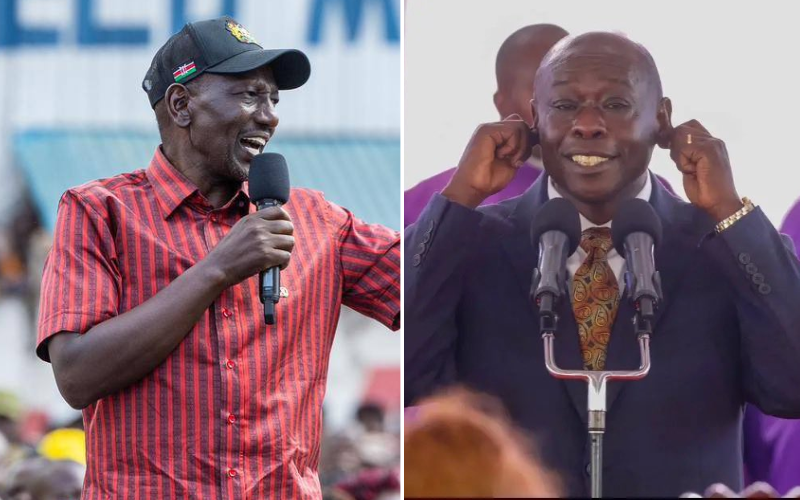
Inflammatory language has been inflicted on us by no less than the highest office in the land, with insults being traded freely between the head of state and the opposition, particularly his deputy and ex-buddy Rigathi Gachagua.
It has left many of us wondering whether we are sleepwalking into the same abyss that nearly tore the country apart in previous years.
The pattern is unmistakable: loose talk steeped in ethnic undertones and thinly veiled threats that once again risk igniting the kind of violence we had hoped was consigned to history. Is this the calibre of leadership we aspire to as a nation? For those of us who have lived through the consequences, the answer is a resounding no.
I write from the heart of the Rift Valley, specifically Nakuru, a region that has borne the brunt of political incitement time and again. We have witnessed firsthand how seemingly casual statements from politicians can transform peaceful neighbourhoods into battlegrounds. Neighbours who would borrow salt and such consumables over the fence turned on each other with machettes simply because their leaders had incited them. Cows were slashed to death and stores full of harvest burned down.
Who can forget that ruffian of a man – I think his name was Leitich – who publicly declared that Kenyans walking around raising two fingers—the international symbol of peace and, at that time in our history, a powerful emblem of support for multiparty democracy—should have their fingers chopped off? The statement was not made in jest. It was delivered with deadly seriousness.
Fast forward to 2007, and the nation came perilously close to losing everything. The disputed presidential election became the spark that ignited a fire fuelled by years of accumulated grievances and loose tongues. What started as campaign rhetoric escalated into widespread ethnic clashes, particularly in the Rift Valley. Nakuru and its surrounding areas were among the hardest hit.
Over a thousand lives were lost nationwide, hundreds of thousands displaced, and the economy suffered blows from which some sectors have never fully recovered. The images of burning homes and fleeing families remain etched in our minds.
Remember the picture of that old lady from Kiambaa, her hands raised in despair and disbelief after witnessing the horror of the church that had just been burned with her neighbours inside? And the other horrific picture of scores of people burned in Naivasha simply because they were from the “wrong” tribe in the wrong place?
Today, as we approach the next election, the same script appears to be unfolding. The base insults flying between the head of state and opposition leaders are not mere political theatre; they are signals to foot soldiers on the ground. When those at the top descend into personal attacks and veiled threats, they grant permission to their supporters to do the same—and often worse.
The question every Kenyan must ask is simple: what kind of country do we want to build? Do we aspire to a mature democracy where differences are debated with ideas rather than insults? Or are we content to remain trapped in a cycle where every election becomes an existential threat?
True leadership demands restraint, vision, and a commitment to national unity. It requires politicians who understand that their words carry the weight of history—especially in a nation still healing from past wounds. The two-finger incident and the 2007 crisis are not distant footnotes; they are cautionary tales that should guide our present conduct.
The solution lies not in suppressing dissent but in elevating the quality of our discourse. Leaders must be reminded that power is temporary, but the nation they lead is permanent. Citizens must demand better, refusing to be pawns in elite power games. Only then can we break the cycle and ensure that the next election becomes a celebration of democracy rather than a repeat of our darkest chapters.
Support Independent Journalism
Stand With Bold Journalism.
Stand With The Standard.
Continue
→
Pay via
Secure Payment
Kenya’s most trusted newsroom since 1902
Follow The Standard
channel
on WhatsApp
As we edge closer to next year’s general election, I feel a certain unease that we are not headed in the right direction. It is a familiar unease that I can relate to having been around and participated in Kenya’s elections since the country became a multi-party.
Inflammatory language has been inflicted on us by no less than the highest office in the land, with insults being traded freely between the head of state and the opposition, particularly his deputy and ex-buddy Rigathi Gachagua.
It has left many of us wondering whether we are sleepwalking into the same abyss that nearly tore the country apart in previous years.
The pattern is unmistakable: loose talk steeped in ethnic undertones and thinly veiled threats that once again risk igniting the kind of violence we had hoped was consigned to history. Is this the calibre of leadership we aspire to as a nation? For those of us who have lived through the consequences, the answer is a resounding no.
I write from the heart of the Rift Valley, specifically Nakuru, a region that has borne the brunt of political incitement time and again. We have witnessed firsthand how seemingly casual statements from politicians can transform peaceful neighbourhoods into battlegrounds. Neighbours who would borrow salt and such consumables over the fence turned on each other with machettes simply because their leaders had incited them. Cows were slashed to death and stores full of harvest burned down.
Who can forget that ruffian of a man – I think his name was Leitich – who publicly declared that Kenyans walking around raising two fingers—the international symbol of peace and, at that time in our history, a powerful emblem of support for multiparty democracy—should have their fingers chopped off? The statement was not made in jest. It was delivered with deadly seriousness.
Fast forward to 2007, and the nation came perilously close to losing everything. The disputed presidential election became the spark that ignited a fire fuelled by years of accumulated grievances and loose tongues. What started as campaign rhetoric escalated into widespread ethnic clashes, particularly in the Rift Valley. Nakuru and its surrounding areas were among the hardest hit.
Over a thousand lives were lost nationwide, hundreds of thousands displaced, and the economy suffered blows from which some sectors have never fully recovered. The images of burning homes and fleeing families remain etched in our minds.
Remember the picture of that old lady from Kiambaa, her hands raised in despair and disbelief after witnessing the horror of the church that had just been burned with her neighbours inside? And the other horrific picture of scores of people burned in Naivasha simply because they were from the “wrong” tribe in the wrong place?
Today, as we approach the next election, the same script appears to be unfolding. The base insults flying between the head of state and opposition leaders are not mere political theatre; they are signals to foot soldiers on the ground. When those at the top descend into personal attacks and veiled threats, they grant permission to their supporters to do the same—and often worse.
The question every Kenyan must ask is simple: what kind of country do we want to build? Do we aspire to a mature democracy where differences are debated with ideas rather than insults? Or are we content to remain trapped in a cycle where every election becomes an existential threat?
True leadership demands restraint, vision, and a commitment to national unity. It requires politicians who understand that their words carry the weight of history—especially in a nation still healing from past wounds. The two-finger incident and the 2007 crisis are not distant footnotes; they are cautionary tales that should guide our present conduct.
The solution lies not in suppressing dissent but in elevating the quality of our discourse. Leaders must be reminded that power is temporary, but the nation they lead is permanent. Citizens must demand better, refusing to be pawns in elite power games. Only then can we break the cycle and ensure that the next election becomes a celebration of democracy rather than a repeat of our darkest chapters.
Stay informed. Subscribe to our newsletter
Follow The Standard
channel
on WhatsApp
By Mutahi Mureithi