

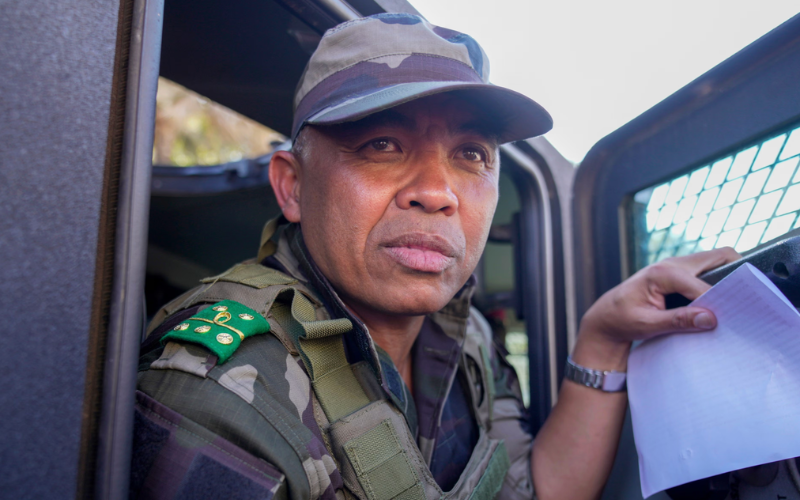
Anyone seeking a ministerial post in Madagascar will have to undergo a lie detector test as part of new anti-corruption measures announced by President Michael Randrianirina.
“We will know who is corrupt and who can help us,” Randrianirina said, according to The Guardian. “We are not looking for someone who is 100% clean, but someone who is more than 60% clean.”
He said the government has acquired a polygraph machine and a specialist to vet prospective ministers, adding that candidates who fail will not proceed to the next stage.
Randrianirina, 52, a colonel in the elite Capsat unit, came to power after weeks of youth-led protests under the banner “Gen Z Madagascar.”
The demonstrations began in September last year over water and electricity shortages before escalating into calls for sweeping political change.
In the country of about 32 million people, at least 22 people were killed in the early days of the unrest, according to the United Nations.
On October 11, the Capsat unit backed the protesters, and a day later, former president Andry Rajoelina reportedly fled to Dubai aboard a French military plane.
Randrianirina was later sworn in as interim president and has pledged to hold elections by late 2027, although Gen Z activists continue to push for a firm date while criticising some of his appointments over alleged ties to the previous regime.
Last week, he fired his entire Cabinet and dissolved the government, before appointing a new prime minister on Sunday.
Madagascar ranks 148th out of 180 countries in Transparency International’s 2025 Corruption Perceptions Index.
The country’s political landscape has long been defined by a “cycle of crisis,” where popular dissatisfaction frequently triggers military intervention.
The elite Capsat unit, which Randrianirina commanded, has historically acted as a kingmaker in Malagasy politics, most notably during the 2009 transition that first brought Andry Rajoelina to power.
Randrianirina is now seen to attempt to distance his administration from a legacy of “transition” governments that have historically struggled to maintain legitimacy or provide long-term stability beyond the reach of the bayonet.