

Audio By Vocalize
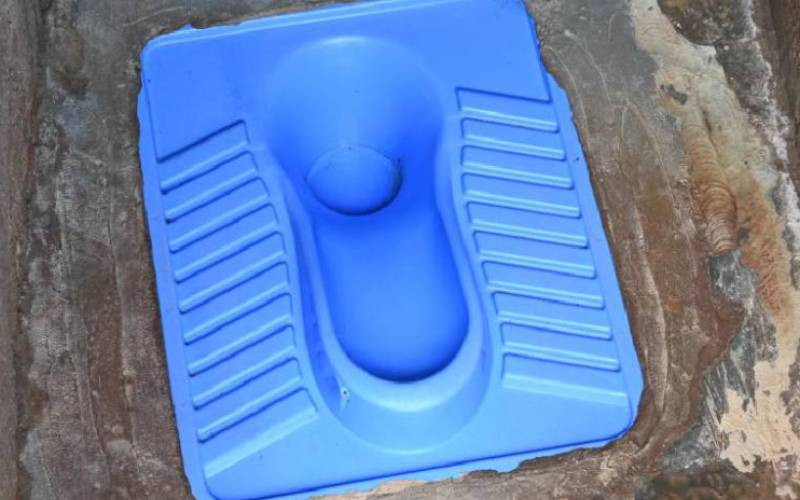
A SATO toilet bowl in Bar Agulu village, Siaya County. [File, Standard]
The world has spent decades donating latrines to Africa and hoping for the best. That strategy has not worked, and the numbers make the case without argument.
Today, 3.4 billion people across the globe live without safely managed sanitation.
In Kenya alone, nearly 23 million people, close to half the population, lack access to basic or improved sanitation, while 3.6 million still practise open defecation.
More than 1,000 children under five die every day from preventable water, sanitation and hygiene (WASH)-related diseases, costing hundreds of billions of shillings annually in healthcare expenses and lost productivity.
Rural counties like Kitui and Siaya, informal urban settlements, refugee camps and under-resourced schools bear the worst of this burden.
A 2012 World Health Organisation (WHO) cost-benefit analysis calculated that for every Sh129.50 ($1) invested in sanitation, society receives a return of about Sh712 ($5.50) through lower health costs, increased productivity and fewer premature deaths.
That ratio, widely cited by the World Bank and peer-reviewed public health research, frames the sanitation gap not merely as a public health emergency but as a colossal market failure, one that charitable aid, operating at insufficient scale for decades, has been unable to correct.
Governments, international agencies and donors have wrestled with this gap for generations. Billions of shillings have financed pit latrines, awareness campaigns and policy frameworks, yet the crisis has persisted because interventions rarely outlasted the funding cycles that created them.
What the sector has consistently lacked is not goodwill but a self-sustaining commercial model capable of reaching scale.
That is the gap that SATO, a social business within Japanese building materials giant LIXIL Corporation, has set out to fill.
Since 2016, the company has reached 103 million people globally with improved sanitation, shipping more than 10 million units across 59 countries and territories, predominantly in sub-Saharan Africa and Asia. Kenya has emerged as its most replicable market.
“Reaching 103 million lives globally is a monumental step toward dignity and health for all, emphasising that Africa is at the heart of this sustainable transformation,” said Samuel Langat, SATO’s Africa leader, adding, “Every person deserves safe sanitation, and we’re just getting started.”
The product at the centre of the model is deliberately unglamorous. A locally made pan seals pit latrines and a portable handwashing tap requires just 100 millilitres of water per use.
What distinguishes the model is not the product itself but the ecosystem built around it. Local manufacturing keeps costs down and supply chains reliable. Local distributors extend reach into remote areas. Trained local masons generate livelihoods by installing the units.
The sanitation gap becomes a supply chain, and a supply chain becomes a jobs programme.
“These interventions do not just deliver infrastructure. They change behaviour, build local capacity and foster ownership within the communities themselves,” said Langat.
In Kenya, the model has moved well beyond individual households. The School Toilet Enhancement Programme (STEP) has upgraded facilities in more than 110 schools, improving conditions for over 60,000 students.
Supply chains in Matungu sub-county now serve more than 7,000 children, while programmes in Kitui and Siaya counties are closing some of the country’s most persistent sanitation gaps. Refugee settlements in Kakuma and Kalobeyei are also being reached through locally distributed products in partnership with Peace Winds Japan.
Partnerships with the United Nations Children’s Fund (UNICEF) Kenya and the Ministry of Health add policy reach to the private sector model, strengthening supply chains and sustaining behaviour change beyond individual installations.
“When governments, non-governmental organisations (NGOs) and private companies align their efforts, sanitation solutions reach more people, persist longer and create lasting community impact,” said Alex Njagi, SATO’s Kenya leader.
The returns are measurable. Every installation contributes to reduced disease burden, lower healthcare costs and improved school attendance, outcomes that translate into economic data that development financiers and government planners can act on.
“103 million lives transformed hits home in Kenya, where SATO has given communities safe toilets where children and women are no longer exposed to illness or assault. Our water-saving solutions alongside our team’s passion and determination have restored health and hope,” said Njagi.
Kenya’s experience, SATO argues, is the template for the continent, proving that locally produced, distributed and installed solutions can embed themselves into community economies rather than depending on donor cycles.
“It proves that sanitation at scale is possible, that market-driven solutions can reach the most underserved and that dignity, health and economic opportunity can be delivered together,” Njagi added.
Support Independent Journalism
Stand With Bold Journalism.
Stand With The Standard.
Continue
→
Pay via
Secure Payment
Kenya’s most trusted newsroom since 1902
Follow The Standard
channel on WhatsApp
A SATO toilet bowl in Bar Agulu village, Siaya County.
[File, Standard]
The world has spent decades donating latrines to Africa and hoping for the best. That strategy has not worked, and the numbers make the case without argument.
Today, 3.4 billion people across the globe live without safely managed sanitation.
In Kenya alone, nearly 23 million people, close to half the population, lack access to basic or improved sanitation, while 3.6 million still practise open defecation.
More than 1,000 children under five die every day from preventable water, sanitation and hygiene (WASH)-related diseases, costing hundreds of billions of shillings annually in healthcare expenses and lost productivity.
Rural counties like Kitui and Siaya, informal urban settlements, refugee camps and under-resourced schools bear the worst of this burden.
A 2012 World Health Organisation (WHO) cost-benefit analysis calculated that for every Sh129.50 ($1) invested in sanitation, society receives a return of about Sh712 ($5.50) through lower health costs, increased productivity and fewer premature deaths.
That ratio, widely cited by the World Bank and peer-reviewed public health research, frames the sanitation gap not merely as a public health emergency but as a colossal market failure, one that charitable aid, operating at insufficient scale for decades, has been unable to correct.
Governments, international agencies and donors have wrestled with this gap for generations. Billions of shillings have financed pit latrines, awareness campaigns and policy frameworks, yet the crisis has persisted because interventions rarely outlasted the funding cycles that created them.
What the sector has consistently lacked is not goodwill but a self-sustaining commercial model capable of reaching scale.
That is the gap that SATO, a social business within Japanese building materials giant LIXIL Corporation, has set out to fill.
Since 2016, the company has reached 103 million people globally with improved sanitation, shipping more than 10 million units across 59 countries and territories, predominantly in sub-Saharan Africa and Asia. Kenya has emerged as its most replicable market.
“Reaching 103 million lives globally is a monumental step toward dignity and health for all, emphasising that Africa is at the heart of this sustainable transformation,” said Samuel Langat, SATO’s Africa leader, adding, “Every person deserves safe sanitation, and we’re just getting started.”
The product at the centre of the model is deliberately unglamorous. A locally made pan seals pit latrines and a portable handwashing tap requires just 100 millilitres of water per use.
What distinguishes the model is not the product itself but the ecosystem built around it. Local manufacturing keeps costs down and supply chains reliable. Local distributors extend reach into remote areas. Trained local masons generate livelihoods by installing the units.
Stay informed. Subscribe to our newsletter
The sanitation gap becomes a supply chain, and a supply chain becomes a jobs programme.
“These interventions do not just deliver infrastructure. They change behaviour, build local capacity and foster ownership within the communities themselves,” said Langat.
In Kenya, the model has moved well beyond individual households. The School Toilet Enhancement Programme (STEP) has upgraded facilities in more than 110 schools, improving conditions for over 60,000 students.
Supply chains in Matungu sub-county now serve more than 7,000 children, while programmes in Kitui and Siaya counties are closing some of the country’s most persistent sanitation gaps. Refugee settlements in Kakuma and Kalobeyei are also being reached through locally distributed products in partnership with Peace Winds Japan.
Partnerships with the United Nations Children’s Fund (UNICEF) Kenya and the Ministry of Health add policy reach to the private sector model, strengthening supply chains and sustaining behaviour change beyond individual installations.
“When governments, non-governmental organisations (NGOs) and private companies align their efforts, sanitation solutions reach more people, persist longer and create lasting community impact,” said Alex Njagi, SATO’s Kenya leader.
The returns are measurable. Every installation contributes to reduced disease burden, lower healthcare costs and improved school attendance, outcomes that translate into economic data that development financiers and government planners can act on.
“103 million lives transformed hits home in Kenya, where SATO has given communities safe toilets where children and women are no longer exposed to illness or assault. Our water-saving solutions alongside our team’s passion and determination have restored health and hope,” said Njagi.
Kenya’s experience, SATO argues, is the template for the continent, proving that locally produced, distributed and installed solutions can embed themselves into community economies rather than depending on donor cycles.
“It proves that sanitation at scale is possible, that market-driven solutions can reach the most underserved and that dignity, health and economic opportunity can be delivered together,” Njagi added.
Follow The Standard
channel on WhatsApp
By David Njaaga