

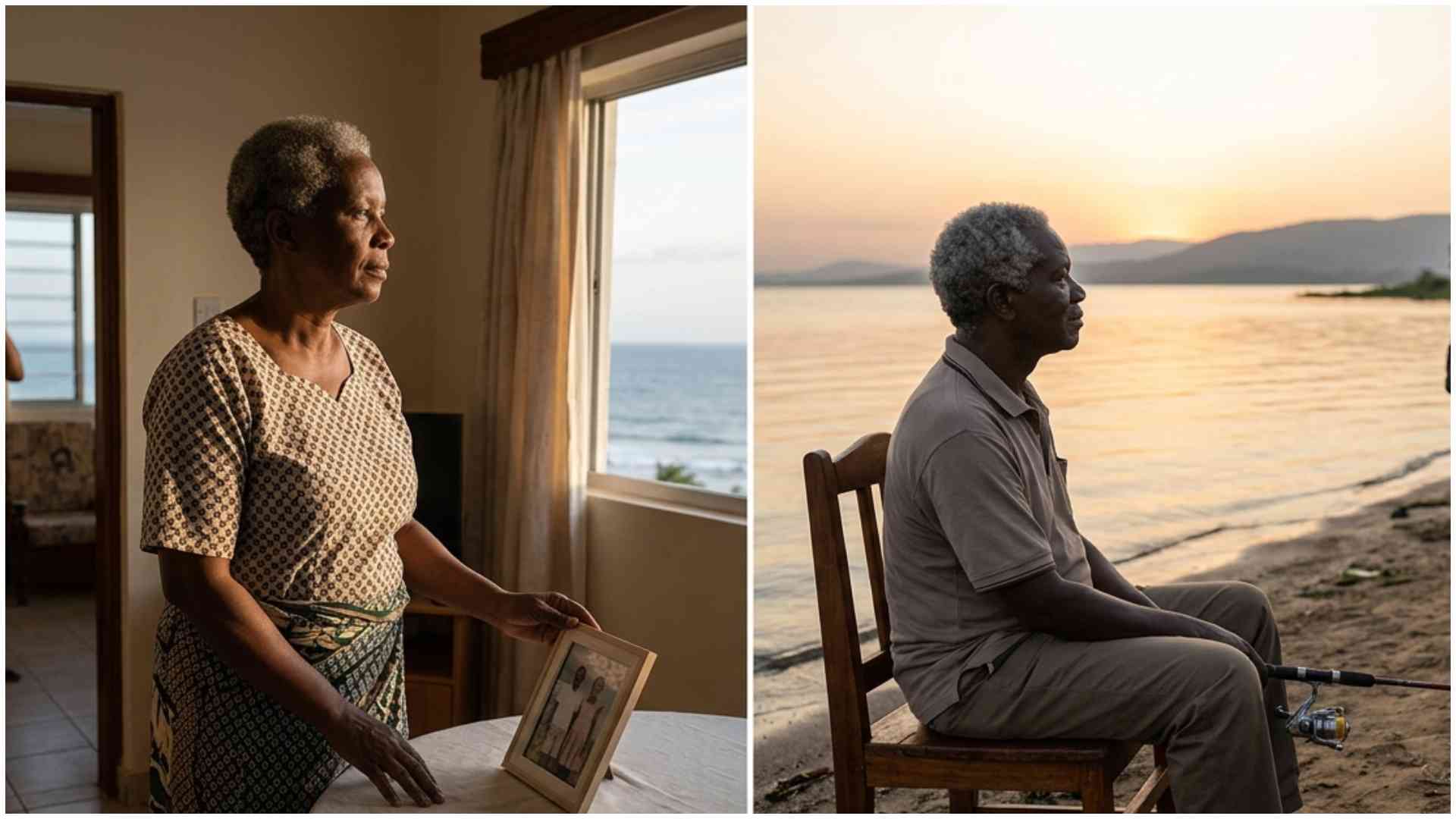
Amina Hamisi had spent most of her married life raising children and supporting her husband’s fishing business in Mombasa. When her last-born left for university, the silence in the house was deafening. She tried to rekindle closeness with her husband, but he preferred long evenings alone, listening to the radio. Slowly, she began to feel invisible in her own home.
“I realized our marriage was built around the children, not us. I wanted companionship, laughter, and shared dreams, but he wanted solitude. After 40 years together, I chose freedom over loneliness,” she shares.
Amina’s story is not unique. Across Kenya and beyond, older couples are confronting the reality that decades of shared routines do not always translate into lasting intimacy. For some, the departure of children exposes cracks that had long been hidden. For others, shifting ambitions and personal growth create new divides.
Take Wanjiku Mwangi, for instance. She built a thriving tailoring business in Nyeri, but her husband resented her success. He insisted that he should control her earnings, and arguments over money became routine. Over time, she felt her independence was being crushed, her voice drowned out in her own household.
“I worked hard to stand on my own feet, but he saw my success as rebellion. Every shilling became a battlefield. I divorced him not because I stopped loving, but because I refused to keep shrinking myself.”
Her experience highlights another dimension of late-life separation, the clash between tradition and modernity. As more women achieve financial independence, the old expectation of male control over household finances becomes increasingly untenable. What once seemed like rebellion is now simply self-determination.
Similarly, Tony Okoth’s retirement in Kisumu illustrates how diverging visions of later life can strain even long-standing unions. After decades of teaching, he dreamed of quiet mornings by Lake Victoria, fishing and reading. His wife, however, wanted to travel, join church missions, and live a vibrant retirement. Their visions clashed until the tension became unbearable. “She wanted adventure, I wanted rest. We tried to compromise, but neither of us was happy. In the end, we parted ways, each chasing the retirement we dreamed of,” shares the retired teacher.
Once considered rare, Grey divorce, the dissolution of marriages among individuals aged 50 and above, is now increasingly visible. The term itself symbolically references grey hair, underscoring the age group most affected.
Grey divorce is on the rise, and the reasons behind it are complex and varied. Statistics suggest that baby boomers are more prone to divorce, with factors like empty nest syndrome, shifting priorities, financial problems, and reduced stigma surrounding divorce all playing a role.
Older populations
According to Turkstant (2025), data confirmed that 33.7per cent of divorces happened in the first five years. Couples face difficulties; some resolve them, others turn to divorce. Divorce can occur at any stage, but early years are perilous. Yet the later years are increasingly vulnerable too.
A study looking at historical trends found that divorce rates among middle-aged and older adults have increased since 1970. Grey divorce was relatively uncommon in 1970 and grew only modestly until 1990.
In 1990, 8.7 per cent of marriages among people over age 50 ended in divorce. By 2019, that number had grown to 36 per cent. By then, one in three divorced individuals was aged 50 or older, highlighting that divorce now substantially impacts older populations as well (Brown and Lin, 2022).
Similar trends are observed in European countries and Canada. In Sweden, grey divorces have more than doubled since the beginning of the millennium.
“What was once considered rare is now a growing sociological issue. Grey divorce signals a shift in the divorce landscape and is likely to become more common in the near future. Divorce is rarely a spontaneous decision; it typically results from issues accumulated over time,” shares psychologist Jane Ngugi
“While the reasons vary by relationship, common causes include economic hardship, poor communication, declining social stigma, infidelity, violence, family interference, sexual incompatibility and insecurity.”
She further explains that modernization plays a role.
As modern institutions expanded, traditional structures began to acquire modern characteristics while traditional values rapidly eroded. Modernization has radically changed not only family types but also how marriage is formed, functioned, and ended.
“Life transitions can also lead to grey divorce, including empty nest syndrome. When children leave home, parents often face a restructured marital dynamic, no longer centred around caregiving roles. This shift can diminish marital satisfaction, creating relational gaps that may lead to divorce. When the children are gone, some couples realize they have drifted apart and no longer have shared interests or a strong connection.” Ngugi adds.
Additionally, some couples stay in unhappy relationships because of the burden of raising children alone or fear of co-parenting intricacies. When children leave the nest, they do not see the need of sacrificing their happiness.

Adjustment
For older adults specifically, aging represents a big change, and people’s priorities, interests, and needs may shift as they grow older. Some couples might grow closer during this time, but others might find their values and priorities too different, leading them to choose separate paths.
As couples begin spending more time together after years of separate routines, mismatched expectations and evolving personal needs may surface, especially in long-term marriages. These adjustments can strain the relationship, making retirement a critical risk factor. Chronic illness or caregiving demands may burden one spouse, potentially leading to marital dissolution if the other partner feels unable or unwilling to provide care.
When couples cannot navigate these fragile periods, grey divorce becomes more likely, underscoring that such decisions are shaped not only by personal choice but also by the structural vulnerability of long-term unions.
Financial issues also loom large. Misunderstandings over money can become more profound as couples near retirement age. Retirement plans may hang in the balance. When financial goals and behaviours are out of sync, divorce can appear to be the only way out.
Emotions run very high when divorcing over 50. Anger, resentment, grief, lost years, little time ahead, and perhaps years of unhappiness in an unfulfilling marriage all lead to high emotional impact. Some people will experience a sense of renewal and freedom as they let go of a relationship that no longer serves them. However, others, particularly those who didn’t initiate divorce, may be left struggling with feelings of stress, anxiety, or depression.
An article published by FairwayDivorce.com in January 2023 defines grey divorce as the demographic trend of couples over the age of 50 getting divorced. While overall divorce rates are in decline, they have doubled for this segment of the population.
The expressions “Silver Splitters” or “Diamond Divorcees” also refer to this trend. People born during the Baby Boomer generation have seen the most increase in divorce rates. This upswing coined the term “Grey Divorce.”
Baby Boomers get a lot of attention because they remain one of the largest demographics in the world. Their lifestyle and spending habits drive market innovation and branding. While companies have successfully predicted trends in the past, no one could predict the onslaught of divorce among baby boomers.
The impact of Grey divorce is far-reaching. It affects housing, travel, retirement spending, and, of course, the providers of divorce services. Families, including children and grandchildren, also feel its effects.
While divorce rates flattened or decreased in some demographics, the statistics for Grey divorces are increasing. The Pew Research Centre notes that “during their young adulthood, Baby Boomers had unprecedented levels of divorce.”
This pattern may be contributing to divorces among them today. This group faces unique challenges when it comes to splitting assets. Their age, careers, retirement, and children mean that their high-income years are either behind them or peaking. At this point, “making it up” financially is less likely than for younger counterparts.
This generation is different from previous ones. They have accumulated wealth through dual-income families, benefited from traveling, and enjoyed increased life spans associated with active lives. The Grey divorcing market wants and expects more out of life. They do not want to settle.
According to FairwayDivorce.com, reasons include the decline of stigma around divorce, the acceptability of “growing apart,” the rise of second marriages later in life, and the ease of meeting new partners through dating websites.
Longer life expectancy also plays a role: between 1921 and 2005, life expectancy increased from 59 years to 78 years for men and from 61 years to 83 years for women.
For some, this is simply too long to remain in an unhappy marriage.
Marriage itself is held to a higher standard than in the past. Being a good provider or homemaker is no longer enough. People are looking for partners, companions, and friends who share common interests, goals, and values. They are seeking personal fulfilment.
Elderly disability rates have declined, meaning many live well into their 60s and 70s feeling active and wanting to share adventures with like-minded partners. Women are also less likely to be financially dependent on their husbands, thanks to increased workforce participation and confidence in equitable asset division.
“People are living longer, healthier lives. For many, the prospect of spending 20 or 30 more years in an unhappy relationship feels untenable. Divorce is increasingly seen not as failure, but as a chance to start afresh,” the psychologist says.
Grey divorce can be particularly disruptive. Financially, splitting assets late in life can derail retirement plans. Emotionally, it can bring loneliness, especially as social circles shrink with age. Relationships with adult children and grandchildren may also become strained.
Yet for some, it offers relief from years of dissatisfaction. The challenge lies in distinguishing between marriages that can be renewed and those that have run their course.
Psychologist Ngugi emphasizes steps to protect well-being after divorce:
“Find support from family and friends, it is pivotal. Maintaining social connection can help mitigate risk.”
It is also important to invest in the relationship beyond parenting. Long before children leave home, couples should nurture their own bond, through shared interests, regular time together and emotional intimacy.
A marriage cannot rely solely on children as its glue.
Open, honest conversation is essential. Couples who actively listen, express needs clearly and address conflicts early are more likely to maintain connection. Avoiding difficult conversations often allows resentment to deepen.
“Grey divorce is not inevitable. In many cases, it reflects years of quiet disconnection rather than a single breaking point.,” she says.