



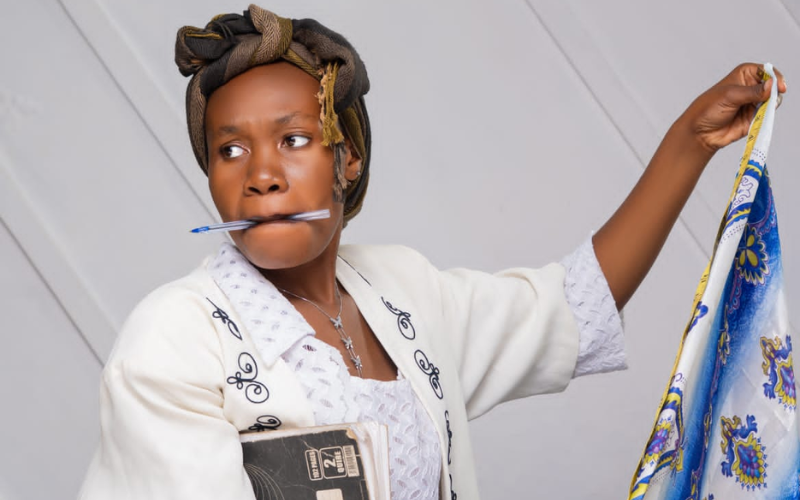
Fundi wa Mtaa, a Swahili comedy play, is set in a lively, chaotic marketplace. It revolves around a small tailoring space and a poorly maintained public washroom dubbed The Royal Palace.
This play, which captures the themes of absurdity and deceit in a relatable setting of the everyday hustle, is staged on April 26 the Klique Hotel in Eldoret. It is presented by DM Chronicles.
Machanjauri (David Mburu) is a carpenter who is married to Truphena, the main tailor in the marketplace.
He is a funny man and a hustler trying to survive. His life in the busy marketplace circles around trying to get clients and complete orders, though he does not deliver his services as quickly as promised.


Truphena (Lisa Sitawa), his wife, is a cunning and humorous business owner running both the Royal Palace washroom and tailoring space.
Machanjauri, a cunning and carefree person, sneaks into the restroom without paying, only to be caught by Truphena. What follows is their troubled marriage, which is also playful and filled with teasing and constant attempts to outsmart each other and their customers, is laid bare.
Mburu explains that his character’s delays in work are caused by mismanagement of payments, as he spends money meant for work on other needs. He does not feel guilty about his tricks and schemes, as he is used to them.
Machanjauri struggles with financial instability and pressure from authorities such as the city council officers while trying not to go back to his humble beginnings.
“The story is about persistence, and that is represented by different members of society, like tailors, carpenters, kibanda owners, and a TikTok content creator, all portraying everyday life,” Mburu says.

The play is directed by Josiah Kiprop and written by Mburu, who explains that the idea was inspired by real-life informal workers who fail to deliver services on time. He also aims to depict everyday market experiences and interactions among different workers.
Sitawa explains that her character is funny partly because of the clothes she makes for customers, which differ from what was requested. She says that running the washroom was a responsibility given due to its proximity to her business.
“Her daily experience in the marketplace involves dealing with customers and people who use the restroom without paying, which frustrates her,” she describes.
At times, she hides from customers because she has not finished making their clothes. She explains that the tailoring work represents the struggle of a woman who is making a livelihood.
Truphena deals with customers through a combination of excuses and persuasion, using her sharp tongue to manage complaints about delays and poor service.
Despite the chaos of the marketplace, Truphena maintains control through her witty, sociable, and sometimes dishonest nature.
“The message of the story is the experiences of informal work and how people deal with the pressures that come with it,” says Sitawa.