

Audio By Vocalize
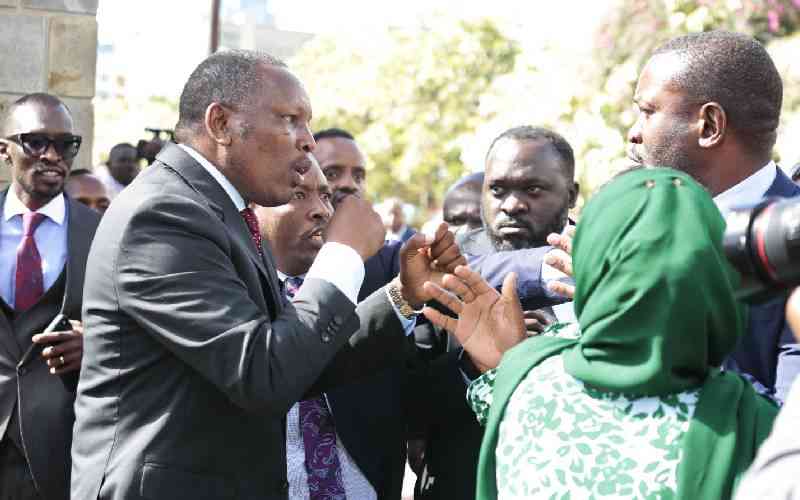
The festering relationship between the Senate and governors reached an unprecedented peak last week. The Senate, or at least a section of it, escalated its response to the perceived defiance by the governors to a new level. The recipient of the Senate’s fury was Samburu Governor Lelelit Lati. He was physically confronted for failing to honour the summons by the Senate’s County Public Accounts Committee.
Contentious relationship between the two is not new. But its escalatory trajectory is revealing the intensity of the problem. The animosity is just a subset of the country’s evolving devolution story. More pointedly, it is a symptom of the stubborn malady afflicting the country’s devolved system. The malignant tumour, for that is what it is becoming, has had a wider contributing agency beyond just the Senate and the governors. In their own way, the National Assembly, the National Executive, the Judiciary, and the county assemblies have had their fair share in the intensifying problem.
The National Assembly has, for instance, insisted on imposing its power over the budget to dictate what the devolved units receive. This has almost always resulted in fights with the Senate. The fight over division of revenue between the two Houses of Parliament has in fact become a predictable annual ritual. The National Assembly has invariably insisted on lesser allocation to counties.
The National Executive has been numerously accused of derailing devolution through various tactics, ranging from delayed disbursements by the National Treasury and clinging onto functions that are otherwise supposed to be managed by counties. The Judiciary is not blameless either. It has been invited to mediate and litigate some of the persistent challenges stalking devolution. Some of its advisories and judgments have only served to aggravate the problem.
For the Senate and governors, the question of summonses has been at the centre of the tensions. The latter have consistently viewed with hostility the decision to summon them to appear before the Senate. The Supreme Court judgment in October 2022, affirming the Senate powers to issue summonses, has done little to put the matter to rest.
Genuinely addressing the contentious relationship between the Senate and governors means one thing: Tackling the design flaws evident in the devolved system. With the benefit of over 10 years of devolution, an objective assessment should point to some obvious flaws in the devolved system. Notable ones include the design of the bicameral Parliament and the place of county assemblies.
The bicameral legislature design that largely made the Senate the ‘custodian’ of devolution has ironically stood in the way of entrenching a robust devolved system. The disproportionately immense powers enjoyed by the National Assembly to the Senate’s detriment has inadvertently left the latter struggling for relevance. To prove its place, the Senate continues its misadventure to crowd out the county assemblies from devolved oversight.
Remedying the fundamental flaw requires a radical overhaul to the current bicameral design. The powers between the two Houses should be redistributed to proximately establish the Senate as the upper house along the 2004 Bomas draft Constitution mould. It would introduce a truly strong bicameral Parliament with both Houses exercising effective check over each other, while freeing the space for county assemblies to run the oversight show at the counties. Nothing short of a constitutional amendment would cure the flaws. Anything short would be akin to administering palliatives with a guarantee of no cure.
Mr Ogutu is a political commentator
Support Independent Journalism
Stand With Bold Journalism.
Stand With The Standard.
Continue
→
Pay via
Secure Payment
Kenya’s most trusted newsroom since 1902
Follow The Standard
channel on WhatsApp
The festering relationship between the Senate and governors reached an unprecedented peak last week. The Senate, or at least a section of it, escalated its response to the perceived defiance by the governors to a new level. The recipient of the Senate’s fury was Samburu Governor Lelelit Lati. He was physically confronted for failing to honour the summons by the Senate’s County Public Accounts Committee.
Contentious relationship between the two is not new. But its escalatory trajectory is revealing the intensity of the problem. The animosity is just a subset of the country’s evolving devolution story. More pointedly, it is a symptom of the stubborn malady afflicting the country’s devolved system. The malignant tumour, for that is what it is becoming, has had a wider contributing agency beyond just the Senate and the governors. In their own way, the National Assembly, the National Executive, the Judiciary, and the county assemblies have had their fair share in the intensifying problem.
The National Assembly has, for instance, insisted on imposing its power over the budget to dictate what the devolved units receive. This has almost always resulted in fights with the Senate. The fight over division of revenue between the two Houses of Parliament has in fact become a predictable annual ritual. The National Assembly has invariably insisted on lesser allocation to counties.
The National Executive has been numerously accused of derailing devolution through various tactics, ranging from delayed disbursements by the National Treasury and clinging onto functions that are otherwise supposed to be managed by counties. The Judiciary is not blameless either. It has been invited to mediate and litigate some of the persistent challenges stalking devolution. Some of its advisories and judgments have only served to aggravate the problem.
For the Senate and governors, the question of summonses has been at the centre of the tensions. The latter have consistently viewed with hostility the decision to summon them to appear before the Senate. The Supreme Court judgment in October 2022, affirming the Senate powers to issue summonses, has done little to put the matter to rest.
Genuinely addressing the contentious relationship between the Senate and governors means one thing: Tackling the design flaws evident in the devolved system. With the benefit of over 10 years of devolution, an objective assessment should point to some obvious flaws in the devolved system. Notable ones include the design of the bicameral Parliament and the place of county assemblies.
The bicameral legislature design that largely made the Senate the ‘custodian’ of devolution has ironically stood in the way of entrenching a robust devolved system. The disproportionately immense powers enjoyed by the National Assembly to the Senate’s detriment has inadvertently left the latter struggling for relevance. To prove its place, the Senate continues its misadventure to crowd out the county assemblies from devolved oversight.
Remedying the fundamental flaw requires a radical overhaul to the current bicameral design. The powers between the two Houses should be redistributed to proximately establish the Senate as the upper house along the 2004 Bomas draft Constitution mould. It would introduce a truly strong bicameral Parliament with both Houses exercising effective check over each other, while freeing the space for county assemblies to run the oversight show at the counties. Nothing short of a constitutional amendment would cure the flaws. Anything short would be akin to administering palliatives with a guarantee of no cure.
Mr Ogutu is a political commentator
Follow The Standard
channel on WhatsApp
By Alex Ogutu