

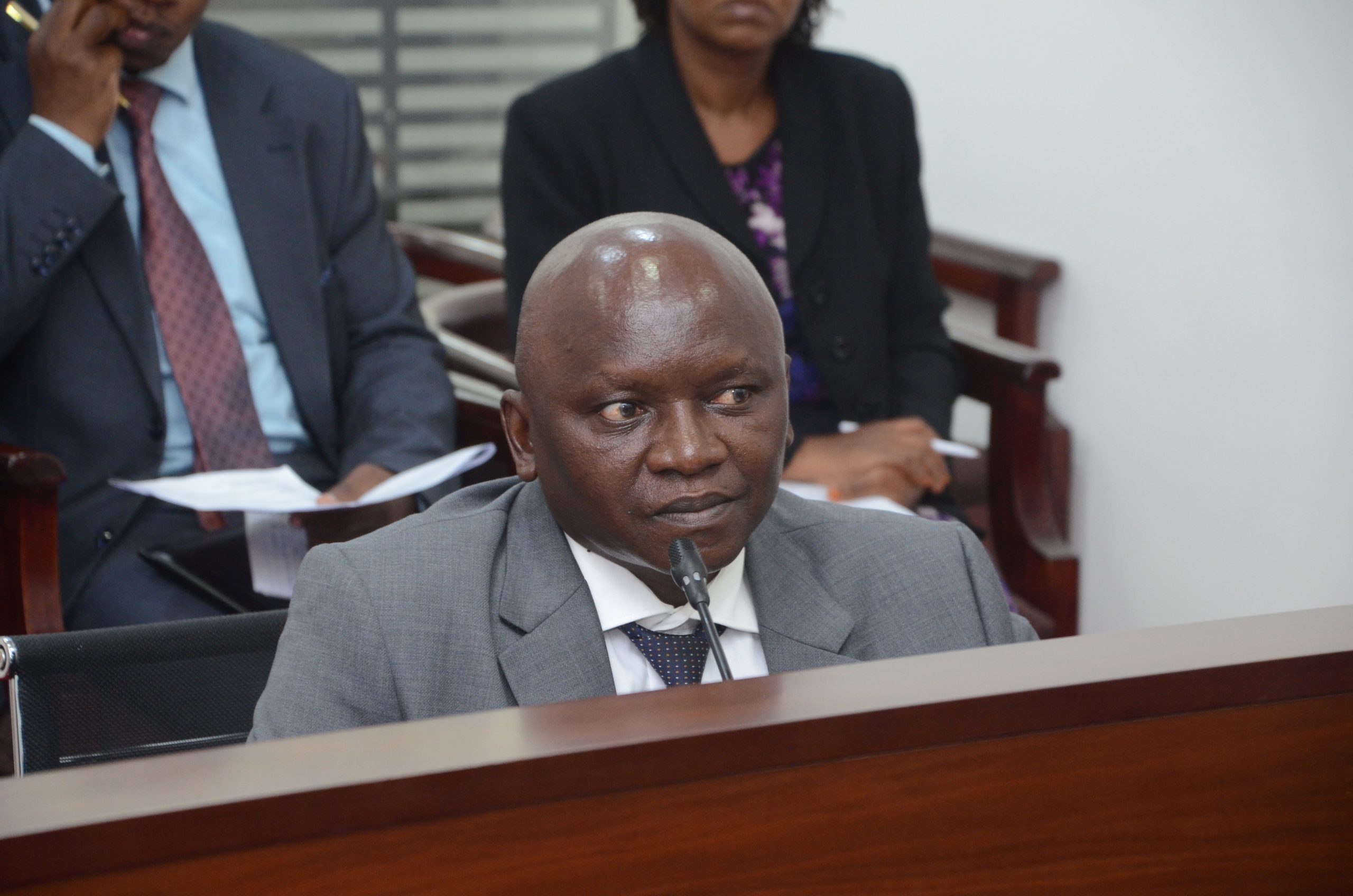
Athi Water Works Development Agency CEO Joseph Kamau, when he appeared before the Committee on Blue Economy, Water and Irrigation Douglas Okiddy
The Athi Water
Works Development Agency is losing nearly Sh1.2 billion annually in uncollected
revenue, amid growing inefficiencies in water bill collection.
This is 56 per cent of the total
collection, compared to only Sh1 billion (44 per cent) that the state agency
collects on average every year, officials
told a parliamentary committee.
Appearing before
the National Assembly Committee on Blue Economy, Water and Irrigation, the
agency’s Chief Executive Officer, engineer Joseph Kamau, revealed that the
agency is only able to collect about 44 per cent of billed revenue, leaving more
than half uncollected
According to data
tabled before the committee, the agency bills roughly Sh186 million monthly,
translating to about Sh2.2 billion annually.
However, low
collection efficiency from Water Service Providers (WSPs) has significantly
undermined revenue performance.
“We are now, from the time we started, at 44 percent. So, we are
expecting to collect around Sh1 billion this financial year; these revenues are
dictated by the tariff, with a large amount of this money being collected and going to the treasury towards public payment for the loans that were taken to
develop the water supply systems,” Kamau told the committee.
To address the
shortfall, the agency is seeking support from the Kenya Revenue Authority to
take over the collection of revenues on its behalf.
Kamau told the committee
chaired by Marakwet East’s Kangogo Bowen that a significant portion of the
revenue collected is channelled towards loan repayments to the National
Treasury, limiting the agency’s operational flexibility.
“We don’t have an enforcement
capacity; that is why we are in talks with KRA to collect revenue on our behalf
since the law mandates them as primary revenue collectors. They have the powers
to analyse the accounts of these providers and enforce the collections,” said
Kamau.
With support from KRA the agency says that it will be targeting to collect between 70 and 80 per cent of the revenues.
The agency noted that water tariffs largely dictate revenue flows, with funds strictly
appropriated and regulated by Parliament.
At the same time,
the agency continues to rely on government allocations for operational costs,
including staff expenses and infrastructure maintenance.
Athi Water
officials also raised concerns over Value Added Tax (VAT) obligations on
projects, noting that efforts to secure waivers have been unsuccessful.
They called on Parliament
to consider appropriating funds to cover VAT costs, warning that contractors’
accounts risk being frozen over unpaid taxes.
Lawmakers led by Bowen
questioned delays in project implementation, particularly where some
initiatives are reported as nearly complete but continue to receive
allocations.
The agency
clarified that funding gaps have slowed progress, especially for large-scale
projects such as the Maragua 4 Dam, a strategic water source expected to supply
Nairobi with up to 180,000 cubic metres of water daily.
The project,
estimated to cost Sh16 billion, remains underfunded, with design work only 80
per cent complete.
Officials
attributed delays to staggered funding, noting that insufficient allocations
prevent timely completion of feasibility studies and designs.
“Inadequate
budgetary allocation for the ongoing government financed projects. The
budgetary requirements for the ongoing projects is Sh1.7billion which will be
requested under supplementary I,” said the CEO.
The Karimenu Dam
project also emerged as a concern, with officials citing delays in compensating
residents living within the reservoir area. The agency requires approximately
Sh1.2 billion to relocate affected communities and establish a buffer zone to prevent
encroachment.
Despite assurances
that the dam is structurally safe, lawmakers warned of potential risks if
relocation is not expedited, especially amid changing weather patterns.
The committee expressed
frustration over prolonged project timelines and lack of clarity on budget
allocations, particularly for boreholes and partially completed projects.
They also raised
concerns about the gap between presidential project announcements and actual
implementation, urging better planning and funding to ensure timely delivery.
In response, the
committee acknowledged that budgetary constraints often affect execution,
noting that government spending is dependent on revenue collected and may
require adjustments through supplementary budgets.