

Audio By Vocalize
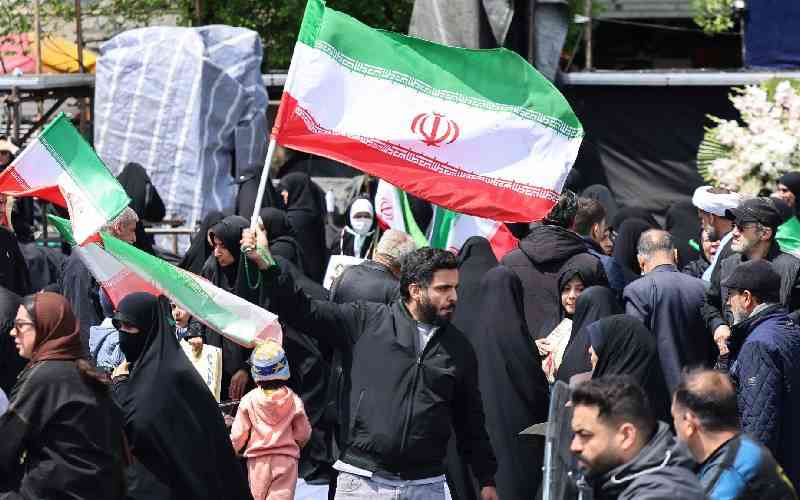
An Iranian man waves the national flag as people gather in Tehran’s Revolution Square after the United States and Iran agreed to a two-week ceasefire, on April 8, 2026. [AFP]
The shock waves from the Middle East conflict are far-reaching as skyrocketing oil prices threaten economies globally.
The situation exposes the weaknesses and fragility of wholly depending on an energy system where oil and gas resources, pipelines and shipping routes dictate energy security and determine geopolitical power dynamics. Though unfortunate, the crisis presents yet another moment of reckoning on the urgent need to shift the lens and logic of energy security.
For Africa, this shift goes beyond energy security. It’s about energy sovereignty, in which the continent decisively takes the reins of its own energy system by a deliberate, intentional massive deployment and scaling of its vast clean energy resources that will define the future.
Studies indicate that the Sahel is a potent solar power house with the potential to meet 13.9 billion kWh/year compared to the global consumption of 20 billion kWh/year. Moreover, the continent’s strong wind corridors are said to possess astonishing technical wind potential enough to satisfy the entire continent’s electricity demands 250 times over.
Beneath our feet, the Great Rift Valley holds massive geothermal reservoirs. Estimates show that just 1 per cent of this geothermal potential could meet Africa’s entire electricity demand by 2050.
Clean energy systems offer a fundamental shift towards energy security and energy sovereignty. No one can enforce a blockade on the sun or embargo the wind. Geothermal does not run on fragile maritime choke points. Renewable energy is therefore an economic and strategic imperative for economies in Africa dependent on expensive fuel imports that are hard hit when geopolitical crises occur.
Efforts to deploy Africa’s clean energy are promising. IEA estimates that investments increased from $2.6 billion in 2021 to nearly $40 billion in 2024. But this ambition falls way short of the annual $100 billion required to meet 2030 goals. Despite having 60 per cent of the world’s best solar resources, the continent utilises only 1 per cent of its solar potential, and accounts for less than 3 per cent of global investment.
Global investment patterns largely penalise Africa as high-risk, turning a blind eye to the continent’s high-potential growth market with a rapid population growth, expanding urbanisation, rising electricity demand, and well-endowed with readily available clean energy conditions.
Strategic investment in three areas could accelerate Africa’s energy powerhouse: Modern grid infrastructure with the capacity to integrate clean energy generation; distributed energy systems that rapidly electrify underserved communities; and clean industrial ecosystems powered by renewable electricity.
These are opportunities to invest in the next global energy system. Clean-energy economy will require new supply chains, new centres of production, and new energy trade corridors. Africa sits at the centre of that system. In such a system, Africa cannot be a cheap raw materials’ exporter and a consumer of expensive clean technologies developed elsewhere. It can produce, deploy, and innovate around them.
Renewable electricity can power industrial parks, digital infrastructure, and new manufacturing sectors. Regional electricity markets such as those being developed through initiatives like the Eastern Africa Power Pool could allow renewable power to flow across borders, strengthening energy security across entire regions.
Fundamentally, renewable energy is a practical pathway to building resilience for vulnerable communities in Africa. Through distributed solar mini-grids rural communities far off from national mini-grids can access electricity, solar can power irrigation systems to boost food production and enhance access to clean water.
Across the continent, solar systems are already powering health clinics, keeping vaccines refrigerated, enabling medical equipment to function, and ensuring that essential services remain available even in remote areas.
Reliable energy strengthens local economies, supports schools, enables digital connectivity, and boosts small businesses. When communities have stable access to electricity, they are better equipped to withstand economic disruptions and climate shocks.
Energy resilience catalyses social and economic resilience.
Africa’s renewable resources are not just part of a global climate narrative. They are the foundation of a development strategy capable of strengthening both communities and national economies.
History reminds us that energy transitions rarely unfold gradually. They accelerate when the old system reveals its weaknesses. The 1973 oil crisis forced industrial economies to rethink energy efficiency and diversification. Today’s geopolitical tensions may trigger a similar shift.
But this time the centre of gravity could look very different.
Africa has long been described as the world’s energy frontier. The real question now is whether the continent will remain a frontier of extraction or emerge as a cornerstone of the clean-power economy.
.std-banner-wrap {
max-width: 100%;
width: 100%;
position: relative;
margin: 2.5rem 0 2rem;
font-family: Georgia, ‘Times New Roman’, serif;
}
.std-top-rule {
display: flex;
height: 4px;
}
.std-top-rule .r1 {
background: #CC0000;
flex: 3;
}
.std-top-rule .r2 {
background: #C9A84C;
flex: 1;
}
.std-top-rule .r3 {
background: #0D0D0D;
flex: 6;
}
.std-banner {
background: #F9F5F0;
padding: 2rem 2.2rem 1.8rem;
position: relative;
overflow: hidden;
box-shadow: 0 4px 24px rgba(0, 0, 0, 0.10), 0 1px 0 #C9A84C;
border-left: 4px solid #CC0000;
}
.std-banner::before {
content: ‘S’;
position: absolute;
right: -1rem;
top: -2rem;
font-family: Georgia, serif;
font-size: 14rem;
font-weight: 900;
color: rgba(204, 0, 0, 0.04);
line-height: 1;
pointer-events: none;
user-select: none;
}
.std-eyebrow {
display: inline-flex;
align-items: center;
gap: 0.5rem;
font-size: 0.62rem;
font-weight: 700;
letter-spacing: 0.2em;
text-transform: uppercase;
color: #CC0000;
margin-bottom: 0.85rem;
font-family: Arial, sans-serif;
}
.std-eyebrow::before {
content: ”;
display: block;
width: 18px;
height: 1.5px;
background: #CC0000;
}
.std-banner-title {
font-family: Georgia, ‘Times New Roman’, serif;
font-size: clamp(1.3rem, 3.5vw, 1.75rem);
font-weight: 900;
color: #0D0D0D;
line-height: 1.2;
margin: 0 0 0.75rem;
letter-spacing: -0.02em;
}
.std-banner-title .std-hl {
color: #CC0000;
font-style: italic;
}
.std-divider {
display: flex;
align-items: center;
gap: 0.6rem;
margin-bottom: 0.9rem;
}
.std-divider::before,
.std-divider::after {
content: ”;
flex: 1;
height: 1px;
background: #d8d0c6;
}
.std-divider-dot {
width: 6px;
height: 6px;
border-radius: 50%;
background: #CC0000;
flex-shrink: 0;
}
.std-banner-body {
font-size: 0.97rem;
line-height: 1.7;
color: #2C2C2C;
font-weight: 400;
margin: 0 0 1.4rem;
font-family: Georgia, serif;
}
.std-banner-body strong {
font-weight: 700;
color: #0D0D0D;
}
.std-cta-row {
display: flex;
align-items: center;
gap: 1rem;
flex-wrap: wrap;
margin-bottom: 1.2rem;
}
.std-btn-subscribe {
display: inline-flex;
align-items: center;
gap: 0.6rem;
background: #CC0000;
color: #fff !important;
font-family: Arial, sans-serif;
font-size: 0.8rem;
font-weight: 700;
letter-spacing: 0.1em;
text-transform: uppercase;
padding: 0.72rem 1.5rem 0.72rem 1.3rem;
border: none;
cursor: pointer;
text-decoration: none !important;
border-bottom: none !important;
position: relative;
overflow: hidden;
transition: background 0.2s ease, transform 0.15s ease, box-shadow 0.2s ease;
box-shadow: 0 4px 16px rgba(204, 0, 0, 0.3);
clip-path: polygon(0 0, calc(100% – 10px) 0, 100% 50%, calc(100% – 10px) 100%, 0 100%);
padding-right: 1.8rem;
}
.std-btn-subscribe:hover,
.std-btn-subscribe:focus,
.std-btn-subscribe:visited,
.std-btn-subscribe:active {
background: #A00000 !important;
color: #fff !important;
transform: translateY(-1px);
box-shadow: 0 6px 22px rgba(204, 0, 0, 0.4);
text-decoration: none !important;
border-bottom: none !important;
outline: none;
}
.std-btn-subscribe:active {
transform: translateY(0);
}
.std-btn-arrow {
display: inline-block;
font-size: 1rem;
line-height: 1;
transition: transform 0.18s ease;
}
.std-btn-subscribe:hover .std-btn-arrow {
transform: translateX(3px);
}
.std-dismiss {
font-size: 0.75rem;
color: #999;
background: none;
border: none;
border-bottom: 1px dashed #ccc;
padding: 0 0 1px;
cursor: pointer;
font-family: Georgia, serif;
letter-spacing: 0.03em;
transition: color 0.2s;
}
.std-dismiss:hover {
color: #333;
border-bottom-color: #333;
}
/* Payment logos */
.std-payment-row {
display: flex;
align-items: center;
gap: 0.45rem;
flex-wrap: wrap;
padding-top: 1rem;
border-top: 1px solid #e0d9d0;
margin-bottom: 0.7rem;
}
.std-pay-label {
font-size: 0.6rem;
color: #aaa;
letter-spacing: 0.14em;
text-transform: uppercase;
font-family: Arial, sans-serif;
margin-right: 0.2rem;
white-space: nowrap;
}
.std-pay-badge {
display: inline-flex;
align-items: center;
justify-content: center;
height: 24px;
padding: 0 0.5rem;
border-radius: 3px;
border: 1px solid #e0d7ce;
background: #fff;
box-shadow: 0 1px 3px rgba(0, 0, 0, 0.05);
}
/* M-Pesa */
.std-mpesa-text {
font-family: Arial, sans-serif;
font-size: 0.7rem;
font-weight: 900;
}
.std-mpesa-m {
color: #39b74a;
}
.std-mpesa-dash {
color: #db3939;
}
.std-mpesa-p {
color: #39b74a;
}
/* Visa */
.std-visa-text {
font-family: ‘Times New Roman’, Times, serif;
font-size: 0.82rem;
font-weight: 900;
font-style: italic;
color: #1a1f71;
letter-spacing: -0.03em;
}
/* Mastercard */
.std-mc-wrap {
position: relative;
width: 28px;
height: 16px;
}
.std-mc-left {
width: 16px;
height: 16px;
border-radius: 50%;
background: #eb001b;
position: absolute;
left: 0;
top: 0;
}
.std-mc-right {
width: 16px;
height: 16px;
border-radius: 50%;
background: #f79e1b;
position: absolute;
right: 0;
top: 0;
mix-blend-mode: multiply;
}
/* Airtel Money */
.std-airtel-text {
font-family: Arial, sans-serif;
font-size: 0.64rem;
font-weight: 800;
}
.std-airtel-a {
color: #ec2427;
;
}
.std-airtel-m {
color: #dd3436;
font-weight: 600;
}
/* Equitel */
.std-equitel-text {
font-family: Arial, sans-serif;
font-size: 0.6rem;
font-weight: 700;
color: #003087;
letter-spacing: 0.02em;
}
.std-equitel-eq {
color: #e2001a;
}
/* Trust strip */
.std-trust-strip {
display: flex;
align-items: center;
gap: 0.45rem;
flex-wrap: wrap;
}
.std-trust-strip .std-shield {
width: 11px;
height: 11px;
fill: #C9A84C;
flex-shrink: 0;
}
.std-trust-strip span {
font-size: 0.67rem;
color: #aaa;
letter-spacing: 0.03em;
font-family: Arial, sans-serif;
}
.std-trust-strip .std-dot {
width: 3px;
height: 3px;
border-radius: 50%;
background: #ccc;
flex-shrink: 0;
}
/* Bottom rule */
.std-bottom-rule {
height: 2px;
background: linear-gradient(to right, #C9A84C, #CC0000, #0D0D0D);
}
/* Entrance animation */
@keyframes stdSlideUp {
from {
opacity: 0;
transform: translateY(20px);
}
to {
opacity: 1;
transform: translateY(0);
}
}
.std-banner-wrap {
animation: stdSlideUp 0.5s cubic-bezier(0.22, 1, 0.36, 1) both;
}
Support Independent Journalism
Stand With Bold Journalism.
Stand With The Standard.
Continue
→
Pay via
Secure Payment
Kenya’s most trusted newsroom since 1902
Follow The Standard
channel on WhatsApp
By Njeri Kahurani