

Audio By Vocalize
Over 20 rocket alerts sounded through Thursday morning in communities near Israel’s northern border with Lebanon as Israeli forces fight Hezbollah despite the US-Iran ceasefire.
AFP footage from the border area showed long rocket trails in the sky and plumes of smoke signalling interceptions.
Calls have been mounting for the ceasefire between the US and Iran — agreed late on Tuesday — to be extended to Israel’s war with Hezbollah, which Israel has said is not included.
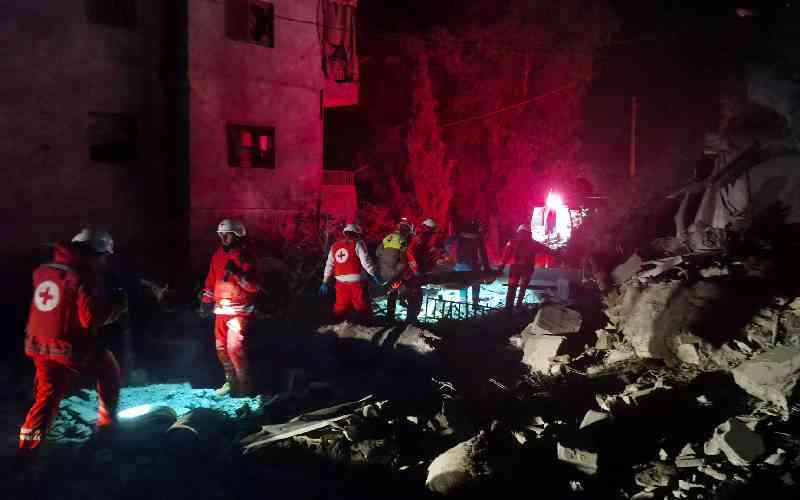
Israel on Wednesday unleashed what it said was its “largest coordinated strike” on Lebanon since the war began, killing more than 300 people and wounding over 1,000, according to Lebanon’s health ministry.
Hours later, Iran-backed Hezbollah said it had fired rockets towards Israel in response to what it called a violation of the US-Iran truce.
Since midnight, at least 20 rounds of sirens warning of incoming rocket fire have sounded in northern Israel.
The Israeli army said it was striking Hezbollah positions again on Thursday, with Chief of Staff Eyal Zamir telling troops in southern Lebanon the group suffered a “heavy blow” from its major bombardment targeting the Iran-backed group across Lebanon a day earlier.
For some residents, the continuation of fighting along Israel’s northern front is seen as the lesser of two evils.
“Actually, we’re quite pleased, even rather relieved, that Lebanon is not included in the ceasefire agreement with Iran, because it’s a threat that weighs directly on us,” said Florence, who lives in the northern mixed Jewish-Arab town of Maalot-Tarshiha and declined to give her last name.
“In recent weeks, we’ve clearly seen that Hezbollah has grown stronger since 2024 and that it continues to threaten the civilian population in northern Israel,” she told AFP by phone, saying she was speaking “on behalf of many people”.
Adva Cohen, a 38-year-old mother of four, told AFP on WhatsApp: “Today has been a very difficult day. We’ve had an enormous number of alerts… As soon as one alert ends, another one starts.”
Israeli Prime Minister Benjamin Netanyahu said Thursday evening, in a video statement, that he was “proud” of the residents of the north of the country, calling on them to “stand firm”, because “we will not stop until we have restored your security”.
The army warned on Thursday evening that Hezbollah may expand its launches to other parts of the country, with Israeli media indicating that the Iran-backed group may target population hubs in the country’s centre.
After Hezbollah launched rockets towards Israel on March 2 in retaliation for the US-Israeli killing of Iran’s supreme leader, Israel invaded southern Lebanon and launched massive air raids in the area.
Support Independent Journalism
Stand With Bold Journalism.
Stand With The Standard.
Continue
→
Pay via
Secure Payment
Kenya’s most trusted newsroom since 1902
Follow The Standard
channel on WhatsApp
Over 20 rocket alerts sounded through Thursday morning in communities near Israel’s northern border with Lebanon as Israeli forces fight Hezbollah despite the US-Iran ceasefire.
AFP footage from the border area showed long rocket trails in the sky and plumes of smoke signalling interceptions.
Calls have been mounting for the ceasefire between the US and Iran — agreed late on Tuesday — to be extended to Israel’s war with Hezbollah, which Israel has said is not included.
Israel on Wednesday unleashed what it said was its “largest coordinated strike” on Lebanon since the war began, killing more than 300 people and wounding over 1,000, according to Lebanon’s health ministry.
Hours later, Iran-backed Hezbollah said it had fired rockets towards Israel in response to what it called a violation of the US-Iran truce.
Since midnight, at least 20 rounds of sirens warning of incoming rocket fire have sounded in northern Israel.
The Israeli army said it was striking Hezbollah positions again on Thursday, with Chief of Staff Eyal Zamir telling troops in southern Lebanon the group suffered a “heavy blow” from its major bombardment targeting the Iran-backed group across Lebanon a day earlier.
For some residents, the continuation of fighting along Israel’s northern front is seen as the lesser of two evils.
“Actually, we’re quite pleased, even rather relieved, that Lebanon is not included in the ceasefire agreement with Iran, because it’s a threat that weighs directly on us,” said Florence, who lives in the northern mixed Jewish-Arab town of Maalot-Tarshiha and declined to give her last name.
“In recent weeks, we’ve clearly seen that Hezbollah has grown stronger since 2024 and that it continues to threaten the civilian population in northern Israel,” she told AFP by phone, saying she was speaking “on behalf of many people”.
Adva Cohen, a 38-year-old mother of four, told AFP on WhatsApp: “Today has been a very difficult day. We’ve had an enormous number of alerts… As soon as one alert ends, another one starts.”
Israeli Prime Minister Benjamin Netanyahu said Thursday evening, in a video statement, that he was “proud” of the residents of the north of the country, calling on them to “stand firm”, because “we will not stop until we have restored your security”.
The army warned on Thursday evening that Hezbollah may expand its launches to other parts of the country, with Israeli media indicating that the Iran-backed group may target population hubs in the country’s centre.
After Hezbollah launched rockets towards Israel on March 2 in retaliation for the US-Israeli killing of Iran’s supreme leader, Israel invaded southern Lebanon and launched massive air raids in the area.
Stay informed. Subscribe to our newsletter
Follow The Standard
channel on WhatsApp
By AFP