

Audio By Vocalize
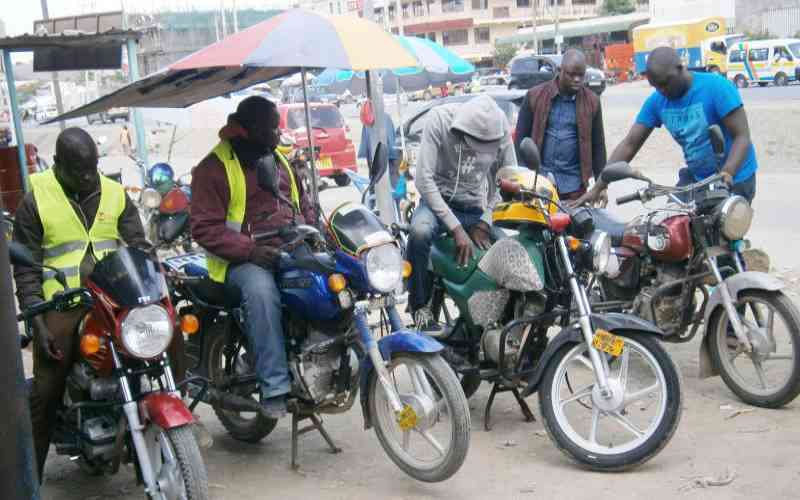
Boda bodas create chaos. They bring disorder in urban centres as they expose villages to crime. If the roads network was perfect, boda bodas will only be used for sporting but because there is a big gap in our transportation, motorcycles come in to fill the gap.
The boda boda sector in Kenya presents a complex paradox: it is both indispensable and deeply problematic. With an estimated 2.4 million motorcycles operating across the country, the sector has grown into one of the largest informal employers, absorbing thousands of youths who might otherwise remain jobless. Yet beneath this apparent success lies a troubling reality of economic fragility, weak regulation and a culture that may inadvertently undermine long-term productivity.
At its core, the industry thrives because it fills a critical gap in Kenya’s transport system. In both urban and rural areas, motorcycles offer speed, accessibility, and affordability where conventional public transport falls short. They navigate poor roads, reach remote villages, and provide last-mile connectivity that matatus and buses cannot. For many Kenyans, boda bodas are not a luxury — they are a necessity. For many young men, they are also an immediate source of income in an economy where formal employment opportunities remain scarce.
However, the numbers tell a sobering story. With 2.4 million riders competing for a limited pool of customers, the market is over-saturated. The result is intense competition that drives down daily earnings. An average income of Sh200 per day is not only unsustainable but also indicative of a sector trapped in survival mode. At this level, riders are unable to save, invest or plan for the future. Instead, they operate within a hand-to-mouth cycle, where each day’s earnings are consumed almost entirely by basic needs such as food, fuel and loan repayments.
This economic precarity has broader social implications. When a large segment of the youth population is locked into low-income, unstable work, the prospects for upward mobility diminish significantly. The sector, in this sense, becomes less of a stepping stone and more of a trap. Many riders enter the industry with hopes of quick financial independence, only to find themselves stuck in a cycle of subsistence.
Compounding this challenge is the issue of weak regulation. While there have been efforts to organise riders into Saccos and enforce safety standards, implementation remains inconsistent. Many operators function outside formal structures, making it difficult to enforce discipline, accountability, and financial management. Without strong Sacco systems, riders miss out on benefits such as collective bargaining, access to affordable credit, insurance, and savings schemes. The absence of these structures not only exposes riders to exploitation but also perpetuates financial instability.
Moreover, the lack of effective regulation has contributed to negative public perceptions of the sector. Issues such as reckless riding, disregard for traffic rules, and involvement in petty crime have tarnished the image of boda boda operators. While it would be unfair to generalise all riders, the absence of strict oversight creates an environment where indiscipline can thrive. This further complicates efforts to professionalise the sector.
For many students, particularly those completing Form Four, the industry appears as an attractive and alternative to further education or skills training.
The writer teaches in Gatundu North sub-County
Support Independent Journalism
Stand With Bold Journalism.
Stand With The Standard.
Continue
→
Pay via
Secure Payment
Kenya’s most trusted newsroom since 1902
Follow The Standard
channel on WhatsApp
Boda bodas create chaos. They bring disorder in urban centres as they expose villages to crime. If the roads network was perfect, boda bodas will only be used for sporting but because there is a big gap in our transportation, motorcycles come in to fill the gap.
The boda boda sector in Kenya presents a complex paradox: it is both indispensable and deeply problematic. With an estimated 2.4 million motorcycles operating across the country, the sector has grown into one of the largest informal employers, absorbing thousands of youths who might otherwise remain jobless. Yet beneath this apparent success lies a troubling reality of economic fragility, weak regulation and a culture that may inadvertently undermine long-term productivity.
At its core, the industry thrives because it fills a critical gap in Kenya’s transport system. In both urban and rural areas, motorcycles offer speed, accessibility, and affordability where conventional public transport falls short. They navigate poor roads, reach remote villages, and provide last-mile connectivity that matatus and buses cannot. For many Kenyans, boda bodas are not a luxury — they are a necessity. For many young men, they are also an immediate source of income in an economy where formal employment opportunities remain scarce.
However, the numbers tell a sobering story. With 2.4 million riders competing for a limited pool of customers, the market is over-saturated. The result is intense competition that drives down daily earnings. An average income of Sh200 per day is not only unsustainable but also indicative of a sector trapped in survival mode. At this level, riders are unable to save, invest or plan for the future. Instead, they operate within a hand-to-mouth cycle, where each day’s earnings are consumed almost entirely by basic needs such as food, fuel and loan repayments.
This economic precarity has broader social implications. When a large segment of the youth population is locked into low-income, unstable work, the prospects for upward mobility diminish significantly. The sector, in this sense, becomes less of a stepping stone and more of a trap. Many riders enter the industry with hopes of quick financial independence, only to find themselves stuck in a cycle of subsistence.
Compounding this challenge is the issue of weak regulation. While there have been efforts to organise riders into Saccos and enforce safety standards, implementation remains inconsistent. Many operators function outside formal structures, making it difficult to enforce discipline, accountability, and financial management. Without strong Sacco systems, riders miss out on benefits such as collective bargaining, access to affordable credit, insurance, and savings schemes. The absence of these structures not only exposes riders to exploitation but also perpetuates financial instability.
Moreover, the lack of effective regulation has contributed to negative public perceptions of the sector. Issues such as reckless riding, disregard for traffic rules, and involvement in petty crime have tarnished the image of boda boda operators. While it would be unfair to generalise all riders, the absence of strict oversight creates an environment where indiscipline can thrive. This further complicates efforts to professionalise the sector.
For many students, particularly those completing Form Four, the industry appears as an attractive and alternative to further education or skills training.
The writer teaches in Gatundu North sub-County
Follow The Standard
channel on WhatsApp
By Ashford Kimani