



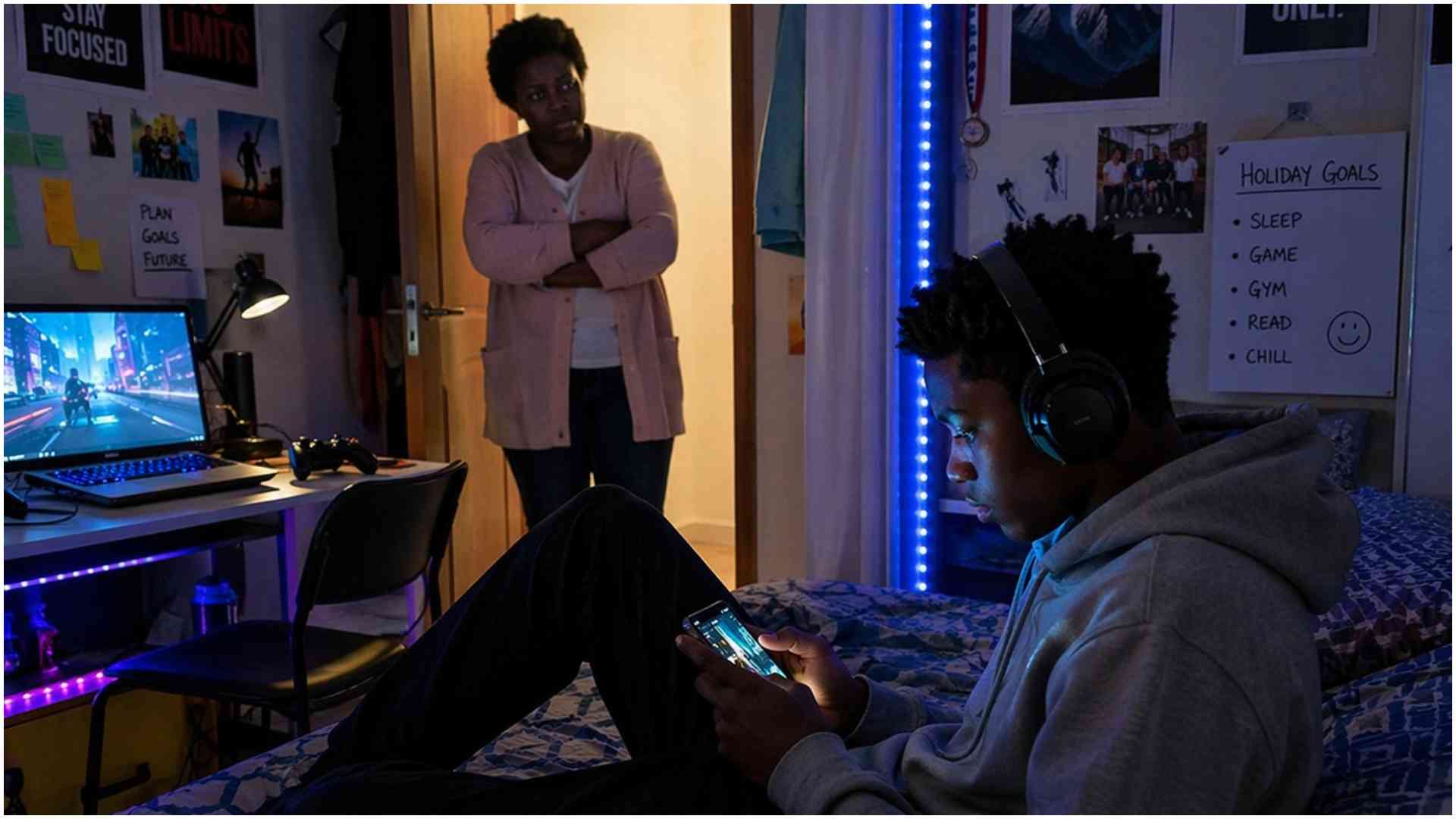
By the time school holidays arrive, many parents expect relief, a break from early mornings, homework battles and exam anxiety. Instead, what often unfolds behind bedroom doors is something quieter, more unsettling. Teenagers retreat. They sleep longer, speak less, and withdraw into screens, music or silence.
Bedrooms transform into personal sanctuaries, phones and gaming consoles glow for hours, and daily routines bend around the rhythms of teens.
Parents often perceive this as withdrawal, while teenagers see it as freedom, a rare opportunity to reset after months of school pressures, deadlines, and structured schedules.
For many Nairobi teens, the holiday represents a space to breathe and reclaim autonomy. During the school term, structure acts as a scaffold. There are timetables, social interactions, expectations and constant stimulation. Holidays remove that framework almost overnight. What remains is unstructured time.
“I finally get to sleep in. I can spend time catching up with friends online, watching shows, or just doing nothing without anyone rushing me,” says 16-year-old Daniel.
His mother, however, notices a different side.
“I barely see him unless it’s meal time. Even then, he’s rushing back to his room or glued to his phone,” she says.
This contrast underscores a familiar tension that what teens see as necessary rest and freedom can feel like disconnection to parents.
Another teen, 15-year-old Aisha, explains why retreating to her room is important.
“At school, there’s always so much to do, assignments, exams, clubs. When I come home, I just want a space that’s mine. It’s not that I don’t want to be with my family, I just need time to recharge and process everything,” she said.
Her mother Mary Anyango echoes the challenge of balancing supervision with respect for independence.
“During the term, there’s structure. But now, it feels like anything goes, and sometimes it’s hard to know when to step in,” Anyango said.
Consultant psychiatrist Dr Linda Nyamute says this withdrawal is a natural part of adolescent development. “Adolescence is defined by a growing need for independence, identity formation, and emotional autonomy. Teens retreat to carve out privacy and reclaim control over their time,” she explained.
Teenagers today are navigating more than just adolescence. They are also managing social media pressures, shifting friendships, academic competition and uncertainty about the future. Without the daily rhythm of school, these pressures can feel magnified. This is why a teenager who seemed “fine” in school may appear distant or irritable during the holidays.
Phones, gaming consoles and streaming platforms offer an easy escape, predictable, controllable, and free from judgement. In digital spaces, teenagers can curate identities, connect selectively, or simply avoid real-world demands.
Strike a balance
“Parents often see screen time as the problem,” says Dr Mary Mwangi, a sociologist. “But it is usually a symptom. The question is: what is the child avoiding, or trying to cope with?”
That does not mean all screen use is harmful. “For many teenagers, it is a way of maintaining friendships or exploring interests. The concern arises when it replaces real-world interaction entirely,” Dr Mwangi adds.
“The conversation around phone use has been quite a nuance for many parents. But the important thing is to strike a balance. You wouldn’t want to be too rigid, because once you’re too rigid, you’ll face resistance,” Dr Nyamute notes.
Teens themselves recognize that too much freedom can sometimes be unproductive.
“Sometimes I get lost in my phone for hours, and then I feel guilty for not doing anything meaningful. But when my schedule is a little predictable, like mornings for chores and afternoons for games or shows, it actually feels better. I know what’s expected and when I can relax,” Daniel, a form three student admits.
Dr Nyamute emphasizes that predictable routines, rather than strict control, can guide behaviour while respecting teens’ autonomy.
She cautions against using screen time as a reward or punishment, noting that incorporating it naturally into a daily schedule reduces conflict and emotional tension.
“The holiday is not just about managing time. Communication between parents and teens is critical, especially in a digital age where social media, online messaging, and gaming platforms dominate interactions,” she said.
While these spaces offer connection, they also bring risks, cyberbullying, peer pressure, and exposure to inappropriate content.
“Sometimes I see things online that make me anxious, but I’m not sure how to tell my parents without them overreacting,” Aisha said.
Dr Nyamute stresses that approaching these conversations with curiosity rather than interrogation encourages openness.
Reinforce trust
“Instead of asking, ‘Who is this?’ or ‘What are you watching?’ you can ask, ‘Could I watch it with you?’ Curiosity invites sharing, interrogation invites secrecy,” Nyamute Explained.
Family therapist Joyce Lumatete agrees that connection, not control, is key.
“Teens want to feel understood and heard. Teenagers are not just looking for rules; they are looking for understanding. If a young person feels constantly watched but not listened to, they will withdraw. But if they feel seen and included, they are more likely to cooperate,” she added.
Lumatete also noted that intentional moments of connection, shared meals without devices, walks, errands done together, or even sitting side by side watching a show, help maintain bonds and reinforce trust.
Teens themselves report that these small gestures matter so much to them and makes them seen.
“When my mom sits with me while I play a game, or when we cook together, it doesn’t feel like she’s checking up on me. It feels like she’s part of my day. I actually like that more than lectures about how much screen time I’m taking,” Daniel says.
Lumatete also highlights involving teens in decision-making noting that when parents collaborate with their children to establish boundaries rather than impose them, the rules feel fairer and teens feel respected.
“When a teenager feels part of the process, they are more likely to respect the outcome,” she said.
Despite the best intentions, parents often worry when retreat goes too far.
Sudden secrecy, irritability, withdrawal from friends or hobbies, aggression, or unexplained emotional changes can signal stress or mental health concerns.
Lumatete explains that there is a distinction between healthy retreat and distress.
“There is a difference between a teenager enjoying their space and a teenager struggling. The signs are in the changes and patterns,” said Lumatete.
“There are days when I shut myself away because I feel anxious or stressed, and I know it worries my parents. I just need them to notice without pushing me too hard,” Aisha confirmed.
Both specialists stress that not every change requires correction. Fashion choices, music tastes, or new slang often reflect self-expression rather than misbehavior.
“Focus less on surveillance and more on whether the values you want your teen to grow into are still present,” Dr Nyamute said.
However, parents should watch for warning signs. Persistent isolation, drastic mood changes, disrupted sleep patterns, or loss of interest in previously enjoyed activities may signal deeper issues such as depression or anxiety. In such cases, professional support is essential.
The key lies in creating safety, fostering curiosity, and maintaining open communication.
“During the holidays, it’s not just about keeping the child busy or off the phone. It’s about ensuring they feel connected,to you, their siblings, their home, their social life,” Nyamute said.
For teens like Daniel and Aisha, retreating is a form of self-care, but for parents, it is an opportunity to step back, observe, and learn how to guide without controlling, listen without judging, and connect without smothering.
When both sides understand these rhythms, the holidays can become a period of growth, reflection, and genuine family connection, an opportunity for teens to reset, and for parents to witness and support their evolving independence.