



Audio By Vocalize
As drought conditions worsen across the country, the Kenya Feed and Fodder Alliance (KEFFA) is calling for the establishment of a special fund for Arid and Semi-Arid Lands (ASAL) to cushion livestock farmers from the impact of climate change.
The alliance warns that the livestock sector, a key economic driver in ASAL regions, is at risk of massive losses if urgent interventions are not implemented.
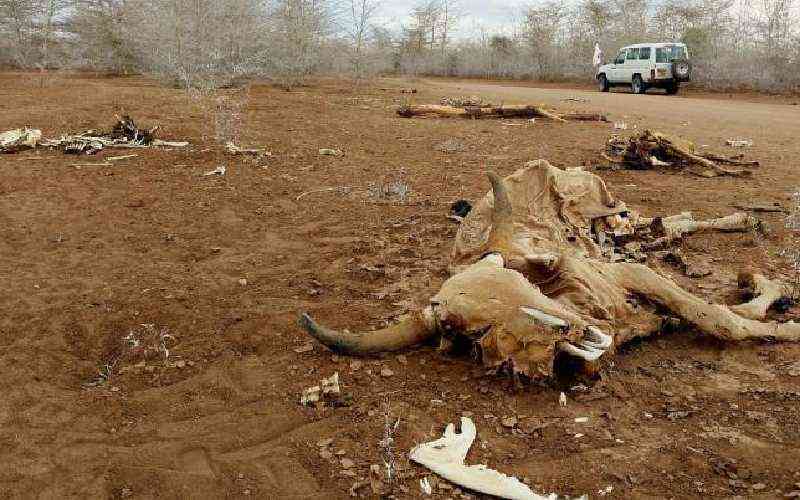
Pastoral communities have for years suffered repeated livestock deaths due to prolonged droughts, undermining livelihoods, food security and nutrition.

During the 2022–2023 drought, more than two million livestock were lost, wiping out billions of shillings in economic value.
To address the crisis, KEFFA has set up a fund aimed at supporting fodder commercialization and off-take to bridge the persistent feed shortage.
KEFFA Secretary General Njeri Gathecha said the initiative will ensure consistent fodder supply in ASAL counties and reduce the impact of erratic weather patterns.
She noted that Kenya is currently grappling with a 60 per cent feed and fodder deficit, affecting productivity, particularly among small-scale dairy farmers.
Speaking in Naivasha during the launch of a fodder project by Heifer International, Gathecha called for increased investment and financing to strengthen the sector.
“The fodder sector still faces challenges including poor-quality feed, inadequate conservation and seasonal production, all of which continue to affect livestock productivity,” she said.
A director at KALRO, Dr Fredric Ogutu, said the institution has established a 160-acre farm for high-energy lucerne and a 30-acre farm for Rhodes grass to help address the deficit.
Ogutu noted that Kenya faces an annual feed deficit of 55 million metric tonnes, with KALRO focusing on research into high-protein fodder species and improved conservation methods.
KALRO Head of Knowledge, Information and Outreach, David Mbugua, said the institution is also promoting improved Kienyeji chicken breeds, currently supplying up to 500,000 chicks monthly.
He added that demand for improved pig breeds is also rising, driven by changing consumer preferences and increased pork consumption.
Support Independent Journalism
Stand With Bold Journalism.
Stand With The Standard.
Continue
→
Pay via
Secure Payment
Kenya’s most trusted newsroom since 1902
Follow The Standard
channel on WhatsApp
As drought conditions worsen across the country, the Kenya Feed and Fodder Alliance (KEFFA) is calling for the establishment of a special fund for Arid and Semi-Arid Lands (ASAL) to cushion livestock farmers from the impact of
climate change.
The alliance warns that the livestock sector, a key economic driver in ASAL regions, is at risk of massive losses if urgent interventions are not implemented.
Pastoral communities have for years suffered repeated livestock deaths due to
prolonged droughts
, undermining livelihoods, food security and nutrition.
During the 2022–2023 drought, more than two million livestock were lost, wiping out billions of shillings in economic value.
To address the crisis, KEFFA has set up a fund aimed at supporting fodder commercialization and off-take to bridge the persistent feed shortage.
KEFFA Secretary General Njeri Gathecha said the initiative will ensure consistent fodder supply in ASAL counties and reduce the impact of erratic weather patterns.
She noted that Kenya is currently grappling with a 60 per cent feed and fodder deficit, affecting productivity, particularly among small-scale dairy farmers.
Speaking in Naivasha during the launch of a fodder project by Heifer International, Gathecha called for increased investment and financing to strengthen the sector.
“The fodder sector still faces challenges including poor-quality feed, inadequate conservation and seasonal production, all of which continue to affect livestock productivity,” she said.
A director at KALRO, Dr Fredric Ogutu, said the institution has established a 160-acre farm for high-energy lucerne and a 30-acre farm for Rhodes grass to help address the deficit.
Ogutu noted that Kenya faces an annual feed deficit of 55 million metric tonnes, with KALRO focusing on research into high-protein fodder species and improved conservation methods.
KALRO Head of Knowledge, Information and Outreach, David Mbugua, said the institution is also promoting improved Kienyeji chicken breeds, currently supplying up to 500,000 chicks monthly.
He added that demand for improved pig breeds is also rising, driven by changing consumer preferences and increased pork consumption.
Stay informed. Subscribe to our newsletter
Follow The Standard
channel on WhatsApp
By Anthony Gitonga